
Plants
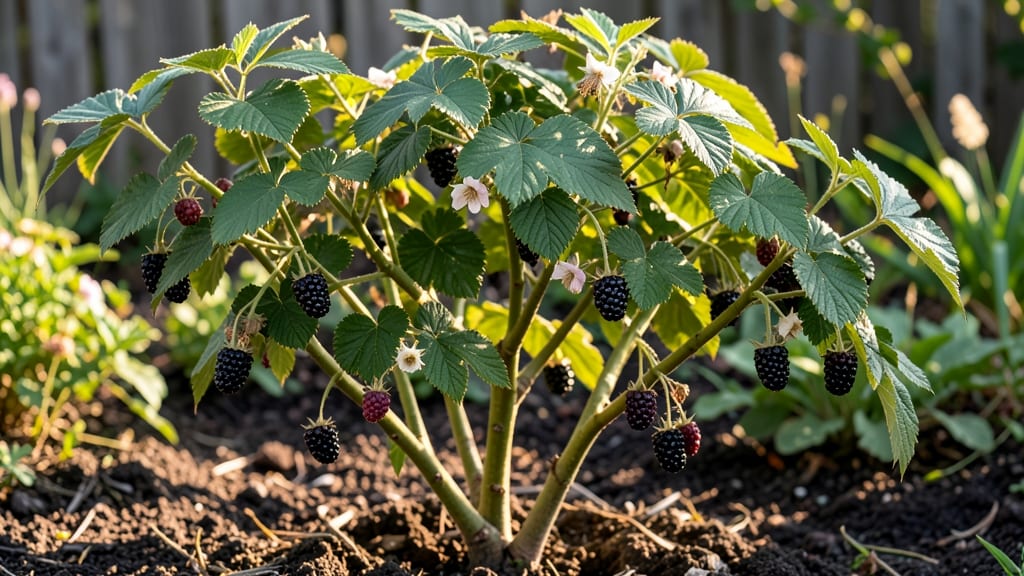
Blackberries are perennials that die back to the ground each winter but regrow from their root crowns annually, producing new canes and fruit each spring. Their hardy roots ensure year-round survival in suitable climates.
This dieback-and-regrowth cycle is what makes blackberries true perennials rather than annuals. 🌱 The plant's roots store energy throughout the growing season, allowing them to push out fresh canes as soon as temperatures rise in spring.
Unlike annuals that complete their entire lifecycle in one season, blackberries rely on this underground network to bounce back year after year. What's fascinating is how they prioritize energy storage—leaving last year's canes to fruit while new growth emerges from the base.
This dual system explains why you often see both flowering and fruiting canes simultaneously in a healthy blackberry patch.
In colder climates, this hardiness comes with special care requirements. The roots need protection from freezing soil, which is why gardeners often mound soil or use mulch. This isn't just about survival—it's about setting up the plant for next year's bounty.
The key difference from annuals is that blackberries don't need replanting; their persistent root systems make them low-maintenance once established.
💡 In This Article
- Blackberry Plant Life Cycle: Why They Die Back and Regrow
- Caring for Perennial Blackberry Bushes Year-Round
Blackberry plant life cycle: why they die back and regrow
The blackberry's perennial nature begins with its specialized root system, which functions like a biological battery. During the growing season, these roots store carbohydrates—primarily in the form of starches—in their thick, woody crowns. This energy reserve allows the plant to survive winter dormancy when above-ground growth halts.
The roots can remain viable even when temperatures drop below 20°F, though prolonged exposure to -10°F may damage less cold-hardy varieties like 'Triple Crown'.
What triggers regrowth in spring is a combination of soil temperature and daylight length. When daytime temperatures consistently reach 50°F and nights stay above 40°F, the root crowns detect these cues and begin sending out new canes.
This process is called budbreak, where dormant buds swell and push through the soil. Unlike annual plants that complete their entire lifecycle in one season, blackberries rely on this stored energy to produce both fruiting canes (from last year's growth) and new primocanes (this year's growth) simultaneously. 🌱
The dieback process itself is a survival strategy. As temperatures drop, the plant redirects nutrients from leaves and stems back into the roots, a process called senescence. This prevents the plant from wasting energy maintaining foliage that would freeze and die anyway.
The remaining canes often appear dead, but their root systems remain active underground, ready to spring back when conditions improve. This makes blackberries fundamentally different from annuals, which must complete flowering, fruiting, and seed production in a single growing season.
One fascinating adaptation is how blackberries manage their growth cycles. The fruiting canes (floricane) produce berries on second-year wood, while the new primocanes won't fruit until their second year. This dual-system ensures continuous production over multiple years.
In contrast, annual plants like strawberries would need to be replanted every year to maintain yield. The blackberry's ability to fruit on old wood while growing new canes simultaneously explains why established bushes can produce 10-15 pounds of berries annually with proper care.
Climate plays a crucial role in this cycle. In Zone 5-6 regions, blackberries may need winter protection like mulch or row covers to prevent root damage. In warmer climates (Zone 7+), they may experience partial dieback but often regrow more vigorously.
The key difference from annuals is that blackberries don't need to start from seed each year—their persistent root systems contain all the genetic information needed to regenerate the entire plant structure annually. 💫
This biological efficiency is why blackberries thrive in both wild and cultivated settings. Their ability to store energy underground and regrow each spring makes them one of nature's most resilient fruit-bearing plants.
Unlike annuals that must complete their entire lifecycle in one season, blackberries have evolved to spread their energy production over multiple years, creating a sustainable system for continuous fruit production.