
Plants
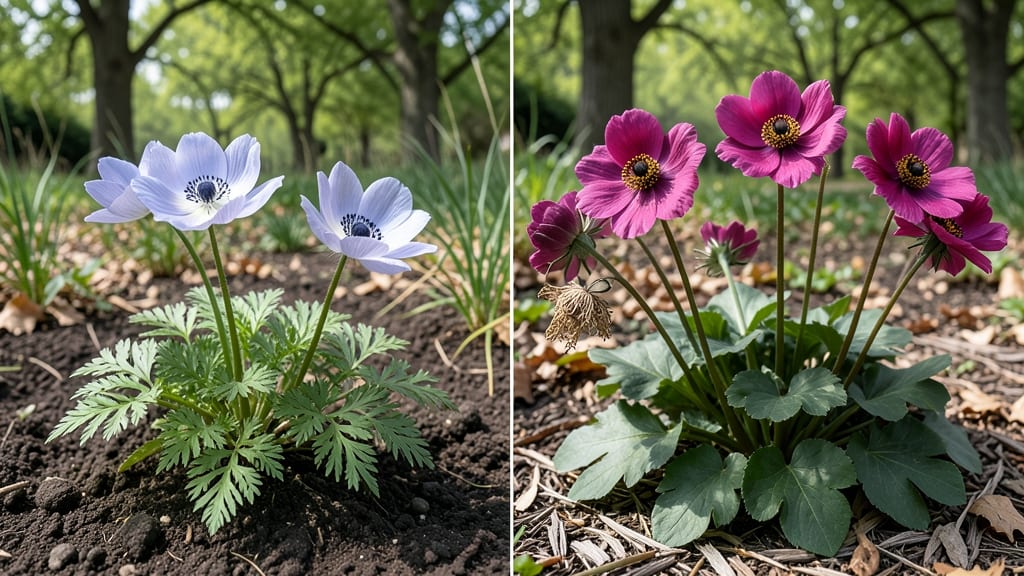
Yes, anemones are perennials, returning each year thanks to their resilient underground corms that store nutrients and regenerate foliage during temperate seasons. Many varieties enter seasonal dormancy but rebound with striking blooms in spring or fall.
These hardy plants defy the annual cycle by developing thick, starch-filled corms that act like natural storage units. 🌱 Unlike true bulbs, anemone corms produce multiple buds that sprout fresh growth annually, even after their above-ground stems die back.
The key difference lies in their root systems—perennial anemones develop extensive fibrous roots that anchor them deeply, while some annual species rely solely on seasonal growth. This biological adaptation explains why gardeners often find anemones popping up reliably year after year in the right conditions.
What makes this particularly interesting is how their dormancy patterns vary by species. For example, Japanese anemones (Anemone hupehensis) bloom in late summer while winter anemones (Anemone nemorosa) brighten early spring gardens.
This seasonal diversity means you can enjoy their vibrant flowers across multiple seasons with proper care—including well-draining soil, partial shade, and strategic mulching during winter months.
💡 In This Article
- How Anemone Corms Enable Perennial Growth
- Caring for Perennial Anemones: Planting, Pruning, and Overwintering
How Anemone corms enable perennial growth
Anemone corms function like nature's built-in energy banks, storing complex carbohydrates (primarily starch) during the growing season. These underground structures can swell to 1-3 inches in diameter, depending on the species, and contain multiple growth buds that remain dormant until conditions are ideal.
The starch content can reach 30-40% of the corm's dry weight, providing the fuel needed for rapid spring regrowth after winter dormancy. This storage mechanism is similar to potatoes but more efficient for perennials because the corms don't fully decompose between seasons.
The dormancy trigger varies by species but typically responds to temperature shifts and daylight changes. For example, wood anemones (Anemone nemorosa) begin their dormant phase when soil temperatures drop below 50°F in fall, while Japanese anemones (Anemone hupehensis) may wait until 40°F before shutting down.
What's fascinating is how these corms develop a protective layer of cells that prevents moisture loss and rot during dormancy—a survival strategy shared with desert plants but adapted for temperate climates. 🌱
Root development sets perennial anemones apart from their annual cousins. While annual species like windflower anemones (Anemone blanda) produce shallow root systems that die back completely, perennials develop extensive fibrous roots that spread 12-24 inches wide.
These roots create a network that stabilizes the plant and taps into deeper soil moisture during dry periods. The corm itself remains connected to this root system year-round, ensuring a continuous nutrient supply even when above-ground growth has stopped.
One common misconception is comparing anemone corms to true bulbs like tulips. While both store nutrients, anemone corms have a more complex structure with multiple growth points that can produce several stems simultaneously.
This polycarpic growth (multiple flowering events) is why you often see clusters of blooms emerging from a single corm. The trade-off? These corms are more delicate when disturbed—their fibrous roots make them sensitive to transplanting after 3-4 years of growth, when the corm cluster naturally divides.
Consider the Greek windflower (Anemone coronaria) as a case study: its corms store enough energy to produce 2-3 inches of new growth within 2-3 weeks of spring thaw, even after a full year of dormancy.
This rapid rebound explains why gardeners often find these plants returning stronger each year despite harsh winters. The secret lies in their ability to balance starch storage with root development—a perfect adaptation for temperate climates where seasonal extremes are common.
What most gardeners don't realize is how these corms handle temperature fluctuations. During winter, the starches convert to sugars that act as antifreeze, protecting cellular structures from freezing. This biochemical adaptation explains why some anemones thrive in Zone 3-4 climates with proper mulching—something their annual relatives can't match.
The corm's ability to "reset" its growth cycle each year while maintaining energy reserves is what truly makes anemones perennial powerhouses in the garden. ✨