
Orchid Care
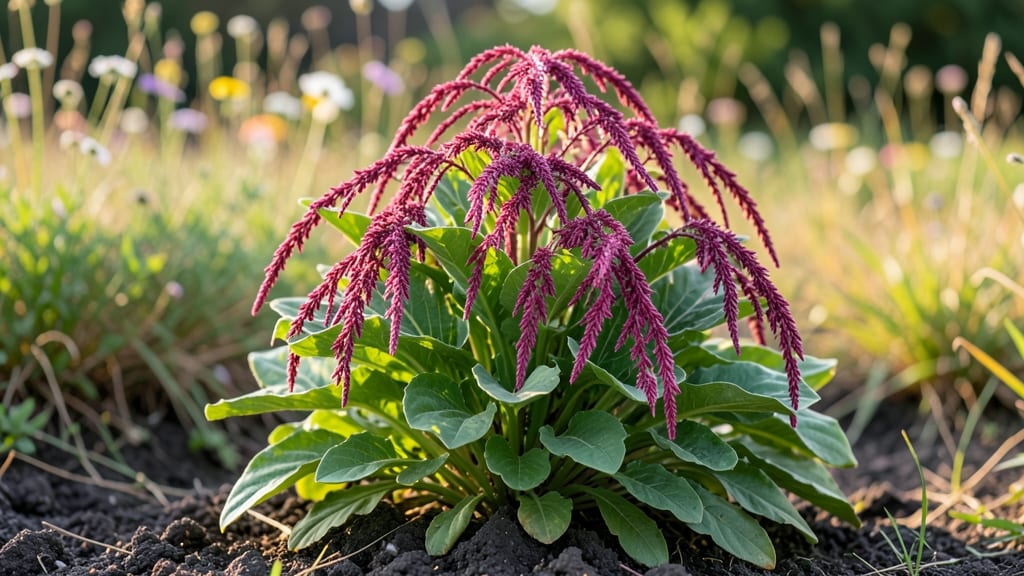
Amaranth is an annual or perennial plant, meaning it completes its entire growth cycle—from seed to seed—in just one season, typically thriving in warm weather before dying back when temperatures drop. While some varieties may regrow from the base in mild winters, they don’t persist as true perennials.
Amaranth’s one-season lifecycle is hardwired into its biology, triggered by day length and temperature cues. 🌱 Unlike perennials that regrow year after year, amaranth plants focus all their energy on rapid growth, flowering, and seed production within 60-120 days.
This makes it a powerhouse for quick harvests but requires replanting annually. The confusion often comes from varieties that sprout new shoots from the base in spring—these aren’t true perennials but rather regrowth from stored energy in the root crown.
What sets amaranth apart is its adaptability—it thrives in both tropical and temperate zones as long as frost isn’t a factor. 🌡️ For gardeners in warmer climates, this means you can often extend the growing season by starting new plantings every 2-3 weeks.
The key is understanding that while amaranth may look persistent, it’s fundamentally an annual that outpaces true perennials in growth speed and productivity.
💡 In This Article
- Amaranth’s Annual Lifecycle Explained
- Extending Amaranth’s Harvest: Prolonging Growth and Seed Production
Amaranth’s annual lifecycle explained
Amaranth’s lifecycle unfolds in four distinct stages, each governed by environmental triggers. The journey begins with germination, which occurs within 5-10 days under ideal conditions (70-85°F soil temperature).
Unlike perennials that develop deep root systems, amaranth focuses on rapid above-ground growth, sending up 2-3 foot stems in just 4-6 weeks—a pace that outstrips many vegetables.
This aggressive growth is fueled by its ability to photosynthesize efficiently, even in lower light conditions, thanks to its broad, 3-6 inch leaves.
The transition to flowering marks the plant’s shift from vegetative growth to reproduction, typically triggered by day length. Short-day varieties (like 'Red Garnet') begin flowering when daylight drops below 12-14 hours, while long-day types (like 'Green Giant') respond to increasing light.
This flowering phase produces 1-3 foot panicles that develop thousands of tiny seeds—each plant can yield 10,000-50,000 seeds, depending on variety. Unlike perennials that allocate energy to root storage, amaranth dedicates nearly all resources to seed production before dying back.
What makes amaranth unique is its photoperiod sensitivity, which explains why it thrives in warm climates. In regions with hot summers and mild winters, some varieties may produce basal shoots from the root crown in spring—this isn’t perennial behavior but rather regrowth from stored energy.
True perennials like Swiss chard develop persistent root systems that regenerate year after year, while amaranth’s root crown lacks the capacity for long-term survival. 🌱 The plant’s entire energy is geared toward completing its lifecycle in one season, making it a fast-maturing crop (typically 60-120 days to harvest).
Temperature plays a critical role in this lifecycle. Amaranth germinates best in warm soil and bolts (goes to seed) when nights drop below 50°F. This sensitivity to cooling cues ensures it completes its cycle before frost.
In contrast, perennials like asparagus or rhubarb develop cold-hardy root systems that persist through winter. Amaranth’s annual nature is also reflected in its seed viability: while seeds can remain dormant for years, the plant itself cannot survive frost or prolonged cold.
For gardeners, this lifecycle means amaranth is best treated as an annual crop, even if it appears persistent. The key to maximizing yield lies in understanding these growth stages and timing plantings to avoid bolting too early.
In warm climates, successive plantings every 3-4 weeks can extend harvests throughout the season, but each planting represents a new annual cycle. 💫
Consider this comparison: while Swiss chard (a true perennial) might produce edible leaves for 3-4 years, amaranth delivers a single, explosive harvest before resetting. This trade-off explains why amaranth is prized for its rapid growth and high seed production—qualities that annuals excel at but perennials cannot match.