
Flowers
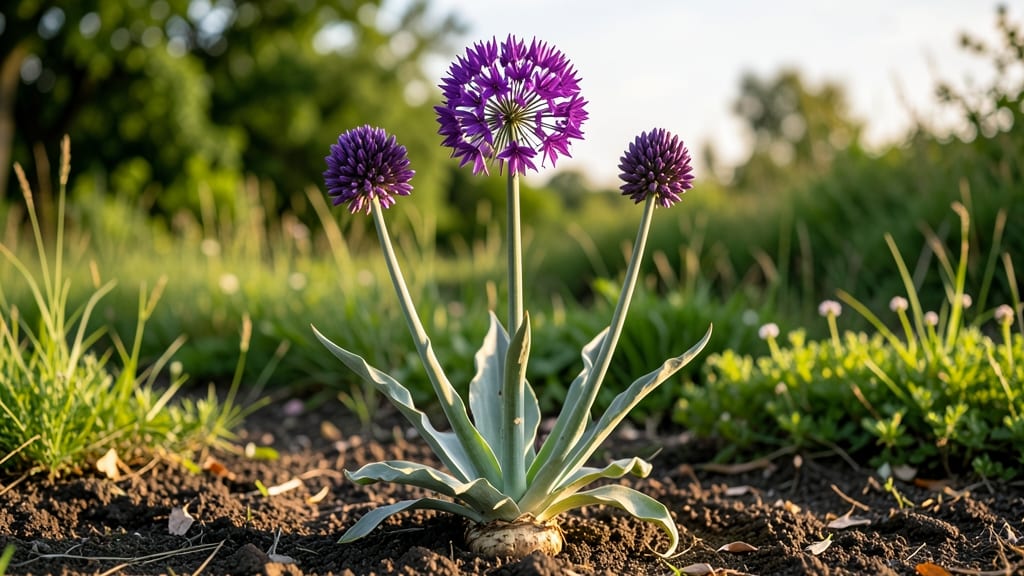
Whether allium plants are perennial or annual depends on the variety and climate—most thrive as perennials, regrowing yearly from bulbs or roots, while chives and garlic often die back in colder zones but return from underground storage. Their life cycle shifts with temperature and hardiness zones.
Understanding whether an allium behaves as a perennial or annual comes down to its hardiness and growing conditions. 🌱 True perennials like globe alliums (Allium sphaerocephalon) survive winters in zones 3-9, while garlic and chives may act as annuals in colder climates but still regrow from roots.
The key difference lies in their ability to store energy underground—perennials like shallots store it in bulbs, while frost-sensitive varieties rely on root systems to bounce back. For gardeners, this means choosing the right allium for your zone and providing winter protection if needed.
For example, garlic planted in zone 5 might die back above ground in winter but regrows from its bulb the following spring. In contrast, ornamental alliums like Allium giganteum thrive as perennials in zones 4-8, blooming reliably each year with minimal care.
The takeaway? Research your specific allium’s hardiness zone and growth habits before planting to ensure it returns year after year.
💡 In This Article
- How Climate and Species Determine Allium Growth Cycles
- Best Allium Varieties for Perennial vs. Annual Gardens
How climate and species determine Allium growth cycles
The distinction between perennial and annual alliums boils down to their biological adaptations for survival. True perennials like Allium sphaerocephalon (globe allium) store energy in underground bulbs, allowing them to regenerate each spring from the same root system.
These bulbs act like natural batteries, converting starches into sugars during dormancy to fuel regrowth when temperatures rise above 50°F.
In contrast, frost-sensitive varieties such as garlic (Allium sativum) rely on cloves that remain dormant but can be killed by prolonged freezing, making them behave as annuals in zones colder than USDA Zone 5. 🌱
Hardiness zones play a critical role in this dynamic. Ornamental alliums like Allium giganteum thrive in zones 4-8, where winter temperatures rarely drop below -20°F, while chives (Allium schoenoprasum) survive as semi-perennials in zones 3-9 by sending up new shoots from their fibrous roots each spring.
The key difference lies in their cold tolerance: true perennials can withstand -30°F with proper mulching, while annual varieties may die back completely in harsh winters but still produce offsets from their roots.
Bulb size and storage matter too. Larger bulbs like those of Allium moly (lamb's ears) contain more stored energy, allowing them to regrow more vigorously after winter. Smaller bulbs or cloves, like those of garlic, are more vulnerable to freeze-thaw cycles that can cause rot.
This is why gardeners in colder climates often plant garlic in fall—giving the cloves time to establish roots before winter—while perennial alliums can be planted in spring with equal success. 💛
Seasonal dormancy is another critical factor. Perennial alliums enter a natural resting phase when daylight shortens and temperatures drop, conserving energy until spring. Annual varieties like garlic may appear dead above ground but still maintain viable cloves underground.
The transition between these states depends on photoperiod (day length) and soil temperature—both of which vary by latitude and elevation. For example, a garlic plant in zone 6 might survive winter but produce fewer scapes the next season if exposed to extreme cold.
Consider these key survival strategies by allium type:
- True perennials: Store energy in bulbs, regrow annually from same roots (e.g., Allium cristophii)
- Semi-perennials: Die back above ground but regrow from roots (e.g., chives, garlic in mild winters)
- Annuals in cold climates: Complete life cycle in one season (e.g., garlic in zone 3)
The bottom line? Allium growth cycles are a delicate balance between species traits and environmental conditions. Understanding these mechanics helps gardeners select varieties that match their climate while implementing simple strategies like mulching or winter protection to extend perennial behavior even in marginal zones. ✨