
Transplanting
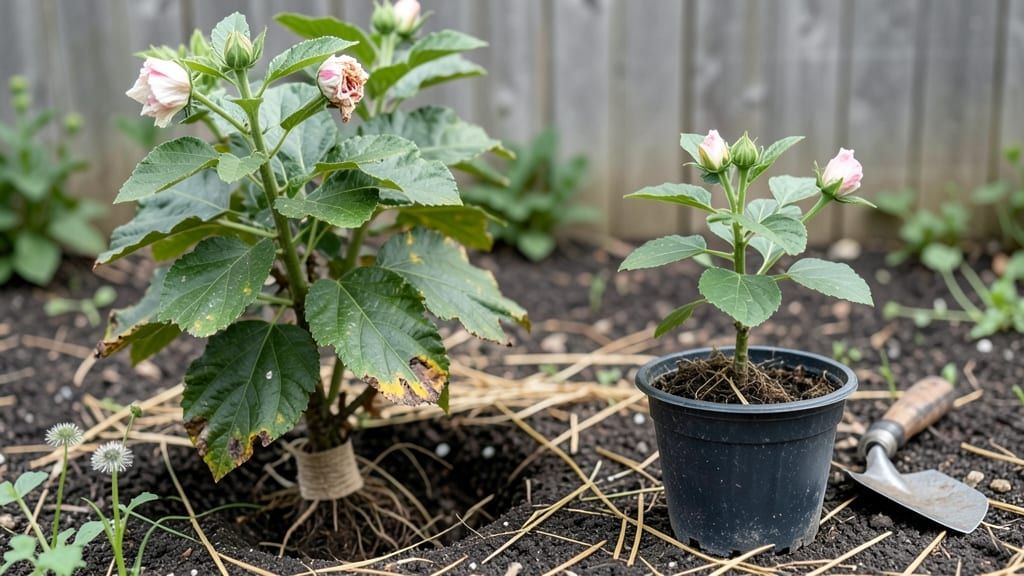
Transplanting perennial hibiscus works best in early spring or late fall when temperatures stay moderate, avoiding sweltering heat or freezing conditions. Pick a cloudy day to minimize stress and help roots settle before new growth begins or winter dormancy sets in.
Timing matters because hibiscus roots are sensitive to temperature extremes. In spring, transplant after the last frost when soil warms to at least 60°F, while fall transplanting should happen 6-8 weeks before first frost to allow roots to recover.
Humidity also plays a role—drier climates need extra care to prevent wilting during the adjustment period. 🌿 I’ve found that container-grown hibiscus adapt faster than bare-root plants, so if you’re working with potted specimens, you can extend your transplant window by a few weeks.
For regions with mild winters (USDA zones 8-11), late fall transplanting in October or November works well, while colder zones (5-7) should aim for April or early May. Tropical climates can sometimes handle summer transplanting if you provide afternoon shade, but this increases shock risks.
Always check your local frost dates and monitor soil temperature with a thermometer for foolproof timing.
💡 In This Article
- Optimal Climate Conditions for Hibiscus Transplanting
- Pre-Transplant Soil and Site Preparation Guide
Optimal climate conditions for hibiscus transplanting
Here's what's actually happening with hibiscus roots during transplanting: these plants enter a delicate phase where their root systems are either waking up from dormancy (spring) or preparing for it (fall). The ideal soil temperature range of 60-75°F triggers root growth without overwhelming the plant's energy reserves.
Below 50°F, root activity slows dramatically, while above 85°F, the roots risk dehydration and stress—similar to how a human would overheat during intense exercise. 🌱
The science behind this involves the plant's cambium layer, which is most active during these transitional seasons. In spring, the cambium begins producing new cells for both stems and roots, while fall allows the roots to strengthen before winter.
What most people don't realize is that hibiscus roots grow most actively in the top 6-12 inches of soil—this is why soil temperature at this depth matters more than air temperature.
A soil thermometer is your best friend here, as air temps can be misleading (ever noticed how pavement stays hot long after sunset?).
Humidity plays a surprising role in recovery rates. In dry climates (like USDA zones 7-9), transplant shock occurs more frequently because the plants lose moisture through their leaves faster than roots can absorb water. The solution? Aim for 50-70% humidity during transplanting—this is why overcast days are perfect.
In humid regions (zones 10-11), you might actually need to provide afternoon shade to prevent fungal issues from excess moisture. I've seen hibiscus in Florida thrive when transplanted during the wet season (June-August) because the natural humidity reduces wilting, but this is an exception rather than the rule.
Regional variations create some fascinating differences. In colder zones (5-7), the last frost date becomes your anchor point—transplant 4-6 weeks after when nighttime temps consistently stay above 40°F.
For tropical hibiscus in zones 10-11, the window opens wider because they're semi-dormant year-round, but summer transplanting requires afternoon shade to prevent leaf scorch. The key factor is matching your timing to the plant's natural growth cycles rather than calendar months. 🌡️
Let's talk about those frost dates more specifically. Most gardeners rely on the USDA Plant Hardiness Zone Map, but what's often overlooked is the first frost date versus last frost date variation.
For example, zone 8 might have a last frost around March 15 but first frost as late as November 15—this gives you a 7-8 month growing window. In zone 5, that window shrinks to just 4-5 months, which is why fall transplanting becomes critical for survival.
Always check your local cooperative extension service for precise frost data—it can vary by 10-14 days even within the same zone.
One advanced consideration is the concept of "thermal time" or growing degree days (GDD). Hibiscus typically need 1,200-1,500 GDDs to establish properly after transplanting. This calculation helps explain why spring transplanting often succeeds better in northern climates—there's more growing season left for root development.
In southern climates, the same GDD requirement might be met during fall, but you'll need to account for shorter daylight hours reducing photosynthesis rates. 🌿
Here's a pro tip: if you're in a transitional zone (like zone 7b where winters can be mild or harsh), consider using row covers for the first 2-3 weeks after transplanting.
This creates a microclimate that maintains 5-10°F warmer soil temps and 10-20% higher humidity—essentially giving your hibiscus a head start on establishment. The investment pays off in stronger plants that bloom more vigorously the following season.