
Flowers
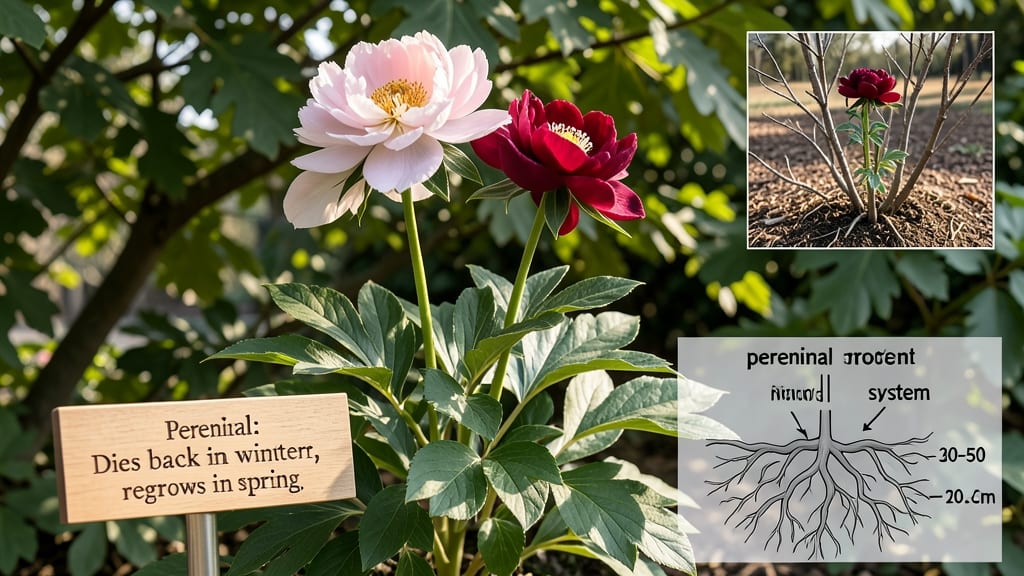
What does perennial mean? It refers to plants that live for three or more years, using the same root system to regrow each season instead of dying back completely. These plants store energy underground—through roots, tubers, or rhizomes—to survive winter dormancy and bounce back stronger every spring.
Perennials thrive because their underground structures act like natural batteries, storing starches and sugars to fuel regrowth. 🌱 Unlike annuals that complete their life cycle in one season, perennials focus energy on expanding roots and foliage over time, making them low-maintenance once established.
This survival strategy explains why many garden staples—like hostas, lavender, and peonies—return year after year with minimal care.
What makes perennials unique is their ability to adapt: some go completely dormant in winter, while others maintain evergreen foliage. This resilience lets them dominate landscapes with minimal replanting. For gardeners, choosing perennials means fewer purchases and more consistent blooms—once you plant them right, they’ll reward you for decades.
💡 In This Article
- How Perennial Plants Survive Winter Underground
- Best Perennial Plants for Cold Climates and Gardens
How perennial plants survive winter underground
The secret to perennial plants' survival lies in their ability to store energy in specialized underground structures. Unlike annuals that complete their life cycle in a single season, perennials invest energy into expanding their root systems, bulbs, tubers, or rhizomes.
These structures act as natural storage units, converting sunlight into starches and sugars during the growing season. For example, a peony's thick roots can store enough energy to fuel a 6-foot-tall plant each spring, even after enduring -20°F winters.
Rhizomes—horizontal underground stems like those in ginger or iris—contain growth nodes that can sprout new shoots when conditions improve. Tubers, such as those in dahlias or potatoes, store nutrients in swollen stems, while bulbs like tulips concentrate energy in modified leaves.
The key mechanism is dormancy: perennials slow their metabolism, reducing water loss and preventing frost damage. Some even produce antifreeze proteins that lower their cellular freezing point by 5-10°F, a trick learned through millennia of evolution in harsh climates.
Contrast this with annuals, which prioritize seed production over survival. A sunflower, for instance, directs all its energy into growing seeds before dying—it has no underground reserves. Biennials, like carrots, split their energy between root storage and flowering over two years.
Perennials, however, balance growth and storage, creating a self-sustaining cycle. This is why established perennials often outcompete annuals: they've already built an energy reserve while their neighbors are starting from scratch every year.
Seasonal triggers also play a role. Many perennials need a period of cold (4-8 weeks below 40°F) to break dormancy—a process called vernalization. Without this chilling period, some plants may remain dormant or produce weak growth.
Gardeners in warm climates sometimes mimic this by refrigerating bulbs for 6-8 weeks before planting. The timing of regrowth is equally precise: once soil temperatures reach 50-55°F, stored sugars convert into sugars and proteins that fuel new shoots.
Consider the contrast between a hosta (a shade-loving perennial) and a marigold (an annual). The hosta's fibrous roots spread 1-2 feet deep, while the marigold's roots barely reach 6 inches.
When winter arrives, the hosta's roots remain active just enough to maintain cellular integrity, while the marigold's entire structure dies back. This underground persistence is why perennials dominate landscapes with minimal replanting—once established, they've already won the energy storage game.
Even the texture of perennial foliage reflects this strategy. Many perennials, like lavender or Russian sage, have thick, leathery leaves that reduce water loss during dormancy. Others, like heuchera, develop vibrant fall colors as they prepare for winter, a visual cue that their energy reserves are being mobilized.
This dual-purpose approach—storage and adaptation—explains why perennials thrive in gardens with minimal intervention once their root systems are established.