
Planting
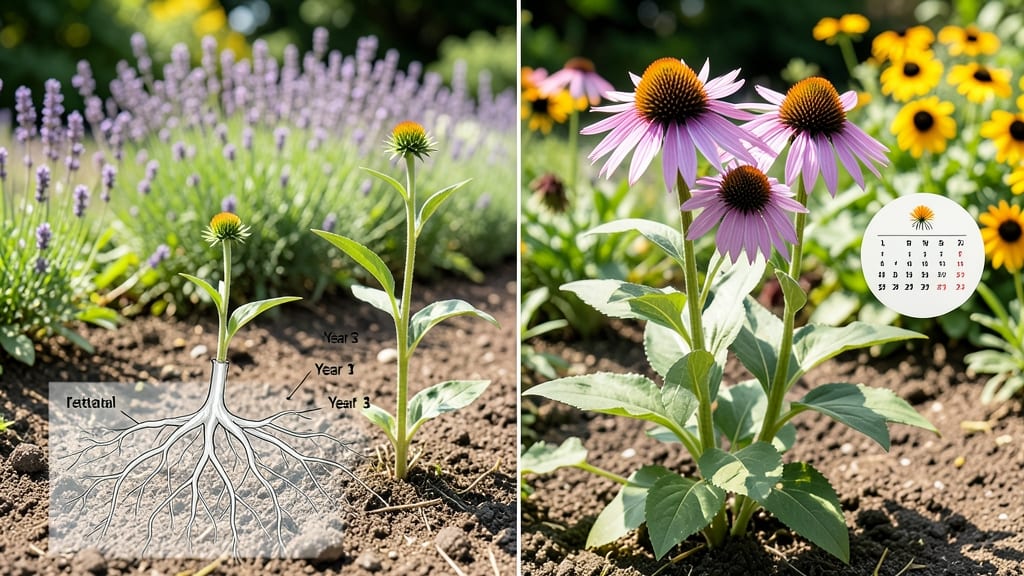
Perennial plants are characterized by living for multiple years, typically regrowing from roots or underground stems each season, and often exhibiting seasonal dieback above ground while remaining dormant or semi-dormant underground.
A perennial plant's defining trait is its ability to return year after year, unlike annuals that complete their life cycle in one season. 🌱 Their survival strategy relies on specialized underground structures like rhizomes (e.g., ginger) or bulbs (e.g., tulips) that store nutrients and energy during harsh conditions.
This adaptation allows them to push through soil and regrow foliage when temperatures rise, often with minimal care once established. Many gardeners favor perennials for their long-term beauty and reduced replanting needs compared to seasonal flowers.
What sets them apart from annuals or biennials is their consistent presence in the garden ecosystem. While annuals like marigolds bloom spectacularly then fade, perennials like coneflowers or black-eyed Susans develop deeper root systems each year, making them more resilient to drought and pests.
This longevity also means they often require less frequent division or replacement, saving both time and resources for garden maintenance.
💡 In This Article
- How Perennial Plants Survive Through Seasons
- Identifying Perennials vs. Annuals and Biennials in Your Garden
How perennial plants survive through seasons
The secret to a perennial's survival lies in its specialized underground storage systems. Unlike annuals that complete their life cycle in one season, perennials rely on structures like rhizomes (horizontal stems), tubers (thickened roots), or bulbs (modified leaves) to store carbohydrates and nutrients.
For example, a daylily rhizome can store enough energy to regenerate an entire plant each spring after winter dormancy. These structures act like natural batteries, converting sunlight into stored sugars during the growing season.
Temperature adaptation is where perennials truly shine. Many species trigger dormancy when temperatures drop below 40°F, slowing metabolic processes to conserve energy. Some perennials, like peony roots, can survive temperatures as low as -30°F thanks to antifreeze proteins that prevent ice crystal formation in their cells.
This biological mechanism allows them to remain viable underground while above-ground foliage dies back completely. The key difference from annuals is that perennials maintain living tissue in their storage organs throughout winter.
Water management plays a crucial role too. Perennials develop deep root systems that can reach 3-5 feet underground, accessing moisture during dry periods. Hostas, for instance, store water in their thick leaves and rhizomes, allowing them to survive brief droughts.
This contrasts with annuals that must complete their entire life cycle within a single growing season when water is available. The perennial's ability to store both water and nutrients makes them far more resilient to environmental fluctuations.
What most gardeners don't realize is how perennials strategically time their growth. Many species like lavender use a "bud dormancy" strategy where they keep their growth points protected underground while developing new shoots from lateral buds.
This allows them to regrow quickly once temperatures stabilize in spring. The trade-off is that some perennials require 2-3 years to reach full maturity, explaining why they might not flower immediately after planting.
Seasonal dieback isn't a sign of death—it's part of the survival strategy. Plants like shrubby St. John's wort completely shed their foliage in winter but maintain living tissue in their woody stems.
This semi-dormant state allows them to resume growth as soon as temperatures rise above 50°F. The energy stored in these structures powers rapid regrowth, often within 2-4 weeks of spring's arrival.
Consider how asparagus crowns demonstrate this perfectly. Each year, the crown produces new shoots from its underground rhizome system while maintaining the previous year's growth points. This layered growth pattern allows asparagus to produce harvestable spears for 15-20 years with proper care.
The ability to maintain multiple growth layers is what truly distinguishes perennials from their shorter-lived counterparts.