
Plants
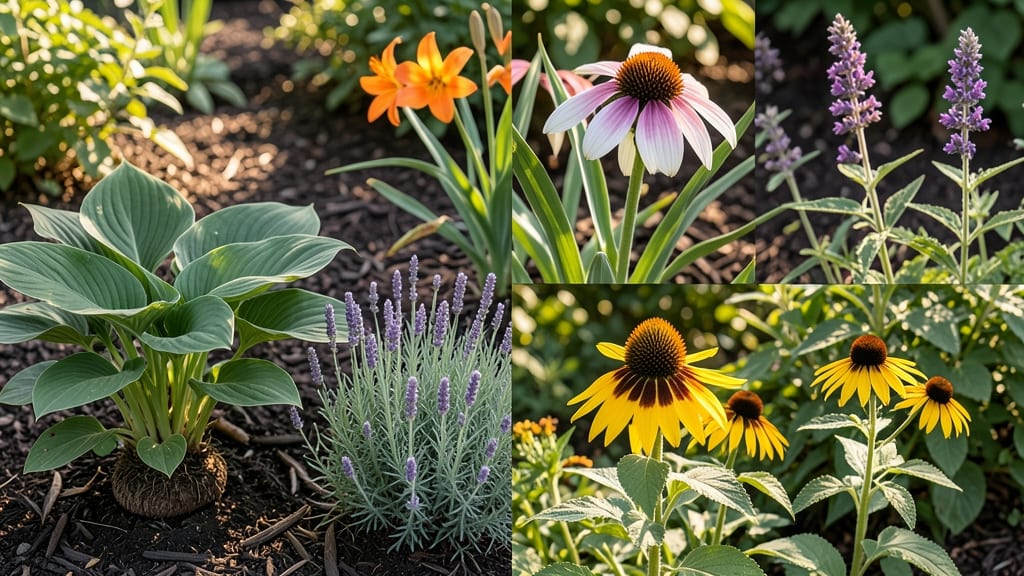
Perennials are plants that regrow year after year from the same root system, blooming seasonally while surviving winter dormancy. Unlike annuals, they return stronger each spring with proper care and soil conditions.
Perennials are the backbone of any garden because they establish strong root systems that store energy underground, allowing them to push through soil and bloom again after winter. 🌱 Unlike annuals that complete their life cycle in one season, perennials like coneflowers or lavender develop deeper roots each year, making them hardier and more resilient.
This means less replanting for you—once established, they can thrive for years with minimal effort, though they do need proper soil prep and occasional division to prevent overcrowding.
What sets perennials apart is their ability to adapt to seasonal changes. Many store nutrients in their roots during the growing season, then use those reserves to regrow leaves and flowers when conditions improve.
This biological trick explains why perennials often outperform annuals in drought-prone areas or colder climates—once they've built up their root systems, they're far more self-sufficient.
💡 In This Article
- How Perennial Plants Survive Winter Dormancy
- Best Perennial Plants for Beginners and Seasonal Gardens
How perennial plants survive winter dormancy
Perennials endure winter through a clever biological process called dormancy, where their metabolic activity slows dramatically to conserve energy. Unlike annuals that die completely, perennials like peonies and hostas store carbohydrates in their roots as starches—think of it as nature's version of a winter food reserve.
These roots can contain up to 30-40% starch by dry weight during peak growing seasons, providing the fuel needed to regrow in spring.
The key to their survival lies in their cambium layer, a growth tissue that remains active year-round in perennials. This layer produces new cells that protect the plant's core from freezing temperatures, often down to -20°F (-29°C) for hardy varieties.
Some perennials, like Russian sage, even produce antifreeze-like proteins that prevent ice crystals from forming in their cells, a trait they share with certain cold-hardy animals. 🌿
Another survival strategy involves their aboveground growth pattern. Many perennials die back completely in winter, but their roots remain alive just below the frost line.
For example, black-eyed Susans might lose all their foliage, yet their roots store enough energy to produce new shoots within 2-3 weeks of spring's arrival. This delayed regrowth allows them to take advantage of early-season sunlight before annuals even sprout.
Soil conditions play a crucial role too. Well-draining soil prevents root rot during winter thaws, while organic matter improves moisture retention. Mulching with 3-4 inches of straw or leaves adds insulation, protecting roots from extreme temperature fluctuations.
Without this protection, perennials risk freeze-thaw damage, where water expands in root cells during freezing, causing irreversible cell rupture.
What's fascinating is how perennials "know" when to wake up. They use a combination of temperature cues (like consistent 40°F (4°C) soil temps) and day length changes to trigger regrowth.
This built-in timing mechanism explains why perennials often bloom earlier than annuals each spring—a survival advantage that gives them a head start on pollinators.
Consider the case of daylilies, which can survive -30°F (-34°C) winters. Their thick, fleshy roots store enough energy to produce multiple flower stalks each season, while their above-ground stems die back completely.
This dual strategy—underground storage + above-ground dormancy—is why perennials dominate landscapes from Zone 3 to Zone 10 with minimal intervention.