
Shrubs
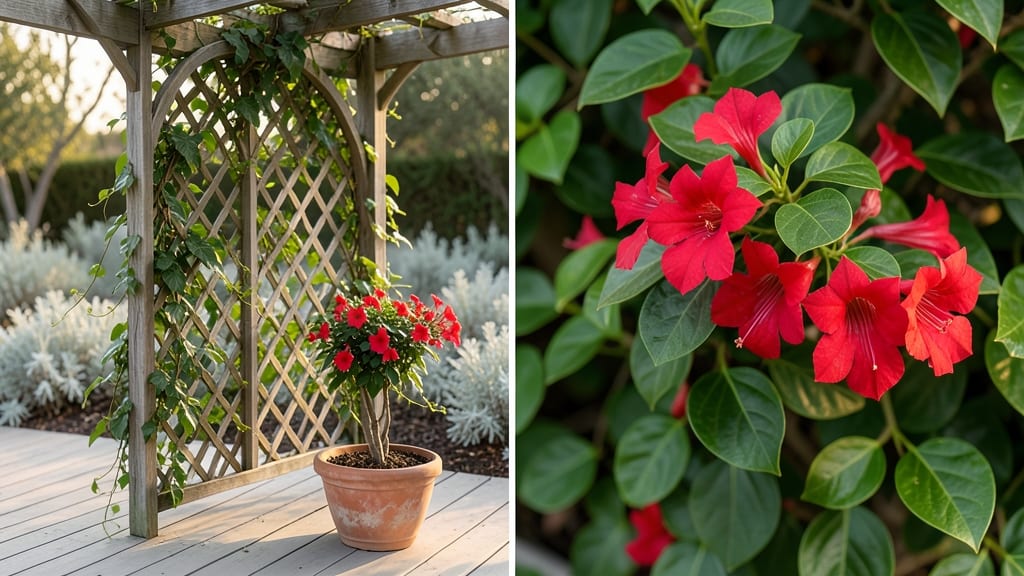
Determining whether red mandevilla is annual or perennial depends on your climate: it thrives as a perennial in frost-free zones (USDA 10-12), but dies back annually in cooler regions and requires overwintering care to survive. Its tropical origins mean cold sensitivity, though some varieties tolerate microclimates with protection.
Red mandevilla's behavior shifts dramatically with temperature. In warm climates where winter temps rarely dip below 30°F, it grows as a perennial shrub, returning each year with vibrant blooms.
However, in cooler zones (USDA 7-9), it behaves like an annual—dying back to the ground when frost hits. 🌡️ The key difference lies in its tropical roots: while some gardeners report success with mulching or microclimates, most varieties need protection or indoor overwintering to persist.
This makes it a rewarding plant for patient gardeners willing to adapt care routines seasonally.
What's interesting is how this plant's growth cycle mirrors its natural habitat. Native to South America, red mandevilla evolved in warm, humid environments where cold simply doesn't exist. That's why even a light frost can cause irreversible damage to stems and leaves.
The good news? With proper care, you can coax it back to life each spring—making the annual/perennial distinction more about climate management than the plant itself.
💡 In This Article
- Red Mandevilla’s Lifespan: Tropical Roots vs. Cold Zones
- Overwintering Red Mandevilla: Zone-Specific Survival Tips
Red mandevilla’s lifespan: tropical roots vs. cold zones
Red mandevilla's biological classification as a perennial stems from its natural tropical habitat in South America, where consistent warmth and humidity create ideal growing conditions. In its native environment, temperatures rarely drop below 60°F, allowing the plant to grow continuously throughout the year.
This tropical adaptation explains why it thrives as a true perennial in frost-free zones like USDA 10-12, where winter temperatures stay above 30°F. The plant's woody stems and robust root system are designed to support perennial growth in these stable climates.
The critical factor determining whether red mandevilla behaves as an annual or perennial is temperature sensitivity. When exposed to temperatures below 32°F, the plant's cells begin to freeze, causing irreversible damage to stems and leaves.
This cold sensitivity triggers dormancy in cooler climates, but unlike true cold-hardy perennials, red mandevilla lacks the biological mechanisms to survive prolonged freezing. 🌡️ The plant's tropical DNA means it simply wasn't evolutionarily equipped to handle frost, which explains why it dies back completely in zones 7-9 without protection.
What makes this plant particularly fascinating is how its growth cycle responds to seasonal changes. In cooler climates, red mandevilla will produce lush foliage and vibrant red blooms during the growing season, but when temperatures dip, the entire above-ground portion will blacken and collapse.
Unlike some perennials that enter true dormancy, red mandevilla undergoes what botanists call "seasonal dieback"—a complete shutdown of all aerial growth. This biological response is why gardeners in marginal zones must treat it as an annual unless they implement overwintering strategies.
The plant's cold sensitivity extends beyond just the visible stems. Even the root system, while more resilient, can suffer damage if exposed to prolonged cold. This is why successful overwintering requires careful handling of both the roots and any remaining stems.
The key difference between annual and perennial behavior lies in this temperature threshold: in warm zones, the plant remains active year-round, while in cooler areas, it must be protected or dug up to survive the winter months.
Consider this biological reality when planning your garden: red mandevilla's tropical origins mean it will never be truly cold-hardy like native perennials in your region. However, its dramatic seasonal transformation—from vibrant summer blooms to complete winter dieback—makes it a stunning seasonal performer for those willing to adapt their growing strategies.
The plant's ability to regrow vigorously from roots each spring demonstrates its resilience when given the right conditions.
For gardeners in transitional zones (USDA 9-10), the plant's behavior can be particularly interesting. Here, red mandevilla might survive mild winters with some protection, like thick mulch or microclimate benefits from walls or large rocks that absorb and radiate heat.
This partial hardiness creates a gray area where the plant might behave as a short-lived perennial, but true reliability requires more active management. 💫