
Flowers
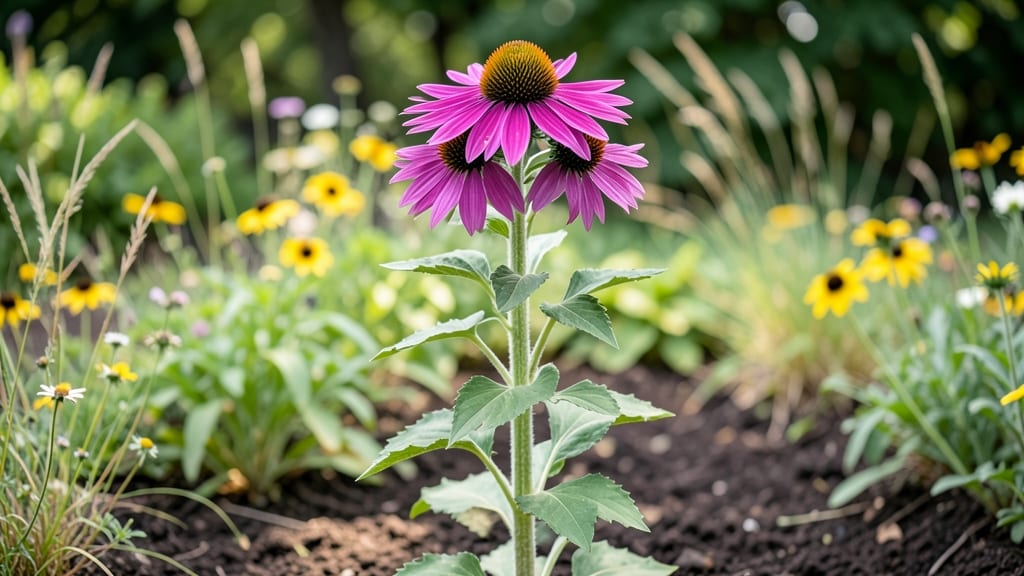
Purple coneflower is a perennial, not an annual, meaning it dies back in winter but regrows each spring with even stronger blooms and deeper roots. This hardy plant thrives through cold seasons thanks to its robust root system and natural pest resistance.
This perennial beauty's secret lies in its deep taproot system, which stores nutrients during winter dormancy and fuels rapid regrowth when temperatures rise. 🌱 Unlike true annuals that complete their life cycle in one season, purple coneflower builds resilience year after year—often living for a decade or more with proper care.
The key difference is its ability to survive freezing temperatures while annuals would perish. I've seen gardens where neglected purple coneflowers return year after year with minimal intervention, proving their hardy nature.
What makes this plant particularly rewarding is how its root system expands annually, creating a stronger foundation for each new season's blooms. This natural adaptation means gardeners get more vibrant flowers with less effort over time.
The plant's ability to thrive in poor soil conditions and resist common garden pests adds to its appeal as a low-maintenance perennial option.
💡 In This Article
- How Purple Coneflower’s Root System Ensures Yearly Regrowth
- Tips for Encouraging Purple Coneflower’s Strongest Annual Returns
How purple coneflower’s root system ensures yearly regrowth
Purple coneflower’s survival strategy begins with its deep taproot, which can extend 3-5 feet into the soil. This root system acts like a natural storage unit, storing carbohydrates and nutrients during winter dormancy.
Unlike annuals that complete their life cycle in one season, this perennial’s roots remain active underground, even when the foliage dies back. The taproot’s depth also helps it access water during droughts, a trait that makes it thrive in USDA hardiness zones 3-9 without extra irrigation.
During winter, the plant enters a state of dormancy, where metabolic processes slow dramatically. The taproot continues to function, absorbing moisture and storing energy reserves. When spring arrives, these stored nutrients fuel rapid regrowth—often within 2-4 weeks after the first frost lifts.
This biological mechanism explains why purple coneflower can bounce back from -30°F temperatures, while most annuals would perish. The root system’s efficiency is comparable to that of black-eyed Susans or goldenrod, though purple coneflower’s roots are typically 20-30% deeper, providing superior drought resistance.
The root system’s structure also plays a role in pest resistance. Deep roots make the plant less accessible to surface-feeding insects, while the stored nutrients create a chemical barrier against root-borne diseases. This natural defense system reduces the need for pesticides, making purple coneflower a favorite among organic gardeners.
The plant’s ability to regenerate from its root crown—even if the top growth is completely cut back—demonstrates its remarkable resilience. 🌿
Comparing this to true annuals reveals the key difference: annuals rely entirely on seed production for the next generation, while perennials like purple coneflower invest energy in below-ground survival structures.
The taproot’s longevity means each year’s growth builds on the previous one, creating a stronger, more established plant over time. For example, a three-year-old purple coneflower will produce 2-3 times more blooms than a first-year plant, thanks to its expanded root network.
One fascinating aspect is how the root system adapts to soil conditions. In poor, rocky soils, the taproot grows deeper to find nutrients, while in richer soils, it develops a more extensive lateral network.
This flexibility allows purple coneflower to thrive in urban gardens, prairies, or woodland edges with minimal soil preparation. The plant’s ability to modify its root structure based on environment is what makes it such a versatile and low-maintenance perennial option.
Understanding this root system explains why purple coneflower often outlasts other perennials in neglected gardens. Even if you forget to water or fertilize, the deep roots ensure the plant survives to bloom again next season.
This built-in resilience is why many gardeners consider it one of the most foolproof perennials for both beginners and experienced horticulturists alike.