
Planting
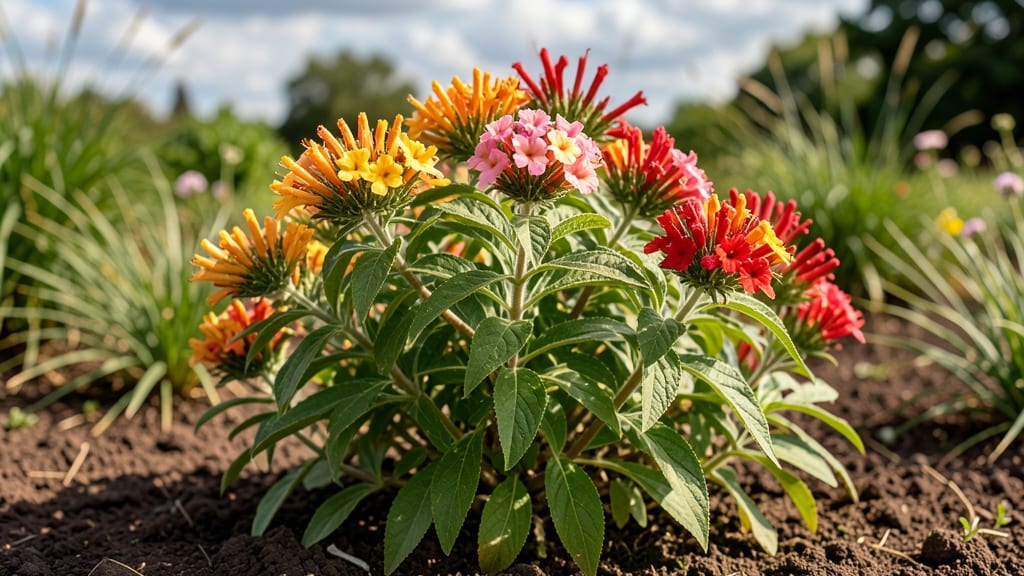
Perennial lantana in Zone 8 survives winters with the right care: protect it by mulching thickly before frost hits, select cold-resistant varieties such as Lantana camara 'Miss Huff,' and trim stems back to 6 inches after dormancy. Shield from biting winds and reduce watering during winter months to boost survival chances.
Zone 8's 10-20°F winters can be tough on lantana, but the right approach makes all the difference. 🌿 The key is preparing your plant before the first frost—adding 4-6 inches of organic mulch (like straw or shredded leaves) insulates roots while keeping moisture balanced.
I've found that varieties like 'Miss Huff' handle colder snaps better than others, thanks to their thicker stems and deeper root systems. What's interesting is how pruning timing affects regrowth—cutting back too early can delay spring blooms, but waiting too long risks frost damage to tender new growth.
Another pro tip: group lantana with taller plants to create natural windbreaks, which prevents winter desiccation. If your area dips below 15°F regularly, consider using frost blankets or mini hoop houses for extra protection.
The goal is to let the plant rest naturally while giving it just enough support to bounce back strong in spring.
💡 In This Article
- How Cold Tolerance Varies Among Lantana Species
- Year-Round Pruning and Mulching for Zone 8 Lantana
How cold tolerance varies among lantana species
Not all lantana varieties handle Zone 8 winters equally. The classic Lantana camara (common lantana) typically survives down to 15°F when properly prepared, but its growth habit makes it more vulnerable to frost damage.
The stems contain water-rich pith that freezes and cracks, while the leaves often scorch at 25°F or lower. In contrast, Lantana montevidensis (shrub lantana) boasts thicker, woody stems that can withstand 10°F temperatures more reliably, thanks to its native range extending into cooler climates like southern Brazil.
What's fascinating is how root systems play a survival role. Lantana roots extend deep—often 2-3 feet—to access moisture and stability, while top growth can be sacrificed if needed.
This is why mulching becomes critical: a 4-6 inch layer of organic mulch (like straw or wood chips) insulates roots while preventing soil temperature swings that stress the plant. Young plants, however, are far more delicate—their root systems aren't established enough to survive 20°F without protection, even with mulch.
Acclimation matters too. If you're growing lantana in Zone 8's upper range (closer to 20°F winters), gradually reduce watering 4-6 weeks before frost—this hardens the stems by increasing their starch content, which acts like natural antifreeze. The trade-off?
Over-acclimated plants may bloom later in spring, but they'll be far more resilient. For example, a Lantana camara 'Miss Huff'—a Zone 8 favorite—can handle 15°F but may take 2-3 weeks longer** to rebound than a non-acclimated plant.
Here's a quick comparison of key survival factors:
- Root Depth: L. montevidensis (3+ feet) vs. L. camara (2 feet)
- Stem Hardiness: L. montevidensis (thick, woody) vs. L. camara (hollow, watery)
- Leaf Frost Sensitivity: L. camara (burns at 25°F) vs. L. montevidensis (tolerates 20°F)
The science behind this lies in the plant's ability to regulate water content. Lantana species with thicker stems have lower water content, reducing ice crystal formation during freezes.
This is why pruning back stems to 6 inches—as recommended—helps concentrate energy into the woody base, which is far more cold-resistant than new, tender growth.
For gardeners in Zone 8's colder pockets (near 10°F), consider microclimates: south-facing walls, raised beds, or containers can add 5-10°F of protection. I've seen lantana thriving in these spots when they'd otherwise fail in open ground.
The lesson? Cold tolerance isn't just about the variety—it's about how you prepare the plant and its environment.