
Flowers
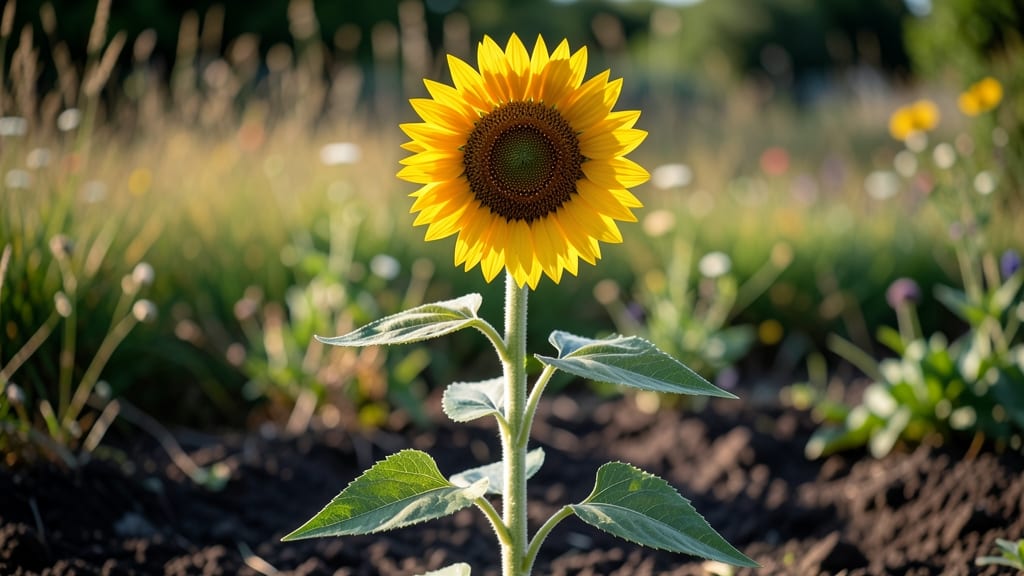
The Mexican sunflower (Tithonia rotundifolia) behaves like a perennial in frost-free climates but is technically an annual because its life cycle resets yearly. Its deep taproot system stores nutrients, allowing it to regrow from the same rootstock when conditions are ideal, though cold snaps will kill it back to the ground each winter.
The Mexican sunflower's lifespan hinges entirely on climate. 🌡️ In regions where temperatures stay above freezing year-round, its robust taproot system lets it regenerate from the same base, creating the illusion of a perennial.
However, in cooler zones, the plant follows its true annual nature—completing its full growth cycle in one season before dying back. This dual behavior makes it a favorite for gardeners in warm climates, where it often self-seeds prolifically, creating naturalized stands of bright orange blooms.
What sets it apart from true perennials like sunflowers (Helianthus annuus) is its inability to survive frost. While its root system stores energy, it lacks the hardy woody stems that perennials use to regrow after winter dormancy.
Instead, Mexican sunflowers rely on warm temperatures to trigger regrowth from the same rootstock, making them more like "pseudo-perennials" in ideal conditions.
💡 In This Article
- How Mexican Sunflower Root Systems Influence Its Lifespan
- Growing Mexican Sunflowers as Annuals vs. Self-Seeding Perennials
How Mexican sunflower root systems influence its lifespan
The Mexican sunflower's lifespan secret lies in its deep taproot system, which can extend 3-5 feet into the soil. This root structure stores carbohydrates and nutrients during its growing season, allowing the plant to regenerate from the same base when conditions are favorable.
Unlike true annuals that die completely after seeding, the Mexican sunflower's root system remains dormant but viable, ready to sprout new growth when temperatures rise above 60°F. This is why it behaves like a perennial in frost-free zones—its rootstock acts as a biological "memory" of the plant's existence.
Botanically, this root system functions similarly to how true perennials like sunflowers (Helianthus annuus) store energy, but with a critical difference: Mexican sunflowers lack the woody stems that allow perennials to survive winter dormancy. Instead, their survival depends entirely on warm soil temperatures to trigger regrowth.
The root's ability to store 15-20% of its annual energy production in starches and sugars explains why it can regenerate so vigorously in ideal climates. 🌱 This stored energy fuels rapid early growth in spring, giving it a competitive edge over true annuals that must start from scratch each season.
Comparing it to Helianthus annuus (common sunflower) highlights this difference: while both have deep taproots, the common sunflower develops a thick, woody crown that survives winter freeze-thaw cycles. The Mexican sunflower's root, though substantial, lacks this protective structure.
This is why a single frost will kill it back to the ground in cooler climates—its root system can't protect the plant's vital tissues from freezing. The trade-off is that in warm zones, this root system makes Mexican sunflowers more resilient than many true annuals during dry periods.
What most gardeners don't realize is that this root system also plays a role in the plant's self-seeding behavior. When the plant completes its annual cycle, it drops thousands of seeds that germinate from the same root zone the following season.
This creates dense stands of Mexican sunflowers that appear perennial-like, though each individual plant technically completes its life cycle annually.
The root system's proximity to the surface (6-12 inches deep) also makes it vulnerable to soil disturbances, which is why careful cultivation is key to maintaining these plants in garden settings.
The plant's ability to regenerate from its rootstock also explains why it thrives in USDA Hardiness Zones 9-11, where winter temperatures rarely drop below 20°F. In these zones, the root system remains active year-round, allowing the plant to produce multiple growth flushes.
The contrast with true perennials becomes clear when you consider that even in these warm climates, Mexican sunflowers won't survive a prolonged freeze—their root system simply can't protect against temperatures below 25°F for extended periods. This biological limitation is what keeps them classified as annuals despite their perennial-like behavior.
Understanding this root system helps explain why Mexican sunflowers often outcompete other annuals in warm climates. Their ability to store and rapidly mobilize nutrients gives them an early-season advantage, allowing them to establish before other plants.
This is particularly noticeable in disturbed soils where their aggressive root system can quickly reclaim space. The trade-off is that in cooler climates, gardeners must treat them strictly as annuals, as the root system won't survive winter without protection. 🌿