
Flowers
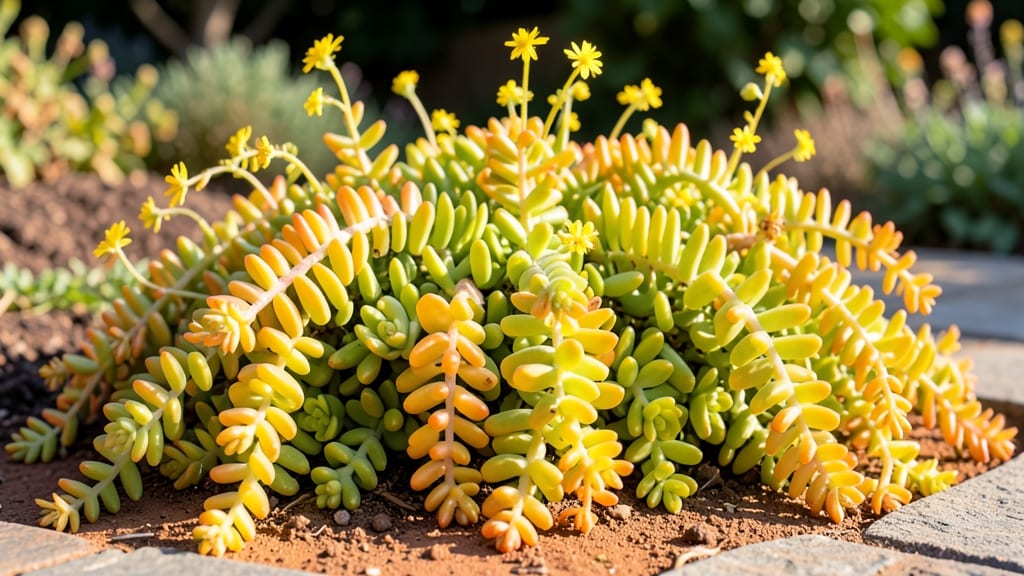
Lemon coral sedum is a perennial, not an annual, plant that returns every year, thanks to its deep root system and ability to store moisture, even in harsh conditions. While it may appear dormant in freezing winters, it regrows from its base once temperatures rise.
This hardy succulent thrives because its thick, fleshy leaves store water like a built-in reservoir, while its extensive roots anchor it against drought and temperature swings. 🌱 Unlike true annuals that complete their lifecycle in a single season, lemon coral sedum enters a survival mode during winter—often losing its foliage but keeping its root structure alive.
This makes it perfect for gardeners who want low-maintenance color without annual replanting.
What sets it apart is its adaptability: it handles everything from full sun to partial shade and tolerates poor, rocky soil where many plants fail. The key to keeping it perennial is providing well-draining soil and minimal winter protection in colder zones (like a light mulch layer).
💡 In This Article
- Why Lemon Coral Sedum Survives as a Perennial Plant
- Caring for Lemon Coral Sedum to Ensure Yearly Regrowth
Why lemon coral sedum survives as a perennial plant
Lemon coral sedum's perennial nature stems from its succulent physiology, where its thick, fleshy leaves act as natural water storage tanks. These leaves contain specialized cells called parenchyma, which swell to hold moisture during dry periods—similar to how a camel stores fat in its hump.
This adaptation allows the plant to survive droughts that would kill most garden plants, often thriving with just 1-2 inches of rainfall per month once established.
The plant's deep taproot system extends 12-18 inches below the surface, accessing groundwater that shallow-rooted annuals can't reach. This root structure also provides stability against wind and temperature fluctuations.
Unlike annuals that complete their lifecycle in one season, lemon coral sedum enters a dormancy phase during winter, where metabolic processes slow dramatically to conserve energy. Its roots remain alive even when above-ground growth dies back in freezing temperatures (15°F or colder).
Temperature tolerance is another key factor. Lemon coral sedum handles heat waves up to 100°F+ by closing its stomata (pores) to prevent water loss, while its waxy leaf coating reflects excess sunlight.
In winter, its cold-hardiness varies by cultivar—most varieties survive down to Zone 3-4 (-30°F to -40°F) with proper care, though growth may pause until spring warmth triggers regrowth from the root crown.
This seasonal adaptation contrasts sharply with annuals, which must complete flowering and seed production within a single growing season.
What makes it truly resilient is its regenerative ability. Even if the plant appears dead after a harsh winter, the root system often remains viable.
When temperatures rise above 50°F, new shoots emerge from the base within 2-4 weeks, demonstrating why it's classified as a hardy perennial rather than an annual. This regrowth capability is tied to its meristematic tissue—undifferentiated cells that can differentiate into new growth when conditions improve.
For comparison, consider how annuals like marigolds or zinnias rely entirely on seasonal growth and seed production. They have no persistent root structure to regenerate, so each plant must complete its lifecycle in one season.
Lemon coral sedum's survival strategy—combining water storage, deep roots, and temperature adaptation—explains why it returns year after year with minimal intervention, making it the ultimate low-maintenance garden workhorse.