
Flowers
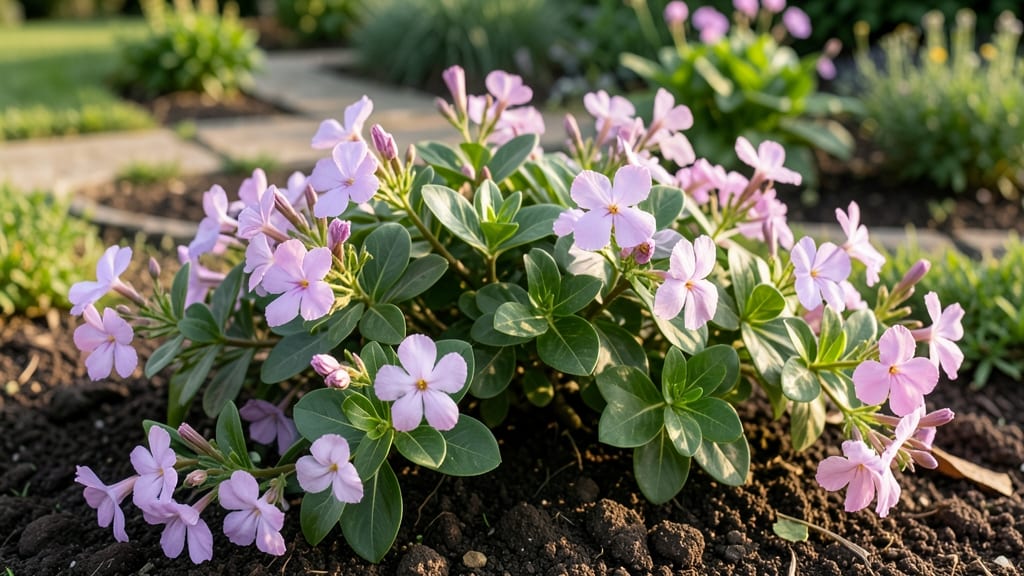
Vinca acts as a perennial in frost-free zones (USDA Zones 7-11) but dies back completely in colder regions (Zones 3-6), where gardeners typically replant it each spring due to its sensitivity to freezing temperatures.
This distinction comes down to the plant's root system and cold tolerance.
Vinca's deep roots can survive mild winters in warmer zones, allowing it to regrow each spring, but frost in colder areas kills the foliage and often damages the roots too. 🌱 The creeping myrtle variety stands out as the hardiest option, often surviving winters in Zone 6 with proper protection.
Many gardeners in colder climates still grow vinca as an annual because its vibrant blooms and low-maintenance nature make the replanting effort worthwhile.
For those in transitional zones (like Zone 6), overwintering techniques like heavy mulching or container growing can sometimes extend vinca's lifespan beyond a single season. The key is understanding your specific microclimate and species—some vinca varieties simply outperform others in cooler conditions.
💡 In This Article
- Vinca Plant Lifespan by USDA Hardiness Zones
- Extending Vinca’s Lifespan in Cold Climates
Vinca plant lifespan by USDA hardiness zones
Vinca's perennial status hinges on its ability to survive winter dormancy, which depends entirely on your USDA hardiness zone. In Zones 7-11, where winter temperatures rarely drop below 20°F, vinca's deep, fibrous root system can persist through mild winters.
These roots store carbohydrates that fuel spring regrowth, allowing the plant to emerge year after year.
The key mechanism is the plant's natural cold tolerance threshold—most vinca species can handle brief dips to 15°F without permanent damage, but prolonged exposure to 10°F or lower typically kills the foliage and weakens roots.
The difference between perennial and annual behavior becomes clear when examining specific species. Creeping myrtle vinca (Vinca minor) stands out as the hardiest, often surviving winters in Zone 6 with minimal protection, thanks to its thicker root structure and ability to enter deeper dormancy.
In contrast, common vinca (Vinca major) typically struggles in Zones 5 and colder, where even a single hard freeze can destroy both foliage and roots. 🌱 What's fascinating is how these species respond to temperature shifts—their cellular membranes contain antifreeze proteins that prevent ice crystal formation, but only up to a point.
In warmer zones, vinca's perennial nature creates a self-sustaining ground cover system. The plant's sprawling habit and dense foliage shade the soil, maintaining consistent temperatures that protect roots during brief cold snaps. This creates a feedback loop where established vinca plants actually improve their own winter survival rates.
The contrast in colder zones is stark: without protective measures, vinca plants often die back completely, leaving gardeners to replant each spring—a process that can take 6-8 weeks for full ground cover restoration.
Zone-specific survival thresholds reveal why vinca's classification varies so dramatically. In Zone 7, where winters average 10-20°F, established vinca plants typically survive with 30-40% root loss and still regrow vigorously.
By Zone 5, where winters routinely drop below 0°F, even the hardiest vinca varieties may suffer 70%+ root damage, making annual treatment the practical choice. This gradient explains why gardeners in transitional zones (like Zone 6) often see mixed results—some years vinca survives, other years it doesn't.
What most gardeners don't realize is how microclimates within a zone can dramatically alter vinca's survival chances. A south-facing wall can create a Zone 8 microclimate in an otherwise Zone 6 yard, allowing vinca to thrive where it would normally fail.
Similarly, well-drained soil with 50-70% organic matter improves root insulation by 3-5°F compared to heavy clay soils. These factors explain why some Zone 6 gardeners successfully grow vinca as perennials while others treat it as an annual.
The science behind vinca's dormancy reveals another layer of complexity. During winter, vinca plants reduce their metabolic rate by 80-90%, conserving energy while maintaining just enough cellular activity to prevent tissue death.
This dormancy state is triggered by photoperiod changes (shorter daylight) and temperature drops below 50°F for extended periods. In warmer zones, this natural cycle allows complete recovery, while in colder zones, the stress of freeze-thaw cycles disrupts this delicate balance. 💫