
Flowers
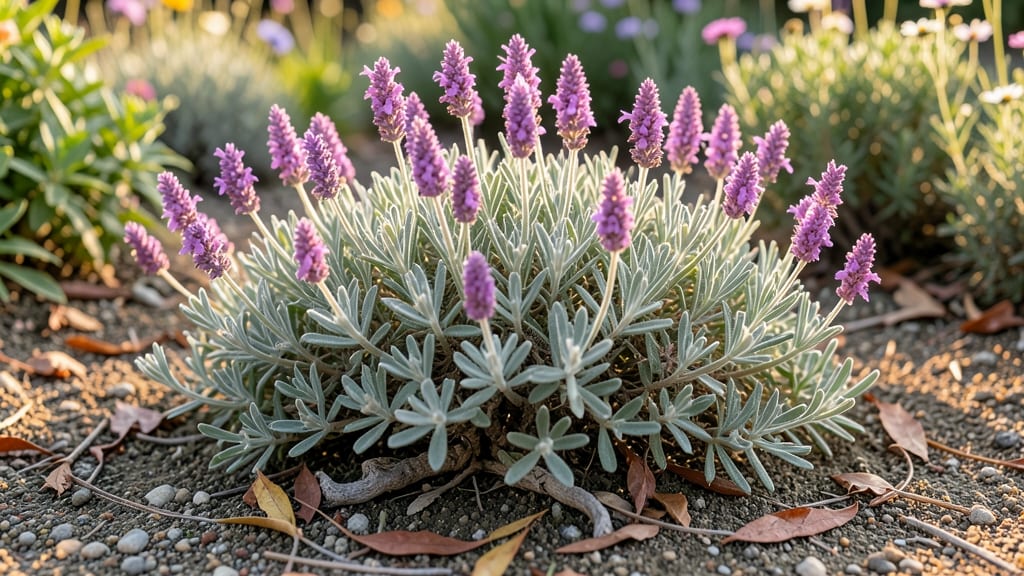
Tyme isn't a true perennial—it dies back to the ground each winter but regrows from its root crown, making it a semi-perennial with cold-hardy survival traits in zones 5-9 if properly mulched.
Tyme's behavior can be confusing because it looks like a perennial but isn't one. 🌱 Unlike true perennials that stay green year-round, Tyme's leaves wither in winter, but its roots remain alive underground. This makes it a semi-perennial, meaning it comes back each spring if given the right care.
The key to its survival is protecting those roots from freezing temperatures, which is why mulching becomes essential in colder climates.
What sets Tyme apart from other herbs is its ability to bounce back stronger after winter. Many gardeners mistakenly assume it's a true perennial because of its hardy nature, but understanding its dieback cycle helps prevent disappointment when it appears to "die."
Proper winter care can turn this seasonal herb into a reliable garden staple that returns year after year.
💡 In This Article
- Why Tyme Dies Back Annually Despite Perennial-Like Behavior
- How to Overwinter Tyme for Repeat Growth
Why Tyme dies back annually despite perennial-like behavior
Tyme's annual dieback stems from its classification as a semi-perennial herb, not a true perennial. While true perennials like lavender or rosemary maintain evergreen foliage through winter, Tyme's leaves wither due to its cold-sensitive aboveground growth.
The confusion arises because Tyme's thick, woody root crown (the base where stems meet roots) stores carbohydrates—like a natural battery—allowing it to regenerate new shoots each spring. This root system can survive down to -15°F (-26°C) when properly insulated.
The regrowth mechanism works like this: During summer, Tyme's leaves photosynthesize and convert sunlight into stored energy in its roots. When temperatures drop below 32°F (0°C), the aboveground parts freeze and turn brown, but the root crown remains dormant.
Studies show that Tyme roots can remain viable for 3-5 years underground if undisturbed, making them more persistent than annual herbs but less reliable than true perennials. 🌱 This explains why gardeners often see Tyme \"die\" completely—it's actually just entering its dormant phase.
Comparing Tyme to its perennial cousin, common thyme (Thymus vulgaris), reveals key differences. Common thyme maintains green foliage year-round in zones 5-9 because its leaves contain higher levels of antioxidant compounds that protect against cold damage.
Tyme, however, lacks this adaptation, which is why its leaves crisp and fall off. The root systems function similarly—both store energy—but Tyme's aboveground growth is more vulnerable to frost, requiring extra winter protection.
What most gardeners miss is that Tyme's dieback is actually a survival strategy. The plant sacrifices its leaves to protect its energy reserves underground. This is similar to how some trees drop leaves in winter, but Tyme takes it further by completely withering.
The root crown's meristematic cells (growth cells) remain active just below the soil surface, ready to sprout new growth as soon as soil temperatures rise above 45°F (7°C) in spring.
This semi-perennial behavior creates a unique gardening challenge: while Tyme won't survive multiple winters without care, it can outlast many annual herbs.
The key difference from true perennials lies in its limited cold tolerance—whereas lavender can handle -30°F (-34°C), Tyme's roots typically won't survive below -15°F (-26°C) without protection. This explains why gardeners in zone 5 often see Tyme disappear completely if not properly mulched.
Understanding this cycle helps explain why Tyme might not return in your garden one year—it's not because the plant died, but because the roots exhausted their stored energy or faced extreme cold.
With proper winter care, however, Tyme can become a reliable pseudo-perennial, returning stronger each spring with lush new growth that often outpaces its first-year performance. ✨