
Flowers
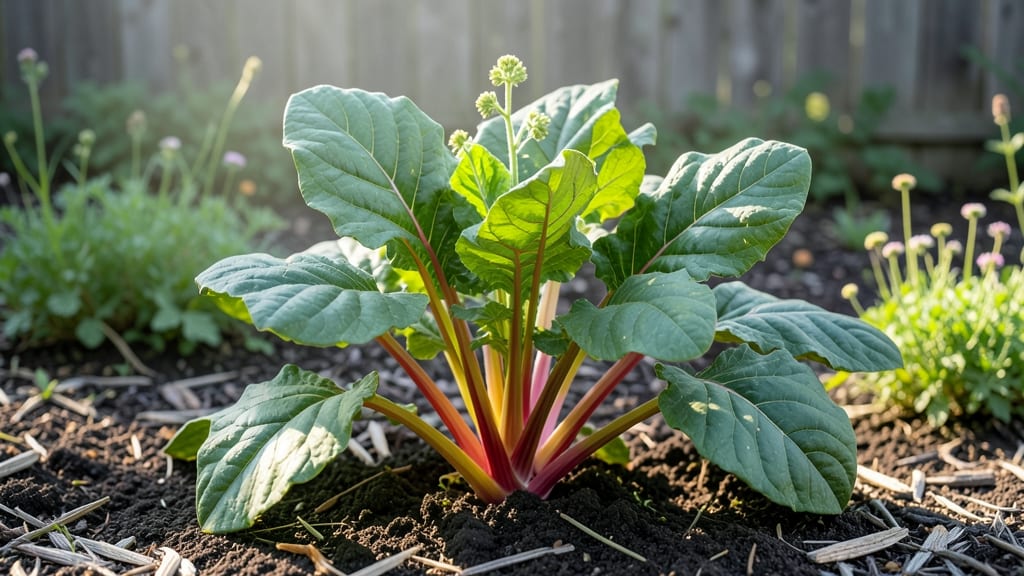
Swiss chard behaves as a perennial in frost-tolerant USDA zones 5-10, returning year after year with proper winter care, though it's often treated as an annual in colder climates where frost kills it back to the ground.
This leafy green's hardiness comes from its deep roots and cold tolerance, letting it survive light frosts down to 15°F. 🌱 Unlike true perennials that regrow from the same crown, Swiss chard often sends up new shoots in spring from its base, making it semi-perennial in ideal conditions.
Gardeners in colder zones can still extend its life by using thick mulch or row covers—this prevents soil heaving and protects tender growth during winter's harshest months.
What sets Swiss chard apart is its biennial lifecycle: it produces leaves in its first year and flowers in the second. In mild winters, you'll see it bolt less aggressively, giving you multiple harvests.
For best results, plant in well-draining soil and avoid over-fertilizing with nitrogen, which can make it too tender for cold snaps.
💡 In This Article
- Swiss Chard’s Perennial Nature: Growth Habits and Zone Hardiness
- Extending Swiss Chard’s Lifespan: Winter Care Tips for Gardeners
Swiss chard’s perennial nature: growth habits and zone hardiness
Swiss chard’s ability to persist through seasons stems from its deep taproot system, which can extend 12-18 inches into the soil. This root structure stores nutrients and moisture, allowing the plant to regenerate even after frost damage.
In USDA zones 5-10, where winter temperatures rarely drop below 10°F, Swiss chard behaves like a true perennial—sending up new shoots in spring from its surviving crown.
Unlike true perennials (like asparagus), however, Swiss chard doesn’t regrow from the exact same plant structure; instead, it relies on its root system to produce fresh growth each season.
The plant’s cold tolerance is remarkable: young leaves can withstand 20°F without damage, while established plants handle 15°F with minimal stress.
This hardiness explains why it thrives in coastal climates (like California) or inland regions with mild winters. 🌱 In colder zones (USDA 3-4), Swiss chard typically dies back to the ground but may resprout if protected.
Its biennial lifecycle also plays a role—first-year plants focus on leaf production, while second-year plants shift energy to flowering, a process that accelerates in warmer climates.
Comparing Swiss chard to other cold-hardy greens reveals its unique advantages. Kale (a true perennial in zones 4-9) regrows from a woody base, while spinach (a cool-season annual) bolts quickly in heat.
Swiss chard’s versatility lies in its ability to produce edible leaves and colorful stems year-round, even when other greens fail. The key difference? Swiss chard’s stems act as a food reserve, sustaining the plant through frost and providing energy for spring regrowth.
What most gardeners overlook is how soil temperature affects regrowth. Swiss chard won’t resprout until soil warms to 40°F—colder soils slow root activity. In zones 5-7, this often means waiting until late April or May for new growth.
Mulching with 4-6 inches of straw or leaves in fall can raise soil temperatures by 5-10°F, giving Swiss chard a head start in spring.
For those in marginal zones (USDA 4-5), Swiss chard’s survival hinges on timing. Planting in late summer (instead of spring) gives roots time to establish before winter, improving cold resistance.
The plant’s ability to photosynthesize at temperatures as low as 32°F means it can still produce leaves under snow cover, unlike many other greens.
One common misconception is that Swiss chard’s perennial nature applies equally to all varieties. Bright Lights (with colorful stems) tends to be more cold-tolerant than Fordhook Giant, which prioritizes leaf production over hardiness.
Choosing the right variety for your zone can mean the difference between a reliable perennial and an annual crop.