
Plants
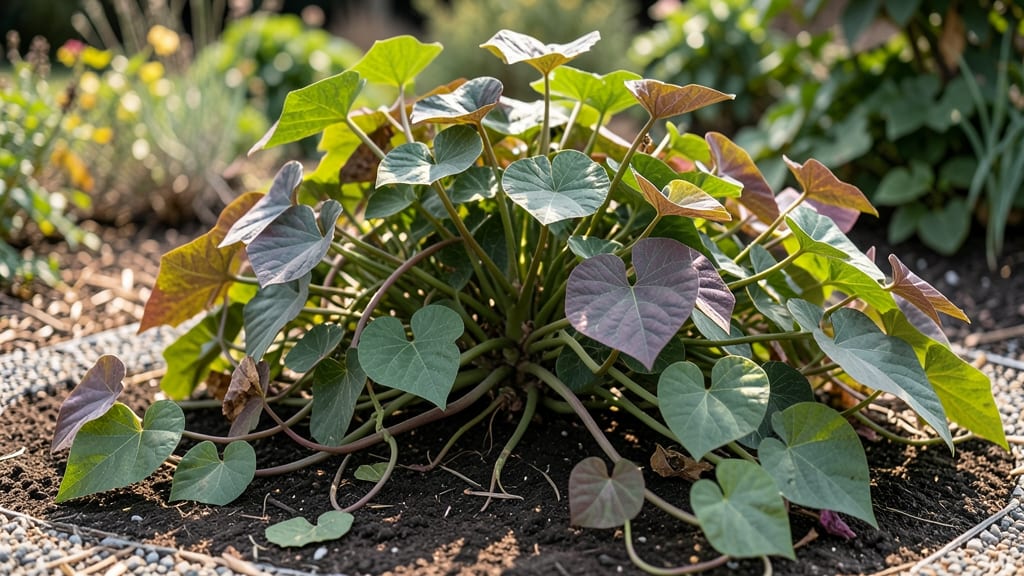
Sweet potato vine is not a true perennial in most climates but behaves as a tender perennial, dying back annually to the ground in frost but often regrowing from rhizomes or roots if conditions are favorable and temperatures stay above freezing.
This plant thrives as an annual in colder regions because its delicate stems can't survive freezing temperatures. 🌱 However, its underground roots often remain dormant and can sprout again when spring warmth returns, making it act like a perennial in milder areas.
The key difference lies in its hardiness—while true perennials like hostas survive winter intact, sweet potato vine relies on its root system to bounce back.
In warmer zones (USDA zones 9-11), sweet potato vine frequently returns year after year without intervention, but gardeners in colder climates (zones 3-8) must take proactive steps to protect it through winter.
The plant's ability to regrow depends heavily on soil conditions and how well the roots are insulated from frost penetration.
💡 In This Article
- Why Sweet Potato Vine Dies Back in Winter
- How to Overwinter Sweet Potato Vine in Cold Climates
Why sweet potato vine dies back in winter
Sweet potato vine's winter dieback stems from its tropical origins—it evolved in warm climates where temperatures rarely drop below 50°F (10°C). When frost hits 32°F (0°C), its above-ground stems and leaves freeze and turn black, a process called "cold-induced necrosis."
This is different from hardy perennials like lavender, which have protective woody stems that survive winter intact. 🌱
The plant's survival strategy relies on its underground rhizomes (thickened roots) that store carbohydrates. These rhizomes can remain dormant through winter if protected from freezing soil. In warmer zones (USDA 9-11), the ground rarely freezes deeply enough to damage them, allowing regrowth when temperatures rise above 60°F (15°C) in spring.
What makes sweet potato vine unique is its "semi-perennial" behavior—it dies back completely but often returns from roots if conditions are right. Unlike true perennials that regrow from their crown, sweet potato vine depends entirely on its root system's vitality.
This is why gardeners in colder zones must take special care to insulate the soil.
Here's how the process works: When temperatures drop below 40°F (4°C), the plant's growth hormones shut down, redirecting energy to root storage. The rhizomes enter a state of dormancy, similar to how sweet potatoes store in cool, dark conditions.
The critical factor is soil temperature—roots can survive 28°F (-2°C) for short periods but die if frozen solid.
In contrast to hardy perennials, sweet potato vine lacks the protective bark or insulating layers. Its stems contain 70-80% water, which freezes and ruptures cell walls when exposed to frost.
This is why even a light freeze can kill the entire plant above ground, while the roots may remain viable if properly protected.
Consider this comparison: A hosta plant (true perennial) can handle -10°F (-23°C) because its crown has specialized protective tissues. Sweet potato vine's rhizomes are more vulnerable, requiring at least 4-6 inches (10-15 cm) of mulch to prevent soil freezing in colder climates.
The plant's ability to return depends on two key factors: root health before winter and soil insulation. Even in colder zones, well-established plants with robust rhizomes can resprout if the roots aren't frozen solid—a testament to nature's resilience! 💫