
Aphids
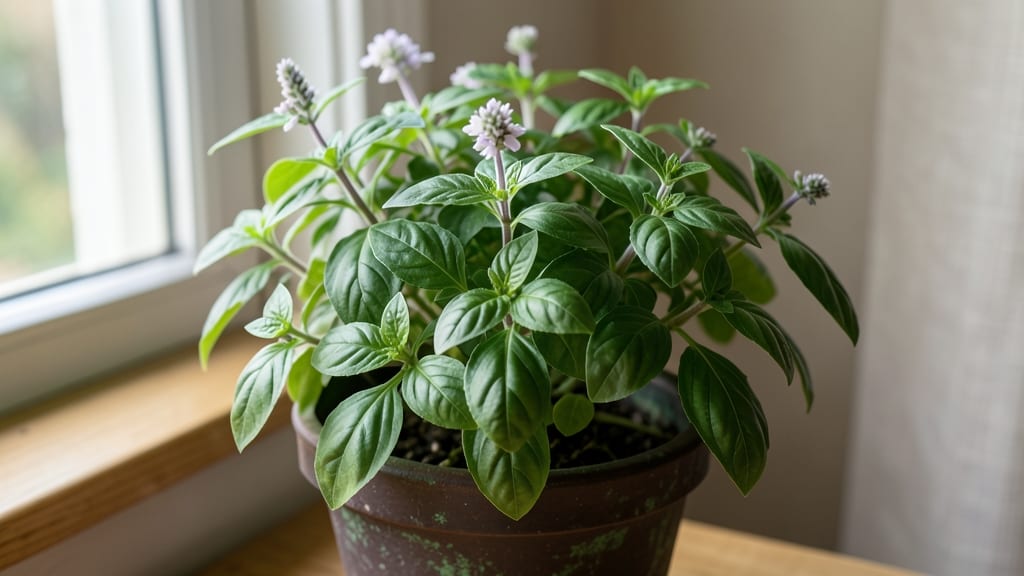
Is sweet basil a perennial? No, it behaves as an annual in most climates, meaning it dies back completely when frost arrives. Only in USDA zones 10-11 can it persist outdoors year-round, while colder regions require replanting each spring for continuous harvests.
Sweet basil's tender stems and shallow root system simply can't withstand freezing temperatures, which is why it acts like an annual in most parts of the country. 🌱 Unlike hardy perennials such as oregano or thyme, basil's growth habit is more aligned with warm-season crops that thrive in summer's warmth but retreat when temperatures drop.
Even in milder climates, the plant often struggles to regrow from the same root system after winter, making replanting the most reliable approach for consistent harvests.
What's interesting is that some basil varieties—like Thai basil—show slightly better cold tolerance, though they still won't survive harsh winters. This is why gardeners in cooler regions often treat basil as a seasonal crop, starting new plants each spring rather than trying to overwinter it.
The good news? With proper care and timing, you can still enjoy fresh basil year-round by bringing potted plants indoors before the first frost.
💡 In This Article
- Why Sweet Basil Dies in Cold Climates
- How to Extend Sweet Basil’s Growing Season
Why sweet basil dies in cold climates
Sweet basil's inability to survive winter stems from its tropical origins and delicate anatomy. The plant's stems are thin and woody only at the base, making them highly susceptible to frost damage.
When temperatures drop below 32°F, the cellular structure of basil's leaves and stems ruptures due to ice crystal formation within the cells—a process called freeze-thaw injury.
Unlike hardy perennials such as oregano or thyme, which have thick, woody stems and deep root systems to store nutrients, basil's shallow roots (6-12 inches deep) can't access moisture or energy reserves during cold snaps.
The real culprit is basil's C3 photosynthetic pathway, which makes it sensitive to cold stress. When exposed to freezing temperatures, basil's chlorophyll breaks down rapidly, turning leaves yellow and crispy—a clear sign of cell death.
Even a light frost can kill the entire plant, as basil lacks the protective mechanisms of cold-hardy herbs. 🌡️ For comparison, oregano can tolerate down to -15°F thanks to its dense, hairy leaves that trap heat, while basil's smooth, broad leaves offer no such protection.
Another key factor is basil's growth cycle. As a short-day plant, sweet basil responds to decreasing daylight in autumn by shifting energy toward seed production rather than root development. This natural shift means the plant is already weakening when winter arrives, making it far more vulnerable to cold.
Unlike biennials or true perennials that store energy in roots or rhizomes, basil's entire structure becomes a target for frost damage.
What most gardeners don't realize is that even in mild winters, basil often fails to regrow from the same root system. The plant's meristematic tissue (growth points) is located near the surface, where it's easily killed by freezing ground temperatures.
This is why you'll rarely see basil naturally overwintering in zones colder than 10-11, where winter temps rarely drop below 40°F.
Interestingly, basil's sensitivity to cold explains why it's often treated as a tender annual in gardening literature. The plant's entire life cycle—from seed to mature harvest—typically spans just 90-120 days in optimal growing conditions.
This rapid growth is an adaptation to its native tropical climate, where it thrives during short, intense growing seasons rather than enduring long winters.
For those in transitional climates (zones 8-9), the challenge isn't just surviving frost but also the temperature fluctuations that occur during late fall and early spring.
Basil's optimal growing range is 70-85°F, and sudden drops below 50°F can stunt growth or trigger early flowering—a process called bolting—which makes leaves bitter and unusable. 🌱 This is why gardeners in these zones often treat basil as an annual, replanting each spring when soil temperatures consistently reach 55°F.