
Flowers
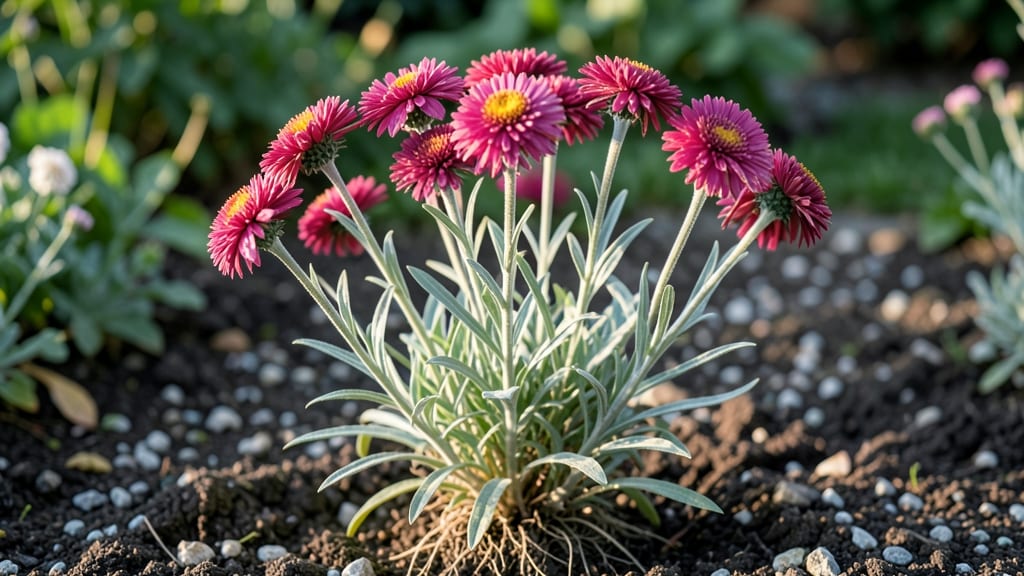
Is strawflower a perennial? No, it behaves like one in most climates because it dies back completely after frost and lacks true winter hardiness. Only in warmer zones (USDA 8-11) does it persist year-round through self-seeding, not cold-resistant growth.
This plant's confusion stems from its long bloom season—up to 8 months in ideal conditions—which makes it seem like a perennial. 🌸 However, its herbaceous stems lack the woody structure that true perennials develop to survive freezing temperatures.
Even in milder winters, strawflower often collapses under light frost, requiring gardeners to replant annually unless they're in frost-free regions. The key difference? Perennials regrow from protected roots, while strawflower relies on seeds or cuttings for renewal.
For gardeners in colder zones, treating strawflower as a tender perennial works best. Overwintering potted plants in unheated garages or using thick mulch can sometimes extend its life, but it's still a gamble.
In frost-free areas, strawflower's ability to self-seed makes it behave more like a wildflower than a cultivated perennial—though it won't survive harsh winters even then without protection.
💡 In This Article
- Strawflower’s Growth Cycle: Annual vs Perennial Behavior
- Extending Strawflower’s Life: Cold-Climate Gardening Hacks
Strawflower’s growth cycle: annual vs perennial behavior
The confusion about strawflower's perennial status comes down to its botanical structure. Unlike true perennials like lavender or hosta, strawflower (Helichrysum bracteatum) grows from a herbaceous base rather than a woody stem.
This means its entire above-ground structure freezes and dies back to the ground when temperatures drop below 25°F, which happens in most USDA zones 7 and colder. The plant lacks the protective bark layer that woody perennials develop to insulate against frost.
What makes strawflower seem perennial is its extended bloom cycle—up to 8 months in ideal conditions—combined with its ability to self-seed aggressively. In frost-free zones (USDA 8-11), these seeds germinate naturally each spring, creating the illusion of perennial behavior.
However, this is not true perennialism—it's annual renewal through reproduction. The plant itself doesn't survive winter; its presence persists through seed propagation.
The key difference lies in the root system. True perennials like peonies develop thick, insulated root crowns that regrow each spring. Strawflower, however, has a fibrous root system that stores minimal energy reserves.
When frost hits, these roots often fail to regenerate, especially in zone 6 and colder where winter temperatures can drop to -10°F or lower. Even in milder winters, the plant's energy is focused on flowering rather than root survival.
Consider this comparison: In zone 9, strawflower might self-seed reliably, appearing perennial-like, while in zone 5, it behaves like a true annual, requiring replanting each spring.
The plant's native habitat in Australia's temperate regions (where winters rarely drop below 32°F) explains why it struggles in colder climates—it simply hasn't evolved cold tolerance mechanisms like many northern perennials.
Interestingly, strawflower's long bloom season creates another misconception. Many gardeners assume continuous blooms mean perennial growth, but this is actually an adaptation to maximize seed production before frost.
The plant's papery, dried flower heads persist long after blooming, adding to the perennial illusion—but these are dead flowers, not living stems. 🌿
For gardeners in transition zones (7a-7b), the plant might survive winters with heavy mulching (6+ inches of straw or leaves)**, but this is still not true perennial behavior—it's more like a tender perennial that needs winter protection.
The energy cost of surviving winter often reduces next year's blooms, making annual replanting more reliable for consistent performance.