
Flowers
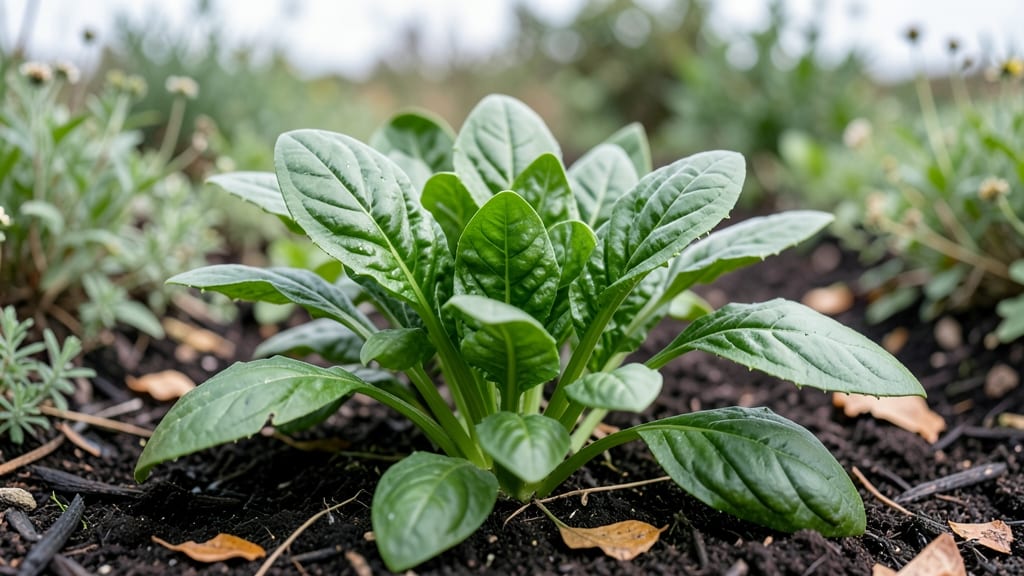
Spinach is not a true perennial but behaves as a cool-season annual or biennial, dying back in summer heat. However, in mild climates, it may regrow from the crown, offering a semi-perennial-like cycle with proper care.
Spinach's growth habits are often misunderstood because it thrives in cool weather and can persist year-round in certain conditions. 🌱 While botanically classified as a biennial (completing its life cycle in two years), many gardeners treat it like a perennial by extending its growing season.
In regions with mild winters, spinach plants can survive dormant periods and regrow when temperatures drop again, creating that "perennial-like" behavior.
This adaptability comes from spinach's ability to form a crown—its base stems and roots—that can regenerate under the right conditions. The key factors are consistent moisture, well-draining soil rich in organic matter, and protection from extreme heat or frost.
Many gardeners achieve multiple harvests by planting new seeds every few weeks during the growing season, effectively creating a continuous supply.
💡 In This Article
- Why Spinach Acts Like a Perennial in Some Climates
- Extending Spinach Harvests: Perennial-Like Gardening Tips
Why spinach acts like a perennial in some climates
Spinach's botanical classification as a biennial means it typically completes its life cycle in two years, with the first year focused on leaf production and the second on flowering and seed development.
However, in cooler climates, spinach often behaves like an annual because the heat of summer terminates its growth before it reaches the flowering stage. The confusion arises because spinach's crown—the compact base where leaves and roots meet—can survive mild winters and regrow when temperatures dip again, creating a semi-perennial appearance.
The key mechanism here is spinach's thermoperiodic sensitivity. When exposed to prolonged daylight and temperatures above 75°F, spinach bolts (rapidly sends up a flower stalk) and dies.
But in regions with cool summers (like the Pacific Northwest or coastal California), spinach may avoid bolting entirely, allowing it to persist through multiple growing seasons. Frost actually helps spinach by slowing metabolic processes, which can extend its dormancy and protect it from winter die-off. 🌱
This semi-perennial behavior also depends on soil conditions. Spinach thrives in well-draining, nutrient-rich soil with a pH between 6.5 and 7.0. In such environments, the crown can store enough energy to regenerate leaves when temperatures drop again.
Gardeners in Zone 5 and above often report spinach returning year after year if protected from extreme cold (-10°F) and given consistent moisture. The crown's ability to regrow is similar to how some herbs like chives or mint persist, though spinach lacks true perennial hardiness.
What makes this particularly interesting is how spinach's growth cycle mirrors that of winter wheat—a crop that also thrives in cool seasons but dies back in heat. Both plants prioritize leaf production over flowering when conditions aren't ideal, allowing them to "wait out" unfavorable periods.
This adaptability is why spinach can appear perennial-like in gardens, even though botanically it's not. The difference lies in the plant's ability to pause rather than complete its life cycle under stress.
For example, in the San Francisco Bay Area, gardeners often leave spinach in the ground over winter, only to see it regrow in early spring with minimal care. The plant's crown remains dormant but viable, much like a geophyte (a plant that stores energy underground).
This is why many home gardeners treat spinach as a perennial, even though it technically isn't. The line between annual, biennial, and perennial becomes blurred when you consider environmental factors like microclimates and soil health. 💫
One critical factor often overlooked is the role of day length. Spinach is a long-day plant, meaning it responds to increasing daylight by flowering. In northern latitudes, shorter summer days can delay bolting, while in southern regions, the opposite occurs.
This explains why spinach behaves differently in Florida (where it bolts quickly) versus Minnesota (where it may persist longer). The plant's internal clock, combined with external temperatures, creates this semi-perennial illusion.
To summarize, spinach's "perennial-like" behavior stems from its ability to survive dormancy, regenerate from its crown, and avoid bolting in cooler climates. While it lacks the true perennial hardiness of plants like asparagus or rhubarb, its adaptability makes it a garden favorite for those seeking year-round greens.
Understanding these mechanisms helps gardeners replicate this behavior intentionally, even in less ideal climates. ✨