
Flowers
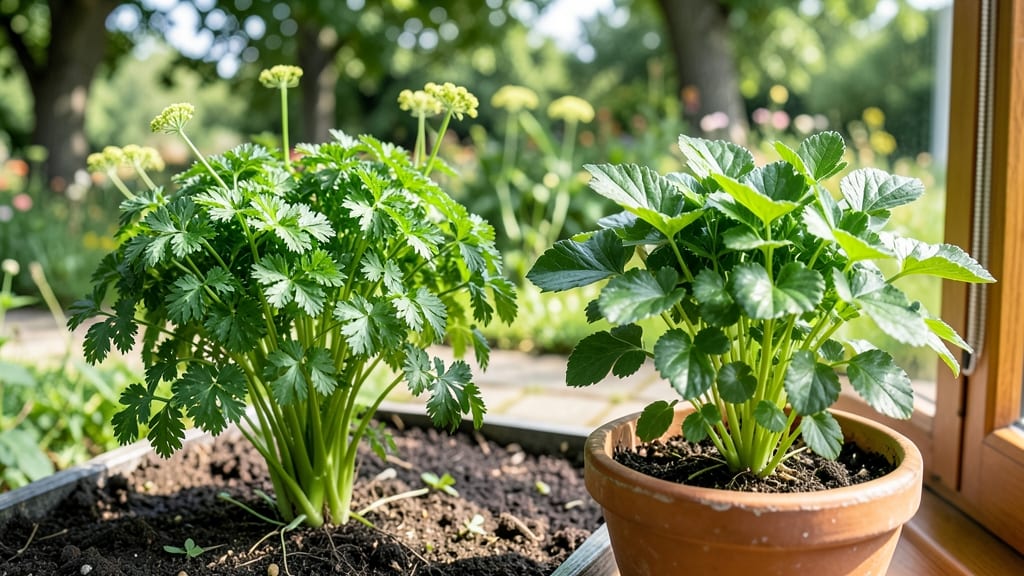
Parsley isn't a true perennial—it's a biennial herb that typically lives two years, though it can self-seed prolifically in mild climates and appear perennial by returning year after year before eventually dying back in cold winters.
Parsley's biennial nature means it grows leaves in its first year, then flowers and sets seed in its second year before dying. 🌱 In warmer climates, parsley often self-seeds so aggressively that it creates the illusion of being a perennial, but true winter dieback will eventually occur.
The key to extending its life lies in proper growing conditions—cool temperatures and partial shade help delay bolting, while rich, well-draining soil supports stronger regrowth each season.
For gardeners in colder zones, overwintering parsley with mulch or growing it in containers that can be moved indoors during frost can preserve it for multiple years. The plant's hardiness varies by variety—curly parsley tends to be slightly more resilient than flat-leaf parsley in challenging conditions.
Understanding these nuances helps you maximize parsley's productivity while working with its natural lifecycle.
💡 In This Article
- Why Parsley Dies After Two Years (Biennial Lifecycle Explained)
- How to Extend Parsley’s Life as a Gardener’s Staple
Why parsley dies after two years (biennial lifecycle explained)
Parsley follows a biennial lifecycle, meaning it completes its growth cycle in two years rather than returning annually like true perennials. During its first year, all energy focuses on developing a robust root system and lush foliage—this is when parsley produces the tender leaves gardeners harvest.
The plant stores energy in its taproot, which can grow up to 12-18 inches deep, acting like a natural battery for the next phase.
Here's where the magic—and eventual demise—happens: In its second year, parsley undergoes a dramatic transformation triggered by longer daylight hours and cooler temperatures. The plant redirects its energy from leaf production to flowering, sending up tall stems (often 2-3 feet) topped with delicate yellow or greenish flowers.
This process, called bolting, signals the plant's shift from vegetative growth to reproductive mode. Once the flowers produce seeds, the original plant typically dies back, completing its lifecycle.
The temperature threshold for bolting varies by variety but generally occurs when nighttime temperatures drop below 50°F in late winter or early spring. Heat stress above 80°F can also accelerate bolting, which is why parsley thrives best in USDA Zones 3-10 with cooler summers.
The plant's natural defense mechanism—flowering before extreme heat or cold—explains why it rarely survives beyond two years unless it self-seeds aggressively in mild climates.
What most gardeners don't realize is that parsley's biennial nature is actually an evolutionary adaptation. The two-year cycle ensures the plant has enough time to establish strong roots before reproducing, increasing the chances of successful seed dispersal.
In colder regions, the first year's growth prepares the plant to survive winter dormancy, while the second year's flowering occurs during optimal spring conditions for pollination. This dual-phase strategy gives parsley a survival advantage in unpredictable environments.
There's a fascinating chemical process at play too: The plant produces higher levels of abscisic acid as temperatures drop, which triggers dormancy in the roots. This hormone helps the root system survive winter, but prolonged cold or freeze damage eventually kills the plant.
In contrast, true perennials like chives or mint produce underground rhizomes or tubers that regenerate yearly, giving them their perennial status. Parsley lacks these structures, which is why it relies on self-seeding to "cheat" the biennial system in favorable climates.
Consider this lifecycle when planning your garden: If you want continuous parsley harvests, you'll need to either plant new seeds annually or create conditions that encourage prolific self-seeding.
The plant's natural two-year cycle means you can't simply expect it to return year after year like a true perennial—it's a temporary resident in your garden unless you actively manage its growth and reproduction. 🌱