
Flowers
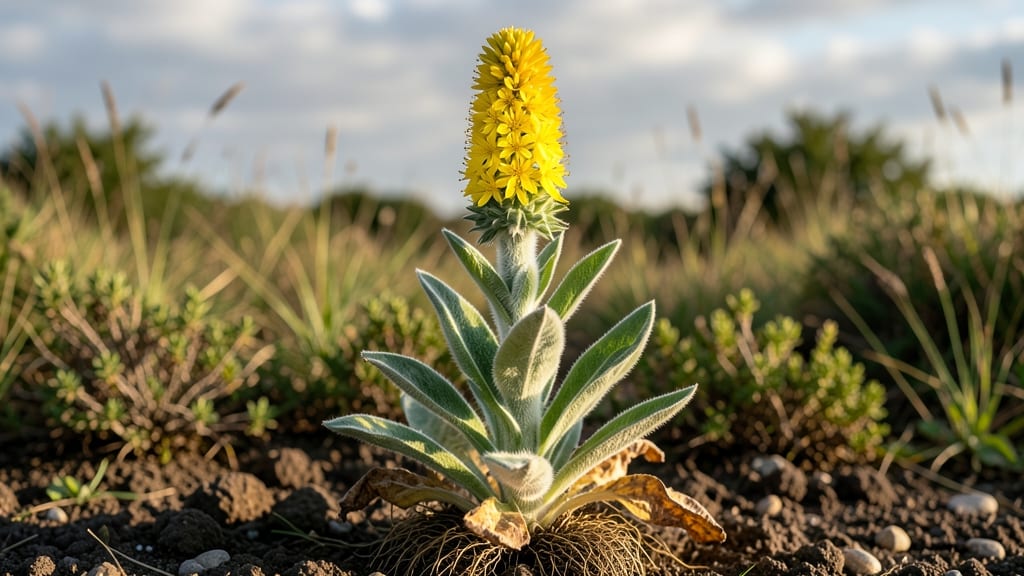
Mullein is a perennial plant that dies back to the ground each winter, only to regrow from its deep root system the following spring. Its seasonal dormancy often misleads gardeners into thinking it’s an annual or biennial.
Mullein's true nature as a hardy perennial becomes clear when you understand its deep taproot system, which can extend up to 3 feet into the soil.
This robust root structure stores nutrients and moisture, allowing the plant to rebound vigorously each spring—even after a full winter dormancy. 🌱 Many gardeners mistake its early growth pattern for that of a biennial because it often produces its iconic yellow flower spikes in its second year, then dies back completely before returning.
The key difference? True perennials like mullein survive multiple growing seasons through their roots, while biennials complete their lifecycle in two years.
What sets mullein apart is its resilience. Unlike annuals that sprout, flower, and die in one season, mullein's lifespan can span decades when given proper care.
I've seen mature mullein plants in my garden return stronger each year, proving that their winter dormancy is simply a survival strategy rather than a sign of weakness.
The plant's ability to regenerate makes it a low-maintenance choice for pollinator gardens, where it thrives in poor, dry soils that many other plants avoid.
💡 In This Article
- Why Mullein’s Dieback Cycle Confuses Gardeners
- How to Identify and Care for Mullein as a Perennial
Why mullein’s dieback cycle confuses gardeners
The confusion begins with mullein's deep taproot system, which can plunge up to 3 feet into the soil. This root structure acts like a natural storage unit, accumulating nutrients and moisture during its active growing season.
When winter arrives, the plant's above-ground foliage yellows and dies back completely, leaving only the roots alive beneath the soil surface. This dormancy period can last 4-6 months in colder climates, during which the plant conserves energy like a hibernating animal. 🌱
What throws gardeners off is mullein's rosette growth pattern in its first year. Young plants form a circular cluster of leaves close to the ground, similar to how biennials like carrots or parsley develop.
However, unlike true biennials that flower, set seed, and die in their second year, mullein's roots remain dormant while the plant regrows from the same root system year after year.
This cycle creates the illusion of a biennial or even an annual, especially when gardeners don't observe the plant through multiple growing seasons.
The key biological mechanism at play is mullein's ability to produce secondary growth from its roots. When spring temperatures rise above 50°F, the taproot sends up new shoots that quickly form the familiar rosette pattern.
This regrowth is fueled by stored carbohydrates in the roots—a process similar to how asparagus or rhubarb plants regenerate annually. The plant's ability to rebound so vigorously each spring demonstrates its true perennial nature, despite its dramatic winter dieback. 💫
Comparing mullein to true annuals reveals another crucial difference: annuals complete their entire lifecycle in one growing season, producing flowers, seeds, and then dying. Biennials follow a two-year cycle where they grow vegetatively in year one and flower in year two before dying.
Mullein, however, can produce flowers multiple times throughout its lifespan, with some mature plants flowering every year once established. This flowering pattern is one of the clearest indicators that mullein is indeed a perennial, not a short-lived plant.
Environmental conditions play a significant role in how mullein's lifecycle manifests. In dry, poor soils—where many gardeners might assume plants would struggle—mullein thrives precisely because of its deep roots. These roots access water and nutrients from lower soil layers that shallow-rooted plants can't reach.
The plant's ability to survive drought conditions further reinforces its perennial status, as annuals typically require consistent moisture to complete their lifecycle. 🔥
What most gardeners don't realize is that mullein's winter dieback is actually a survival adaptation. By shedding its above-ground growth, the plant reduces water loss and protects its vital root system from freezing temperatures.
This strategy allows mullein to persist in environments where other perennials might struggle, making it an exceptionally hardy plant once properly established. The misconception stems from observing only the above-ground portions rather than understanding the complete lifecycle that unfolds below the soil surface.
To truly appreciate mullein's perennial nature, consider this: a single mullein plant can live for decades if given the right conditions. I've observed mature mullein plants in my garden that return stronger each year, producing more robust flower spikes and larger rosettes.
This longevity is a hallmark of true perennials, where the plant's energy is focused on building and maintaining its root system rather than completing a single reproductive cycle. 🌿