
Aphids
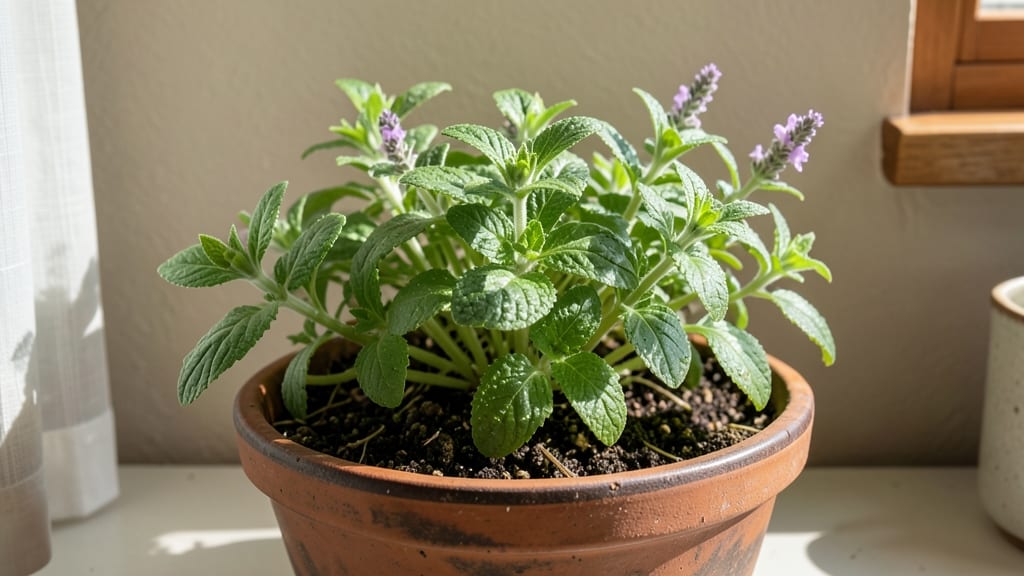
Yes, mint is a perennial plant because it grows back each year from its extensive underground rhizome network, surviving frost and regrowing when conditions improve.
This hardy herb thrives as a perennial thanks to its specialized root system that stores nutrients and moisture, allowing it to rebound after winter dormancy. 🌱 Unlike annuals that complete their lifecycle in one season, mint's deep rhizomes can extend several feet, making it nearly impossible to eradicate without barriers.
The plant's ability to regenerate from even small root fragments explains why it often takes over garden beds if left unchecked.
Gardeners often struggle with mint's persistence because its rapid spread isn't just about regrowth—it's about aggressive expansion. The rhizomes can push through soil and even concrete cracks if given space, which is why containment methods like deep-rooted pots or buried barriers become essential management tools.
Understanding this growth pattern helps explain why mint returns with vigor each spring, even after heavy pruning.
💡 In This Article
- How Mint’s Rhizome System Enables Yearly Regrowth
- Managing Mint as a Perennial in Gardens and Containers
How mint’s rhizome system enables yearly regrowth
Mint’s perennial nature stems from its specialized underground rhizome system, which functions like a living storage unit. These horizontal stems grow just below the soil surface, storing carbohydrates and nutrients that fuel regrowth.
Unlike annuals that die back completely after seed production, mint’s rhizomes remain dormant but viable through winter, ready to sprout when temperatures rise above 50°F in spring. This system allows mint to persist for years—some garden varieties have been known to thrive for a decade or more under ideal conditions.
The rhizomes also contain meristematic cells, which are undifferentiated plant cells capable of rapid division. When spring arrives, these cells activate in response to increasing soil moisture and warmth, sending up new shoots within 2-4 weeks.
What makes this process remarkable is how efficient it is: even a 1-inch rhizome fragment can regenerate into a full plant, which explains why mint spreads so aggressively.
This contrasts sharply with biennials (like carrots) that complete their lifecycle in two years or annuals (like basil) that must reseed each season.
Temperature plays a crucial role in this cycle. Mint enters dormancy when soil temperatures drop below 40°F, slowing metabolic processes but keeping the rhizomes alive. The plant’s hardiness extends to frost tolerance—most varieties survive down to 10°F without permanent damage.
This adaptability is why mint thrives in diverse climates, from Mediterranean regions to temperate zones. The key trigger for regrowth is consistent moisture combined with stable temperatures above 55°F, which reactivates the rhizome’s growth hormones.
What sets mint apart from other perennials is its rhizome’s ability to both store nutrients and expand laterally. While plants like lavender rely on deep taproots, mint’s shallow but extensive rhizome network allows it to quickly reclaim space after pruning or frost.
This horizontal growth pattern also makes mint highly competitive—it can outcompete weeds by shading the soil surface with its dense foliage. The plant’s rapid regrowth is so efficient that even heavy pruning down to 2 inches above the ground won’t prevent new shoots from emerging within 3-4 weeks.
For gardeners, this biological advantage translates to both a blessing and a challenge. On one hand, mint’s persistence means you’ll always have fresh leaves for cooking or tea. On the other, its ability to regenerate from tiny root fragments makes complete removal difficult without proper containment.
The rhizome’s growth pattern explains why mint often escapes from garden beds—it doesn’t just grow back; it spreads outward aggressively, sometimes at rates of 6-12 inches per year if unchecked. 🌱
Understanding this system helps explain why mint returns with such vigor each spring. The rhizomes act as a biological memory of the plant, storing enough energy to fuel rapid regrowth even after severe winter conditions.
This is why mint often appears lush and green earlier in the season than many other perennials—its underground network is already primed for action when temperatures rise.