
Planting
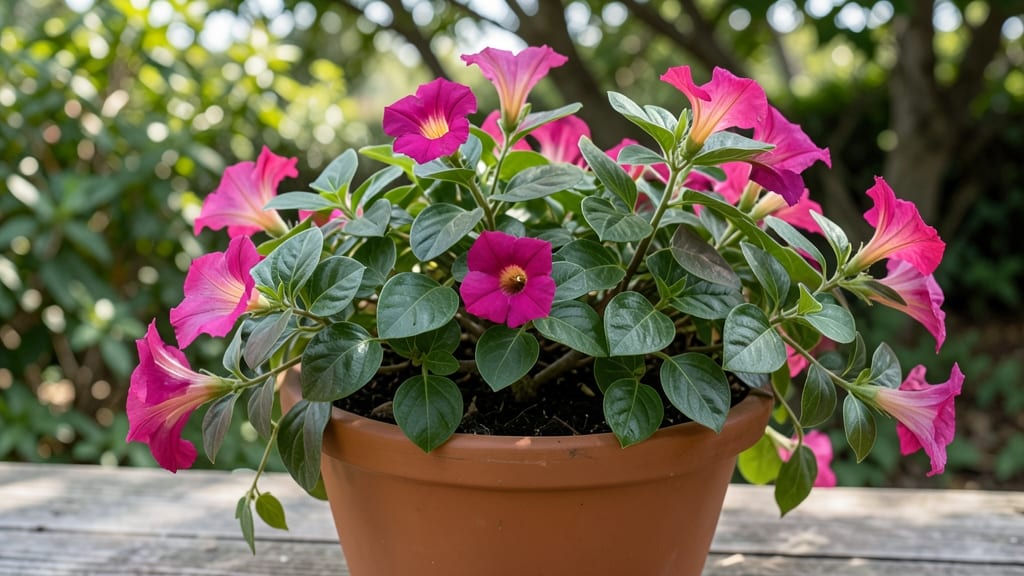
The mandevilla plant is not considered a true perennial in most U.S. climates, since it cannot survive frost below USDA Zone 10 without dying back completely. However, in warmer regions (Zones 10-11), it behaves like a perennial by regrowing each year from roots. Gardeners in colder areas must treat it as an annual or take special overwintering steps.
The mandevilla's winter behavior depends entirely on your climate zone. 🌱 In frost-free areas, it naturally returns each spring from its root system, making it a reliable garden staple.
But in colder regions, even a light freeze will kill the above-ground growth, forcing gardeners to either dig up the tubers for indoor storage or start fresh each season.
The key difference lies in its tropical origins—mandevilla evolved where temperatures never drop below 40°F, so it lacks cold hardiness built into true perennials like hostas or daylilies.
What this means for your garden is that proper winter prep can turn a seasonal plant into a long-term favorite. With the right care, you can enjoy mandevilla's vibrant blooms year after year, even if you're not in its native range.
The effort pays off in summer's spectacular trumpet-shaped flowers that attract hummingbirds!
💡 In This Article
- Mandevilla Plant’s Perennial Status by USDA Hardiness Zones
- How to Overwinter Mandevilla for Year-Round Growth
Mandevilla plant’s perennial status by USDA hardiness Zones
The mandevilla's perennial status hinges on its tropical origins and cold sensitivity. Native to South America, this plant evolved in environments where temperatures rarely drop below 40°F, making it completely intolerant of frost.
In USDA Zones 10-11, where winter lows stay above 30°F, mandevilla behaves like a true perennial, regrowing each spring from its robust root system. The roots themselves can survive brief dips to 25°F if protected by mulch, but any prolonged exposure to freezing temperatures will kill them.
In colder zones (8-9), the above-ground growth dies back completely when temperatures fall below 32°F, but the roots may linger underground until spring.
This is why many gardeners in these areas discover new shoots emerging each year without any intervention—though these plants often grow more slowly and produce fewer blooms.
The critical threshold is 28°F
The plant's growth cycle reveals its tropical nature. In warm climates, mandevilla grows continuously, with blooming periods lasting from spring through fall. The roots store energy during winter dormancy, ready to burst into growth when temperatures rise above 60°F. This contrasts sharply with true perennials like roses or peonies, which develop hardy woody stems that can withstand -10°F to -20°F temperatures. Mandevilla's delicate structure simply can't handle such extremes. What makes this especially interesting is how mandevilla's dormancy differs from true perennials. While plants like hostas enter a deep physiological dormancy with specialized buds, mandevilla relies on its root system to regenerate. This means proper soil preparation—rich in organic matter and with good drainage—is crucial for successful regrowth. In Zones 10-11, gardeners can simply mulch heavily around the base to protect roots during mild winters, while colder climates require more aggressive protection strategies. Consider this comparison: In Zone 10, a mandevilla plant might grow 6-8 feet tall with abundant blooms year after year with minimal care. But in Zone 8, the same plant would likely die back completely each winter unless dug up and stored indoors. The difference comes down to how the plant's biology interacts with your local climate—specifically, how quickly temperatures drop and how long they stay cold. Even a single night below 28°F can be fatal to unprotected mandevilla roots. What most people don't realize is that mandevilla's cold sensitivity extends beyond just the roots. The plant's leaves and stems contain high moisture content, which freezes and ruptures cell walls at 32°F. This is why you'll often see mandevilla leaves turning black and crispy overnight during early fall frosts—it's not just wilting, but actual cellular damage from ice formation. This fragility is what makes overwintering techniques so critical for gardeners outside its native range.