
Planting
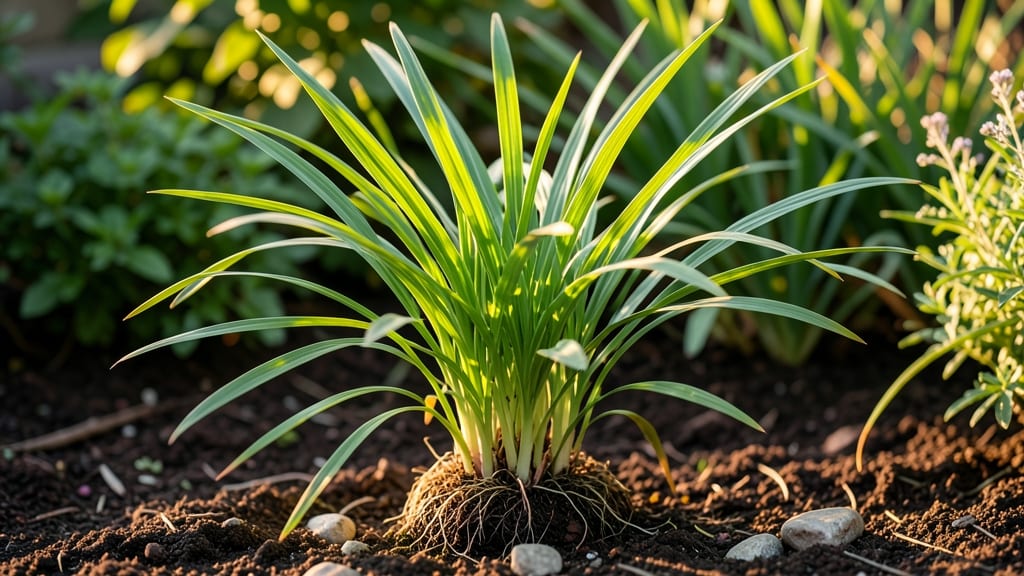
This lemongrass plant is a perennial in warm climates, but it behaves like an annual in frost-prone areas because cold temperatures kill its root system. Most varieties thrive only in USDA zones 9-11 without protection.
This tropical plant's survival depends entirely on temperature—lemongrass stems die back when exposed to below 30°F, and the rhizomes (roots) won't regrow after frost damage. 🌱 In milder winter zones like Southern California, it may persist with heavy mulch, but gardeners in colder regions treat it as a seasonal herb.
The key difference lies in its native habitat: lemongrass evolved in Southeast Asia's steamy climates, where it grows year-round without dormancy.
What this means for home gardeners is that even if you replant from store-bought stalks each spring, you're essentially cultivating the same perennial species—just resetting its growth cycle annually.
The rhizomes themselves contain all the genetic potential to regrow, but they lack the cold resistance to survive through winter in most of the U.S.
💡 In This Article
- Why Lemongrass Dies in Cold Weather
- How to Overwinter Lemongrass in Cold Climates
Why lemongrass dies in cold weather
Lemongrass (Cymbopogon citratus) evolved in tropical Southeast Asia, where temperatures rarely dip below 50°F—its natural cold tolerance is near zero. The plant's survival hinges on its rhizome system, which stores energy and nutrients.
When exposed to below 30°F, these underground stems freeze solid, disrupting cellular membranes and killing the plant's ability to regenerate. Unlike hardy perennials such as asparagus or mint, lemongrass lacks the biochemical adaptations (like antifreeze proteins) to withstand frost.
The damage isn't just cosmetic—frost penetrates the rhizome's vascular system, cutting off water and nutrient flow. In USDA zones 8-11, where winters rarely drop below 10°F, lemongrass may survive with heavy mulching (using 4-6 inches of straw or leaves).
But in zones 7 and colder, even protected plants often succumb to winter dieback. The plant's leaves, which contain volatile oils for its signature citrus aroma, also freeze and turn black, signaling irreversible damage to the plant's photosynthetic machinery.
What makes this especially tricky is that lemongrass grows from clumps of rhizomes that spread horizontally. When these roots freeze, the entire plant's regeneration potential is lost—unlike perennials like peonies, which have dormant buds that survive underground.
This is why gardeners in colder climates often start fresh from store-bought stalks each spring, as the original rhizomes won't regrow after frost.
Another key factor is the plant's growth cycle. In tropical climates, lemongrass grows continuously, producing new shoots year-round. But in temperate zones, it enters a forced dormancy when temperatures drop, halting growth until spring.
This dormancy isn't true hibernation—it's a survival mechanism that fails when frost occurs. The plant's energy reserves deplete without the ability to photosynthesize, leading to complete die-off.
For comparison, consider its cousin, citronella (Cymbopogon nardus), which has slightly better cold tolerance but still struggles below 28°F. The difference lies in their native habitats: citronella grows in slightly cooler tropical highlands, while lemongrass thrives in steamy lowlands.
This explains why some gardeners in zone 8 report limited success with heavy mulching, while those in zone 9 or warmer can treat it as a true perennial.
The bottom line? Lemongrass isn't built for cold. Its entire biology—from rhizome structure to leaf composition—is optimized for warm, humid conditions. Without protection, frost turns this tropical herb into a one-season wonder. 🌱