
Flowers
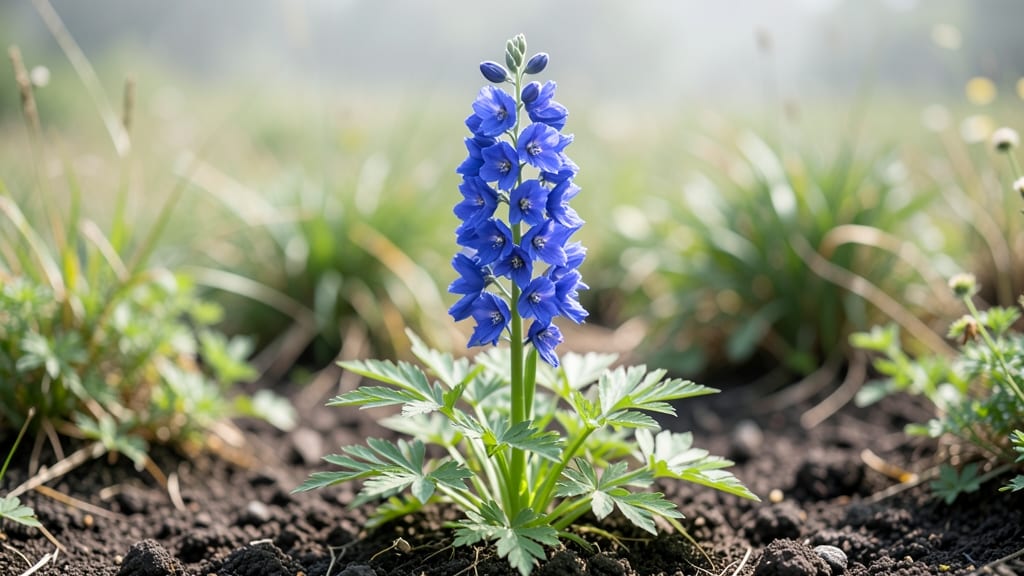
Larkspur is not a perennial—it’s an annual or biennial plant that typically blooms once before dying, though some varieties may self-seed prolifically in mild climates. Most gardeners replant it yearly for seasonal color.
Larkspur's lifespan depends entirely on your climate zone. In colder regions, it behaves as a true annual, completing its life cycle in one growing season. 🌱 However, in warmer areas with mild winters, some varieties may survive as biennials, taking two years to flower and set seed.
The key difference lies in their ability to withstand frost—most larkspur varieties simply won't survive freezing temperatures, which is why gardeners in colder zones treat it as an annual.
What's fascinating is how some self-seeding varieties create natural displays year after year without replanting, though these plants themselves won't live beyond their initial bloom cycle.
This behavior explains why you'll find larkspur thriving in cottage gardens every spring—it's not the same plant returning, but rather a fresh generation emerging from seeds dropped the previous year.
The plant's energy focuses entirely on producing those stunning flower spikes before dedicating resources to seed production, leaving little energy for perennial survival. Understanding this growth pattern helps gardeners plan their planting schedules and manage expectations for year-round blooms.
💡 In This Article
- Larkspur’s Growth Cycle: Annual vs Biennial Behavior
- Extending Larkspur’s Seasonal Presence Through Gardening Hacks
Larkspur’s growth cycle: annual vs biennial behavior
Larkspur's life cycle is tightly linked to its native Alpine and Mediterranean habitats, where cold winters trigger specific survival mechanisms. As an annual, it completes its entire growth—from seed germination to flowering—in just one growing season, typically 60-90 days from sowing to bloom.
The plant prioritizes energy toward rapid growth and flower production, with stems reaching 3-5 feet tall in ideal conditions. This aggressive growth pattern is a survival adaptation: in its natural environment, larkspur must flower quickly before summer drought sets in.
The biennial behavior emerges in milder climates where winter temperatures hover above 20°F (-6°C). Here's what happens: seeds undergo cold stratification during winter, a process where cold temperatures break seed dormancy.
This allows the plant to develop a robust root system its first year, then flower and set seed in its second year.
However, most larkspur varieties still won't survive freezing temperatures—frost damages the tender stems and leaves, halting growth. 🌱 The key difference lies in their vernalization requirement: biennial varieties need this cold period to trigger flowering, while annuals skip straight to bloom.
Climate plays a crucial role in determining whether larkspur behaves as an annual or biennial. In USDA zones 3-6, where winters drop below 10°F (-12°C), larkspur acts as a true annual. The plant simply can't withstand the freeze-thaw cycles that would be required for perennial survival.
Even in zone 7, where winters are milder, most varieties still die back completely. Only in frost-free zones (8-10) might you find larkspur persisting as a short-lived perennial, though this is rare and not reliable for gardeners.
What's fascinating is the plant's reproductive strategy. Larkspur produces 100-200 seeds per plant, which scatter widely when the seed pods burst open. These seeds remain viable for 2-3 years in soil, creating natural self-seeding displays.
This explains why larkspur often appears year after year in gardens without replanting—it's not the same plants returning, but rather successive generations emerging from the seed bank. The plant's entire energy output focuses on seed production rather than vegetative growth, making perennial survival impossible.
Understanding these growth patterns helps explain why larkspur thrives in cottage gardens but rarely makes it as a true perennial. The plant's life cycle is optimized for quick reproduction rather than long-term survival. In colder climates, gardeners must replant annually, while in milder regions, strategic planting can encourage biennial behavior.
The trade-off is clear: larkspur offers stunning seasonal color but requires annual investment to maintain its presence in the garden.