
Flowers
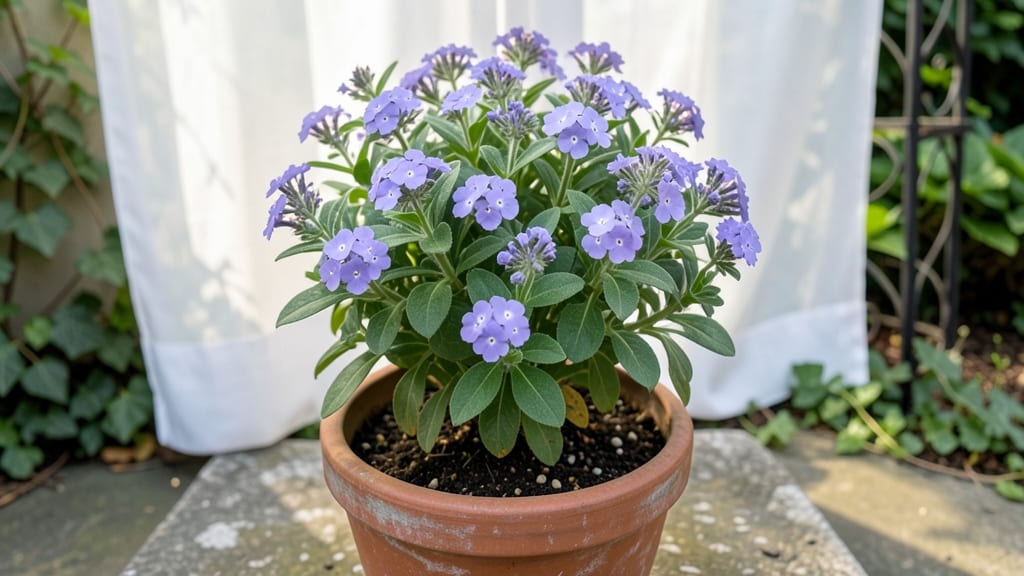
Heliotrope behaves as a perennial in frost-free zones (USDA Zones 9-11) but dies back to the ground in colder climates, where gardeners typically grow it as an annual. Its deep root system can persist through mild winters, though above-ground growth halts until spring warmth returns.
Heliotrope's classification as a perennial hinges entirely on climate. In warmer regions, it thrives year-round, sending up new growth from the same roots season after season. 🌱 The real magic happens underground—those fibrous roots store energy like a natural battery, ready to fuel regrowth when conditions improve.
In colder areas, though, even the roots struggle without protection, which is why most gardeners in Zones 8 and below replant fresh starts each spring.
What sets heliotrope apart from true cold-hardy perennials is its tropical heritage. Unlike lavender or salvia that shrug off 20°F dips, heliotrope's foliage turns to mush below 32°F.
That said, with the right overwintering strategies—like digging up tubers or using thick mulch—you can coax it back to life year after year, even in marginal zones.
💡 In This Article
- Heliotrope’s True Perennial Nature and Root Survival
- Extending Heliotrope’s Life in Cold Climates
Heliotrope’s true perennial nature and root survival
Heliotrope's perennial status depends on its root system's ability to survive dormancy—a process that's fundamentally different from cold-hardy perennials like lavender. The plant's thick, fibrous roots store carbohydrates like a natural battery, which fuels regrowth when temperatures rise above 55°F in spring.
These roots can persist through mild winters (down to 25°F for short periods) but begin dying back when exposed to prolonged 32°F temperatures or below.
The key difference lies in heliotrope's tropical origins. Unlike native perennials that evolved to withstand freezing, heliotrope's survival strategy relies on rapid regrowth from stored energy rather than cold resistance.
Its leaves contain water-soluble pigments that freeze and rupture at 30°F, causing the above-ground plant to collapse—but the roots often remain viable if protected. 🌱 This makes heliotrope more like a "semi-perennial" that behaves differently from true cold-hardy plants.
In frost-free zones (USDA 9-11), heliotrope grows continuously, producing fragrant blooms year-round with minimal care. The plant's growth cycle mirrors tropical species: it doesn't experience true dormancy but instead maintains a slow, steady growth pattern.
This contrasts sharply with temperate perennials that enter full dormancy during winter months, where all growth ceases until spring.
What's fascinating is how heliotrope's root system behaves during dormancy. Unlike bulbs that store energy in compact underground structures, heliotrope's fibrous roots spread horizontally, creating a dense network that can regenerate quickly.
This makes it more resilient than you'd expect—given proper moisture and protection, roots can survive 2-3 weeks of 28°F temperatures before permanent damage occurs.
For comparison, consider how salvia (a true perennial) handles cold: it can survive -10°F with minimal protection because its leaves contain antifreeze proteins. Heliotrope lacks these adaptations, which is why its growth pattern shifts dramatically between climates.
In warm zones, it's a reliable perennial; in cooler areas, it becomes an annual unless you intervene with overwintering techniques.
The plant's fragrance—often described as a mix of cherry and vanilla—comes from volatile oils stored in its leaves and stems. These same oils actually help the plant recover faster in spring by providing antimicrobial protection to new growth.
This biological advantage means that even when heliotrope appears dead after frost, its roots often remain alive and ready to sprout within 2-3 weeks of warm weather returning. ✨