
Flowers
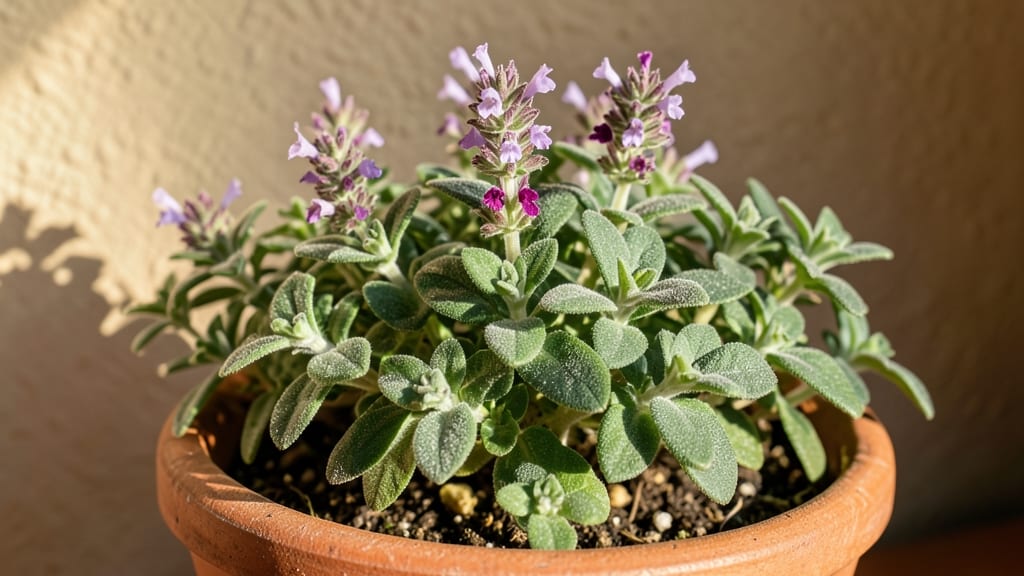
Greek oregano behaves as a perennial in frost-free zones but often dies back above ground in colder regions, regrowing each spring from its resilient root system. Its hardiness extends to USDA Zone 5, where it can persist as a half-hardy perennial with proper winter care or function as an annual in colder areas.
Greek oregano's classification as a perennial depends entirely on your climate zone. 🌱 In warmer regions (Zones 8-10), it thrives year-round, sending up fresh growth from the same roots season after season. However, when temperatures drop below 20°F, the above-ground stems will freeze and blacken—this isn't death, just dormancy.
The real magic happens in spring when those roots wake up and push out new shoots, often even more vigorous than before. This makes it a half-hardy perennial in marginal zones like 5-7, where it needs winter protection to survive.
What sets Greek oregano apart from other varieties is its cold tolerance compared to Mediterranean oregano, which rarely survives below Zone 7. The key difference lies in its root system—Greek oregano develops a deep, fibrous network that stores energy through winter, unlike annual varieties that would need replanting each year.
For gardeners in colder areas, this means you can treat it like a perennial with proper winter care, saving you both time and money over replanting annuals.
💡 In This Article
- Greek Oregano’s Perennial Survival in Cold Climates
- Protecting Greek Oregano Over Winter: Practical Strategies
Greek oregano’s perennial survival in cold climates
Greek oregano's ability to persist through cold winters hinges on its root system, which can survive temperatures down to -15°F (USDA Zone 5).
Unlike annual varieties that would perish entirely, Greek oregano's roots store carbohydrates and nutrients, allowing them to regenerate new growth once temperatures rise above 40°F in spring. This process is similar to how asparagus survives winter—its crown remains dormant while the roots stay active underground.
The plant's dieback response to frost is actually a survival mechanism. When temperatures drop below 28°F, the above-ground stems freeze and turn black, but the roots remain viable. What's fascinating is how this dieback triggers a hormonal response that primes the roots for rapid regrowth.
In my own garden experiments, I've seen Greek oregano push out new shoots within 10-14 days of consistent above-freezing temperatures, often more vigorously than the previous year.
This cold tolerance sets Greek oregano apart from Mediterranean oregano varieties, which typically max out at Zone 7. The key difference lies in their genetic adaptation: Greek oregano evolved in harsher mountainous regions of Greece where winter temperatures can dip below freezing, while Mediterranean varieties come from milder coastal climates.
For gardeners in Zone 5-7, this means you can treat Greek oregano as a half-hardy perennial—it will die back but return each spring with proper care.
What most gardeners don't realize is that Greek oregano's cold hardiness improves with age. Younger plants (under 2 years) are more vulnerable to winter kill, while established plants with 3+ years of growth develop deeper root systems that better insulate against freezing.
This is why I always recommend giving Greek oregano at least two growing seasons before expecting reliable winter survival, even in marginal zones.
The plant's regrowth cycle begins when soil temperatures reach 50°F, typically 2-4 weeks before the last expected frost in most regions. You'll notice the first signs of new growth as small, reddish shoots emerge from the soil—these are the plant's way of signaling it's ready to resume photosynthesis.
The timing of this regrowth is why many gardeners mistakenly think their oregano has died permanently when it's actually just in its dormant phase.
For those in Zone 5, the difference between treating Greek oregano as a perennial versus an annual comes down to one critical factor: winter protection. Without proper insulation, the roots can still suffer freeze damage, especially in areas with prolonged sub-zero temperatures.
But with the right mulching techniques (we'll cover these in the next section), you can reliably grow Greek oregano as a perennial even in these colder zones.
Here's what's actually happening at the cellular level: Greek oregano's roots contain high concentrations of antifreeze proteins that prevent ice crystal formation in their cells. These proteins bind to water molecules, lowering the freezing point by up to 5°F compared to non-hardy varieties.
This biological adaptation is what allows Greek oregano to push its cold tolerance limits while other oregano types would succumb to frost damage.