
Flowers
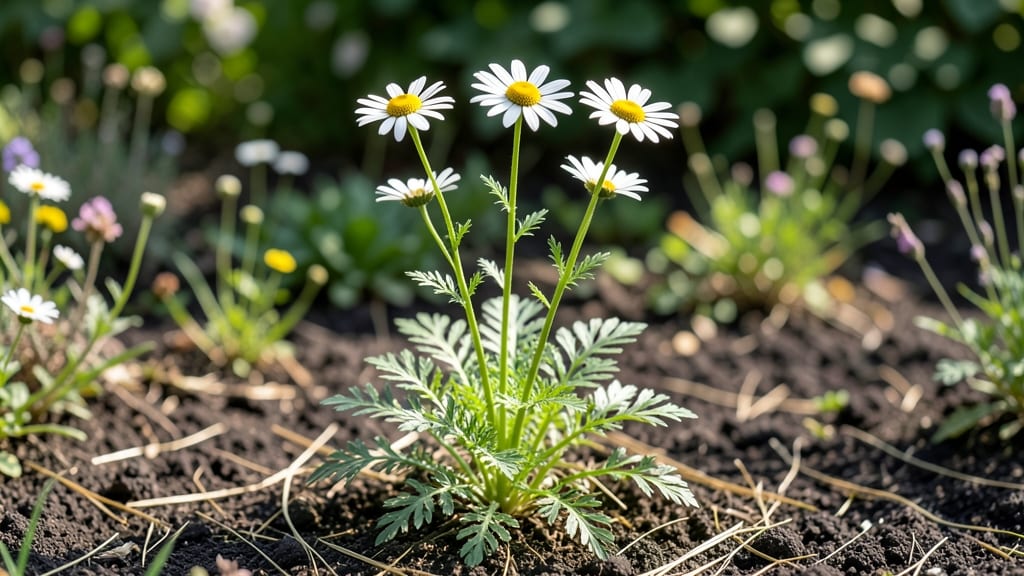
German chamomile behaves like a short-lived perennial but isn't a true one—it dies back after flowering and may regrow from roots if conditions are right. Most plants last 2-3 years before fading completely, depending on climate and care.
German chamomile's lifespan confusion comes from its hardy annual nature—it completes its life cycle in one growing season but can persist through root systems in mild climates. 🌱 Unlike true perennials, it doesn't reliably survive winter in colder regions, though some varieties might resprout if protected.
The key to extending its life lies in soil health and proper winter care, which I'll cover in detail below.
What sets German chamomile apart is its self-seeding habit—many gardeners find it returning year after year even when it technically behaves as an annual. This makes it perfect for naturalizing in meadows or cottage gardens where you want low-maintenance blooms.
The plant's ability to regenerate depends heavily on your local frost patterns and how well you prepare the soil before winter.
For gardeners in USDA zones 5-9, overwintering becomes crucial—mulching heavily and avoiding heavy pruning before frost can make all the difference. I've seen plants thrive for 3+ years with these techniques, though their vigor eventually declines as the root system ages.
The trade-off? You get stunning white daisy-like blooms each season with minimal effort.
💡 In This Article
- German Chamomile’s Dieback Cycle Explained
- Extending German Chamomile’s Lifespan in Gardens
German chamomile’s dieback cycle explained
German chamomile (Matricaria chamomilla) is botanically classified as a hardy annual, meaning it completes its entire life cycle in one growing season but can persist through root systems in favorable conditions. The confusion arises because its roots remain dormant underground during winter, mimicking perennial behavior.
However, unlike true perennials, these roots don't reliably regenerate the same plant structure year after year—especially in colder climates where winter temperatures drop below 20°F.
The dieback cycle begins after flowering when the above-ground stems dry and brown, signaling the plant's natural senescence. What most gardeners miss is how the taproot system (reaching 12-18 inches deep) stores energy for potential regrowth.
In mild winters (zones 7-9), these roots can survive and produce new shoots in spring, creating the illusion of perennial behavior. The critical factor is temperature: roots can tolerate brief exposure to 15°F but die back completely if frozen for extended periods.
This root behavior explains why German chamomile often self-seeds prolifically. When the main plant dies back, the roots may produce new seedlings from fallen flowers or stem nodes—this is nature's way of ensuring survival.
The plant's ability to regenerate depends on soil moisture and organic matter levels during dormancy. Well-drained soil with 2-3% organic content helps roots store more carbohydrates, giving them a better chance at overwintering successfully.
Here's what happens under the surface: During summer, the plant allocates energy to both flowering and root development. By autumn, if temperatures stay above 40°F for at least 4-6 weeks, the roots can remain viable.
The key difference from true perennials is that German chamomile's root system doesn't develop a robust crown—just a fibrous network that's more vulnerable to temperature fluctuations. This is why some plants return for 2-3 years while others disappear completely after one season.
Consider this comparison: True perennials like lavender develop woody stems that insulate their growth points, while German chamomile relies entirely on its root reserves. The plant's native habitat in Europe's temperate regions explains this adaptation—it evolved to thrive in areas with cold winters but not extreme freezes.
In gardens with consistent winter mulching, you'll often see it return year after year, though its vigor gradually declines as the root system ages.
The science behind this involves photoperiodism—the plant's response to daylight changes. As daylight shortens in autumn, German chamomile initiates flowering and then prepares for dormancy. The hormonal shift triggers leaf senescence while the roots remain metabolically active until frozen.
This two-phase life cycle (above-ground growth followed by below-ground survival) is what creates its "perennial-like" appearance without being a true perennial.