
Flowers
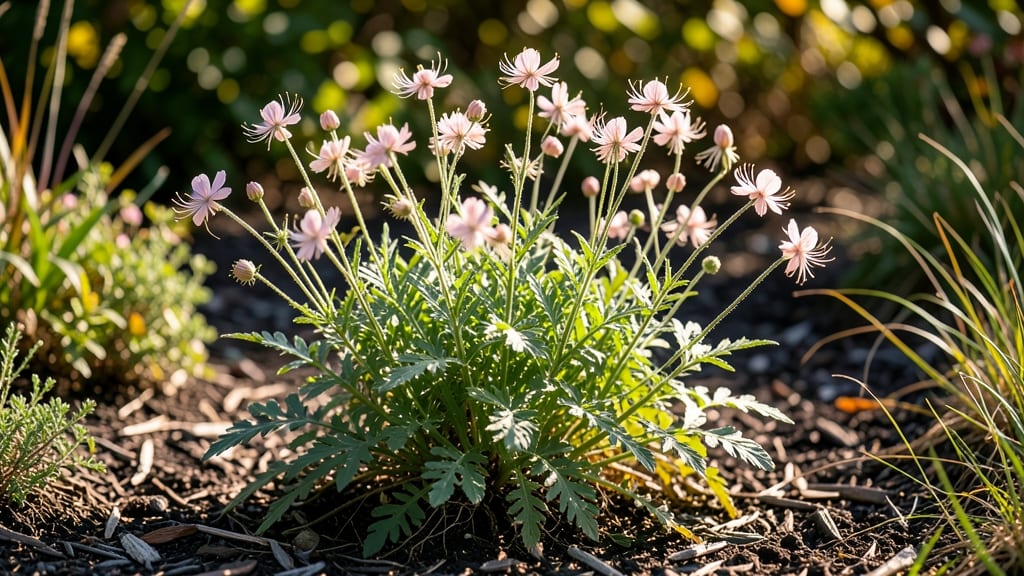
Gaura qualifies as a perennial in USDA zones 5-10, though it behaves like a hardy annual in colder regions. Its deep root system and self-seeding traits enable seasonal regrowth, even if frost reduces foliage to the ground each winter.
Gaura's true perennial nature shines in warmer climates where it returns year after year with minimal care. 🌱 The key lies in its cold-resistant root system, which stores energy to fuel new growth when temperatures rise.
In colder zones, gardeners often treat it as an annual because winter dieback is more pronounced, but with proper protection like mulching, you can coax perennial behavior even in marginal climates.
What sets gaura apart is its ability to self-seed prolifically, meaning even if the main plant dies back, new shoots often emerge from seeds dropped the previous season. This makes it an excellent low-maintenance choice for gardeners who want long-lasting color with minimal effort.
The plant's adaptability means it thrives in both formal gardens and wildflower meadows, making it a versatile perennial option for many landscapes.
💡 In This Article
- Gaura’s Cold-Hardiness and True Perennial Behavior
- How to Extend Gaura’s Lifespan in Cold Climates
Gaura’s cold-hardiness and true perennial behavior
Gaura's perennial status comes from its deep, fibrous root system that can withstand temperatures down to -20°F in protected conditions. Unlike shallow-rooted annuals, gaura stores carbohydrates in its roots during dormancy, fueling new growth when spring arrives.
This root system acts like a natural energy reserve, similar to how peonies or daylilies survive winter. The key difference is that gaura's foliage often dies back completely in colder zones, while its roots remain viable beneath the soil.
In USDA zones 8-10, gaura behaves as a true perennial, returning each year with minimal winter protection. The plant's natural dormancy period begins when nighttime temperatures consistently drop below 50°F, triggering a metabolic slowdown.
What's fascinating is how gaura's growth cycle mirrors that of many desert plants—it conserves water and energy during cold periods while maintaining root viability.
In zone 7, where winters are milder but still challenging, gaura may lose all foliage but often resprouts from the same root system when temperatures rise above 55°F.
The plant's self-seeding habit further complicates the perennial vs. annual debate. Gaura produces thousands of tiny seeds that scatter easily, creating a natural insurance policy.
Even if the parent plant dies back completely, these seeds often germinate the following spring, giving the appearance of perennial behavior without the same root system requirements.
This is why many gardeners in zones 5-6 treat gaura as an annual—it's not the same plant returning, but rather new plants emerging from seeds dropped the previous season.
What truly defines gaura's cold-hardiness is its ability to regenerate from both roots and seeds. In zone 5, where winters are harshest, established plants with protected roots may survive to resprout, while seeds from previous years provide additional plants.
The plant's adaptability means it can behave as a true perennial in ideal conditions while still thriving as a self-sustaining annual in marginal climates. This dual nature makes gaura one of the most resilient flowering plants for gardeners in transitional zones.
For comparison, consider how daylilies (true perennials) maintain both foliage and roots through winter, while gaura prioritizes root survival over foliage preservation. The trade-off is that gaura's delicate stems and leaves are more vulnerable to frost damage, but its deep roots compensate by providing a stronger foundation for regrowth.
This survival strategy explains why gaura often appears to "come back" from nothing each spring—it's not just seeds, but also the persistent root system doing the heavy lifting.
Understanding this mechanism helps explain why gaura thrives in both formal gardens and wild meadows. Its ability to regenerate from multiple sources—roots, seeds, and even cuttings—makes it uniquely adaptable.
In warmer zones, this results in dense, long-lasting plantings, while in colder areas, it creates a natural succession of new plants through self-seeding. This dual survival strategy is what makes gaura such a valuable perennial in many climates, despite its occasional annual behavior in colder regions.