
Flowers
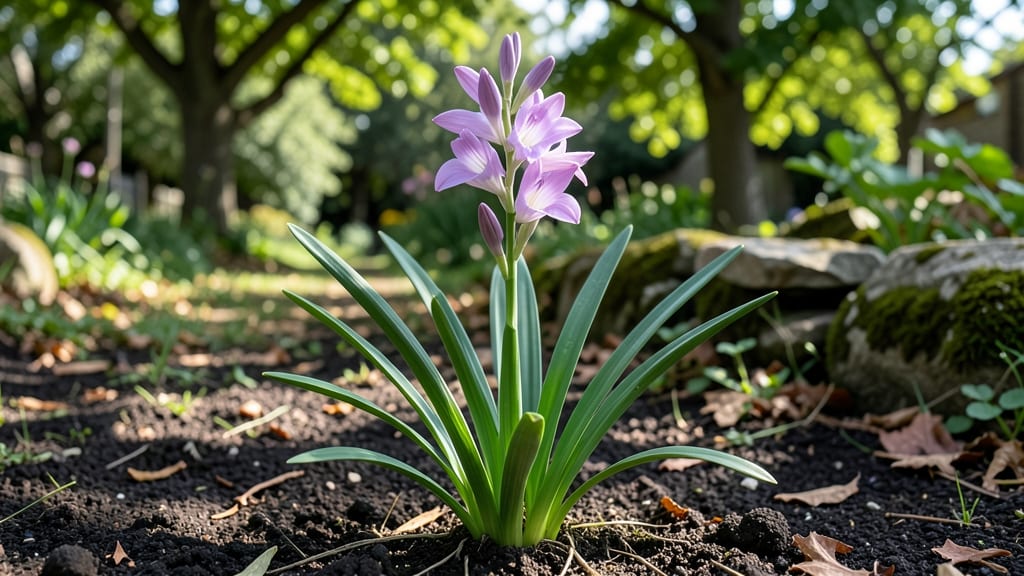
Freesia is not a true perennial—it behaves as an annual in most climates, dying back after flowering but only surviving year-round in frost-free zones like USDA Hardiness Zone 10 or warmer. Its corms require winter dormancy and replanting in colder regions.
Freesia's life cycle is tied to temperature cues rather than seasonal persistence. 🌱 In regions where frost occurs, the plant's above-ground foliage withers completely after blooming, leaving only underground corms to survive. These corms enter a natural dormancy phase during winter months, similar to how tulip bulbs behave.
What sets freesia apart is its inability to regenerate foliage from the same corm in colder climates without human intervention—unlike true perennials that resprout naturally each spring.
This annual behavior explains why gardeners in temperate zones must treat freesia like a seasonal plant. The corms can be carefully dug up, dried, and stored until replanting season arrives—typically in early spring—rather than relying on them to push through soil independently.
This cycle mirrors how many bulb plants operate, though freesia's delicate blooms and specific growing requirements make it feel more like an ephemeral garden star than a hardy perennial.
💡 In This Article
- Why Freesia Dies Back After Blooming
- How to Overwinter Freesia Corms for Repeated Blooms
Why freesia dies back after blooming
The freesia's post-bloom dieback is triggered by a combination of biological and environmental factors. After producing its signature fragrant flowers—typically lasting 2-3 weeks—the plant's foliage begins yellowing and wilting as a natural response to decreasing daylight and cooler temperatures.
This process is driven by the plant's photoperiodism, where shorter days signal the end of its flowering cycle. The energy stored in the corm (a thickened underground stem) then shifts entirely to maintaining dormancy rather than supporting new growth.
What makes freesia behave like an annual is its lack of cold hardiness. Unlike true perennials such as lavender or daylilies, freesia corms cannot tolerate freezing temperatures below 30°F.
In colder climates, even light frosts (28-32°F) can cause irreversible damage to the corm's protective layers, leading to complete dieback. This sensitivity explains why freesia thrives only in frost-free zones like Southern California or Florida, where it can remain dormant but viable throughout winter without human intervention.
The plant's natural cycle mirrors that of other geophytes (plant group that stores nutrients underground), but with a critical difference: true perennials like crocuses or daffodils regenerate foliage from the same corm each spring.
Freesia, however, requires a 6-8 week dormancy period at temperatures between 50-60°F to break its growth inhibitors. Without this precise temperature window, the corm fails to initiate new shoots, forcing gardeners to treat it as an annual.
Here's what happens at the cellular level: As temperatures drop, the corm's meristematic cells (growth centers) enter a state of quiescence, halting metabolic activity. The plant's chlorophyll production ceases, and stored starches convert into sugars that sustain minimal life processes.
This dormancy isn't just about survival—it's a carefully regulated process that prevents premature regrowth, which would deplete the corm's reserves before spring.
Visual clues help identify this cycle: The first sign is the flower stalks bending over and drying completely, followed by the leaves turning yellow from the base upward. By this stage, 90% of the plant's energy has been redirected underground.
What remains above ground is essentially dead biomass, while the corm below remains alive but inactive—waiting for the right conditions to restart growth.
This annual behavior isn't a flaw but an evolutionary adaptation. Freesia's native habitat along South Africa's coastal regions experiences distinct wet and dry seasons rather than cold winters.
The plant's life cycle is perfectly timed to capitalize on the region's brief rainy season for flowering, then conserves energy during the dry period. When transplanted to temperate climates, this natural rhythm clashes with local seasonal patterns, forcing gardeners to mimic these conditions artificially.