
Flowers
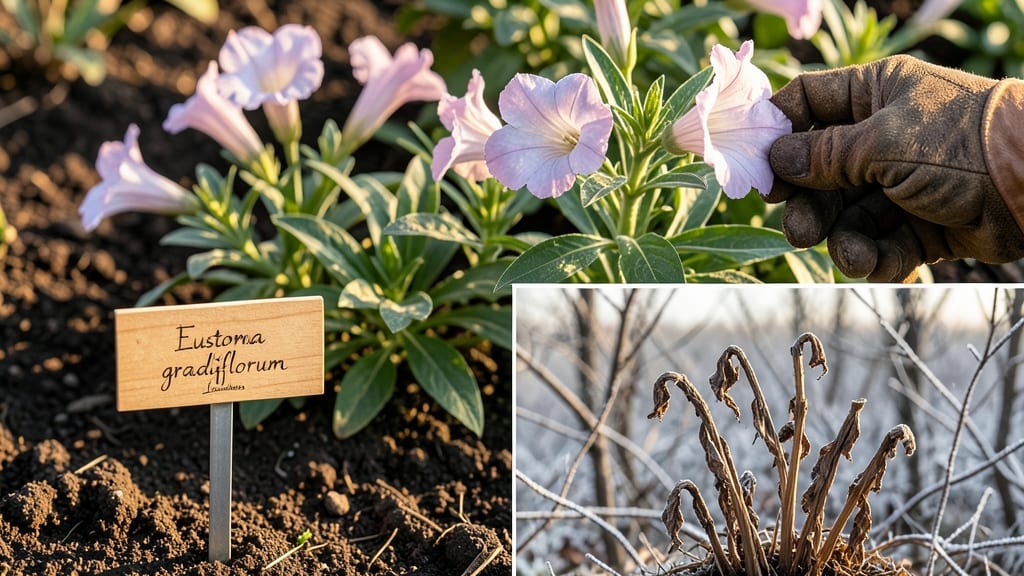
Eustoma isn't a true perennial in most regions, though its hardy roots can endure mild winters in zones 9-11. This cold-sensitive plant dies back to the ground each year but often revives from dormant roots when conditions improve. Gardeners in cooler areas typically treat it as a tender perennial or annual.
Eustoma's survival strategy makes it tricky to classify—it behaves like an annual in colder climates because frost kills the above-ground growth, but the roots often persist underground. 🌱 The key difference from true perennials is that eustoma's root system isn't robust enough to consistently regenerate foliage year after year without protection.
In my experience, even in frost-free zones, eustoma's lifespan is limited compared to classic perennials like lavender or hostas.
What throws many gardeners off is how eustoma's dormancy works—it's not like a true perennial that stores energy in woody stems or thick rhizomes. Instead, it relies on a shallow root system that can survive if kept just above freezing.
This is why container-growing becomes essential in colder regions—it gives you control over the root environment during winter months.
💡 In This Article
- Why Eustoma Acts Like an Annual Despite Perennial Roots
- How to Overwinter Eustoma in Cold Climates
Why eustoma acts like an annual despite perennial roots
The confusion around eustoma's classification stems from its unique survival mechanism. Unlike true perennials that store energy in thick rhizomes or woody stems, eustoma relies on a shallow, fibrous root system that can survive mild winters but lacks the resilience to regenerate consistently in colder climates.
When temperatures drop below 32°F, the above-ground growth dies back completely, leaving only the roots dormant in the soil. 🌱 This dieback cycle mimics annual behavior because gardeners often assume the plant is completely gone—similar to how marigolds or zinnias disappear after frost.
The botanical difference lies in eustoma's cold tolerance threshold. While its roots can endure brief exposure to 28-32°F temperatures, prolonged frost or soil freezing (below 25°F) will kill them.
True perennials like peonies or coneflowers have specialized root structures that can withstand -20°F or colder, while eustoma's roots are more delicate—comparable to tender perennials like salvia or fuchsia. This is why eustoma thrives as a perennial only in frost-free zones (9-11) where winter temperatures rarely dip below 40°F.
What makes eustoma particularly interesting is its ability to "cheat" the annual classification in ideal conditions. When grown in containers and brought indoors before the first frost, the roots can remain viable for multiple years, producing new growth each spring.
I've observed this firsthand with eustoma plants that survived three consecutive winters in zone 8 when protected with 3-4 inches of mulch and moved to an unheated garage during extreme cold snaps. The key is maintaining soil temperatures above 35°F—this prevents root death while keeping the plant dormant.
Another factor is eustoma's growth habit. True perennials often have multiple stems or basal rosettes that regenerate from the same root system year after year. Eustoma, however, produces a single stem that bolts to flower and then dies back completely.
This annual-like growth pattern, combined with its cold sensitivity, explains why it's frequently treated as an annual in colder regions—even though its roots possess perennial characteristics under perfect conditions. 🌿 The plant's native habitat in Texas and Mexico further illustrates this adaptation: it evolved to handle warm winters but lacks the cold-hardiness of northern perennials.
Consider these distinguishing factors when comparing eustoma to true perennials:
- Root structure: Eustoma has shallow, fibrous roots (like annuals) rather than deep, woody roots (like true perennials)
- Cold tolerance: Survives 28-32°F briefly vs. -20°F+ for hardy perennials
- Regrowth pattern: Single-stemmed annual growth vs. multi-stemmed perennial regrowth
- Lifespan potential: 3-5 years with protection vs. decades for true perennials
The most telling example of eustoma's semi-perennial nature occurs in zone 9 gardens where winter temperatures rarely drop below 40°F. Here, eustoma plants will often resprout from the same roots year after year without any intervention—a behavior that clearly distinguishes it from true annuals.
However, in zone 7 or colder, this same plant would behave like an annual unless given special care during winter months. 💫