
Flowers
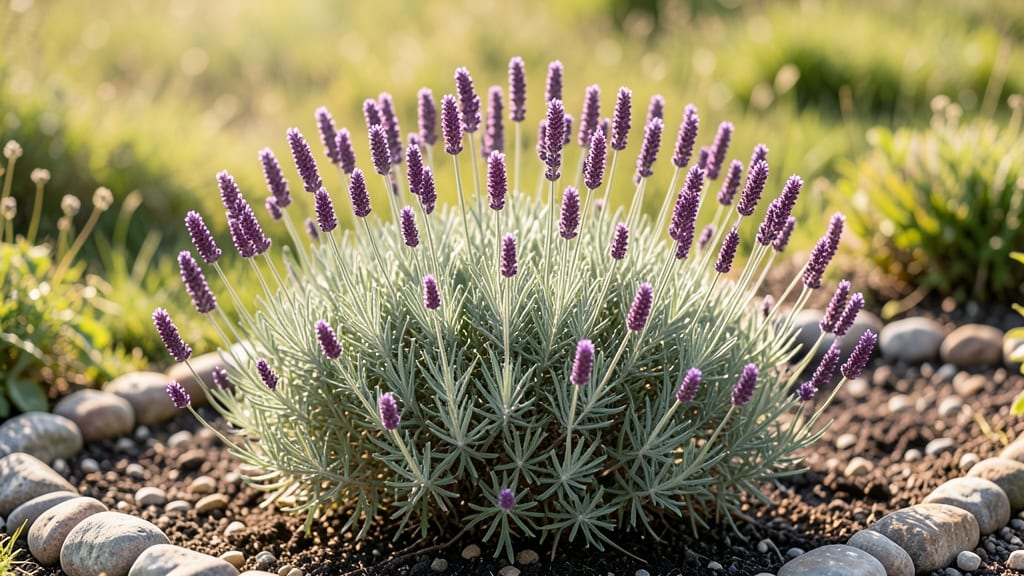
English lavender is indeed a perennial plant, thriving as a hardy shrub in USDA zones 5-9 where it survives winter cold by dying back to the ground. Its roots remain alive underground, allowing fresh growth to emerge each spring with proper winter care.
This hardy nature makes English lavender a favorite among gardeners in colder regions. 🌿 Unlike annual varieties that must be replanted yearly, perennial lavender establishes deep root systems that store nutrients and energy for regrowth.
The key to its winter survival lies in protecting both the roots and any remaining stems—mulching with straw or leaves and providing light wind protection can make all the difference in harsh winters.
What sets English lavender apart from other perennials is its semi-evergreen behavior. While it may lose its foliage in winter, the woody stems often persist, creating a natural framework for new growth. This characteristic makes it particularly resilient compared to tender perennials that require more intensive winter protection.
For best results, I recommend pruning back dead growth in early spring before new shoots appear. This encourages bushier growth and prevents disease by removing any damaged stems.
The plant's ability to regenerate from the root system means even if winter damage occurs, it can often recover fully with proper care.
💡 In This Article
- Understanding English Lavender’s Cold Hardiness Zones
- Winter Care Tips to Protect English Lavender
Understanding English lavender’s cold hardiness zones
English lavender (Lavandula angustifolia) earns its perennial status through a clever survival strategy: its woody stems and deep root systems work together to endure winter dormancy.
Unlike annual lavender varieties that complete their life cycle in one season, English lavender stores energy in its thick, fibrous roots (which can extend 12-18 inches deep) and woody base, allowing it to regenerate each spring.
This adaptation is why it thrives in USDA zones 5-9, where winter temperatures can drop to -20°F or lower.
The plant’s semi-evergreen nature comes from its ability to retain some foliage year-round in milder zones, while in colder climates it enters a dormant state—shedding leaves but keeping its woody framework intact.
This framework acts like a skeleton that protects the buds hidden at the base, ready to burst into growth when temperatures rise. 🌱 The key difference from annual varieties?
Annual lavender lacks this woody structure and must replant seeds each year, while perennials like English lavender rely on their persistent root crowns.
Botanically, English lavender’s hardiness is tied to its cold acclimation process. As temperatures drop, the plant increases its antifreeze proteins (similar to those in cold-hardy trees) and reduces water content in its cells to prevent freezing damage.
Studies show that well-established lavender plants (over 3 years old) handle cold better than younger specimens because their root systems mature to store more starch reserves—nature’s equivalent of a winter food bank.
Zone distinctions matter because zone 5 (with -20°F winters) pushes English lavender to its limits, while zone 9 (mild winters) allows it to stay evergreen. In transitional zones (like zone 6), gardeners often see partial dieback but full recovery.
The root zone temperature is critical—soil should never freeze solid, which is why mulching becomes essential in extreme cold.
For comparison, Spanish lavender (Lavandula stoechas), another popular variety, typically thrives only in zones 7-10—it lacks the same cold tolerance. This is why English lavender dominates colder climates: its hardiness zone range is nearly twice as broad as its Mediterranean cousin.
The trade-off? Spanish lavender often has showier flowers, but English lavender’s reliability in cold winters makes it the perennial powerhouse for northern gardens.
What most gardeners don’t realize is that plant maturity directly impacts winter survival. A 2-year-old lavender might struggle in zone 5, while a 5-year-old plant with a well-developed root system can handle the same conditions with ease.
This is why patience pays off—giving lavender time to establish pays dividends in winter resilience. 💫