
Flowers
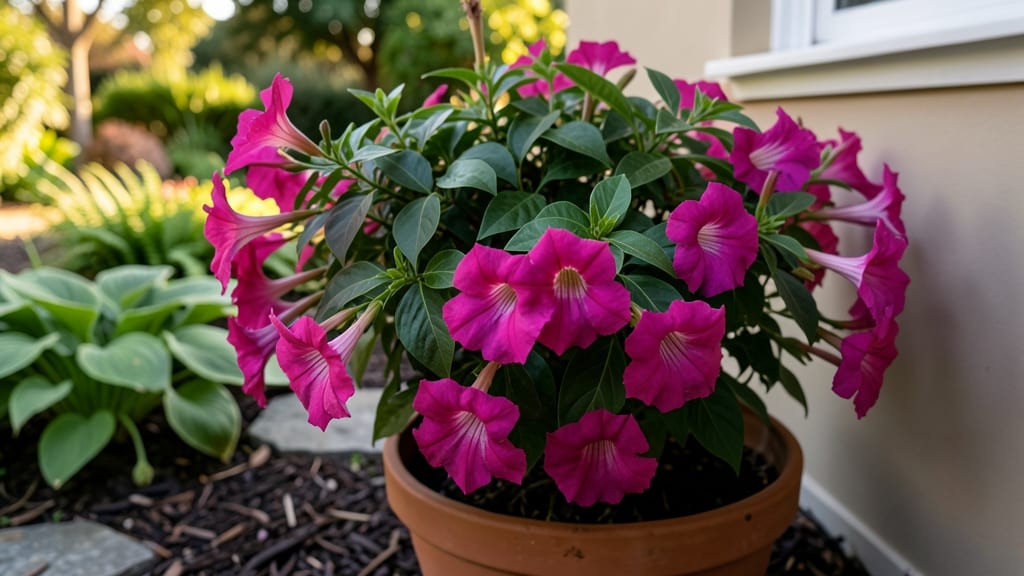
Dipladenia isn't a true perennial in most regions, but it often regrows from its roots after winter dieback—especially in warmer climates like USDA zones 9-11. While frost kills the top growth, proper winter care helps it bounce back seasonally.
This tropical beauty behaves like a perennial because its root system and basal growth can survive freezing temperatures, even when the stems and leaves die back. 🌱 Unlike true perennials that regrow from the same woody structure year after year, dipladenia relies on its hardy root zone to regenerate.
In colder zones (below USDA 9), gardeners often treat it as an annual unless they take protective measures during winter. The key difference lies in its subtropical origins—it's adapted to warm climates but can trick gardeners into thinking it's more cold-hardy than it truly is.
What makes this plant so resilient is its ability to store energy in its roots during dormancy. When spring arrives, new shoots emerge from the base, giving the illusion of perennial behavior. However, without proper winter protection, the roots themselves can suffer damage, making seasonal revival impossible.
This is why many gardeners in marginal climates opt to grow dipladenia in containers that can be moved indoors during cold months.
💡 In This Article
- Why Dipladenia Dies Back Annually (And How It Survives)
- Winter Care Tips to Keep Dipladenia Thriving Year-Round
Why dipladenia dies back annually (and how it survives)
Dipladenia's annual dieback stems from its tropical origins—it evolved in warm, frost-free climates where temperatures rarely dip below 40°F. The plant's above-ground growth is highly sensitive to cold, with frost causing cell damage that leads to blackened stems and leaf drop.
However, its root system and basal growth zones (the thickened stem base near the soil) contain specialized cells that can withstand brief cold snaps down to 25°F in short durations, thanks to natural antifreeze proteins that prevent ice crystal formation in tissues.
The confusion arises because dipladenia mimics perennial behavior through its rhizomatous root system, which stores carbohydrates and water. Unlike true perennials like bougainvillea (which have woody stems that regrow yearly), dipladenia relies entirely on its root reserves to regenerate.
When spring arrives, new shoots emerge from these basal growth points, creating the illusion of perennial survival. In USDA zones 9-11, this cycle repeats naturally, but in colder regions, the roots often need protection to survive winter at all.
What makes this survival mechanism fascinating is the plant's ability to enter a state of dormancy when temperatures drop. During this phase, metabolic activity slows dramatically, conserving energy in the roots.
The key difference from true perennials is that dipladenia doesn't have persistent woody stems—its survival depends entirely on the health of these underground storage organs. A single hard freeze (20°F or lower) can kill both the above-ground growth AND the roots if protection isn't provided.
Botanists classify dipladenia as a subtropical perennial because it behaves like one in ideal conditions, but its cold tolerance is limited compared to native perennials. For example, bougainvillea can handle 20°F for short periods, while dipladenia's roots typically survive only brief exposures to 28°F.
This is why gardeners in marginal climates must take active steps to protect it—without intervention, it behaves more like an annual plant that dies completely each winter.
The plant's vibrant blooms and rapid growth make it popular, but this tropical nature explains why it's often mislabeled as a true perennial.
In reality, its survival strategy is more akin to geophytes (plants that store nutrients underground), like crocuses, which also die back annually but regrow from bulbs or corms.
The difference is that dipladenia's root system isn't as specialized for cold storage as true geophytes, making it more vulnerable to prolonged cold.
Understanding this mechanism helps explain why some gardeners see dipladenia return year after year while others lose it completely. The plant's ability to regrow depends entirely on whether its roots survived the winter—something that becomes increasingly unreliable in zones colder than USDA 9.
This is why proper winter care becomes critical for maintaining dipladenia as a seasonal plant rather than an annual.