
Flowers
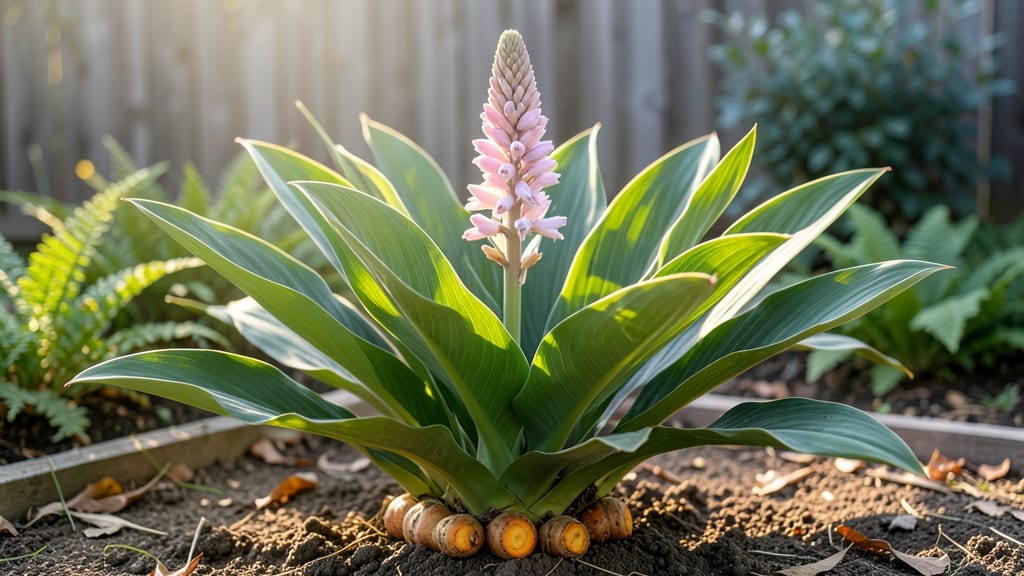
Curcuma ginger behaves as a perennial in warm climates, regrowing from its rhizomes each year. But in cold regions, it dies back annually unless you take protective measures like mulching or overwintering indoors.
This tropical plant's perennial nature comes from its underground rhizomes, which store energy for regrowth.
In frost-free zones (USDA 10-11), it thrives year-round, sending up new shoots from the same root system. 🌱 The challenge comes when temperatures drop—without protection, the above-ground foliage blackens and dies, but the rhizomes remain dormant until spring warmth returns.
Many gardeners in colder areas treat it as an annual, digging up and storing the rhizomes until replanting season.
What makes this adaptability fascinating is how the rhizomes function like a built-in survival mechanism. They act as living batteries, storing starches and nutrients to fuel new growth when conditions improve.
This is why even after a freeze kills the top growth, the plant can bounce back with proper care—whether that means lifting and storing the rhizomes or insulating them with thick mulch.
💡 In This Article
- How Curcuma Ginger’s Rhizome System Works as a Perennial
- Cold Zone Survival Tips for Growing Curcuma Ginger
How curcuma ginger’s rhizome system works as a perennial
Curcuma ginger's perennial nature stems from its specialized rhizome system, which functions like a natural energy reserve. These thick, knobby underground stems store starches and nutrients that fuel regrowth after each growing season.
In tropical climates (USDA zones 10-11), the rhizomes remain active year-round, producing new shoots when conditions are favorable. This continuous cycle is what makes it behave as a true perennial in frost-free environments.
The rhizomes grow horizontally just below the soil surface, typically 3-6 inches deep, where temperatures remain stable. Each segment contains growth nodes that can sprout new stems when exposed to warmth and moisture.
During active growth, the rhizomes expand by 1-2 inches per month, creating a network that can regenerate the entire plant if damaged. This resilience explains why curcuma ginger can recover even after partial rhizome loss.
Seasonal dormancy plays a crucial role in its perennial behavior. In cooler months, the above-ground foliage yellows and dies back, but the rhizomes enter a semi-dormant state. They don't die completely - they simply slow metabolic activity to conserve energy.
This dormancy period is triggered by shorter daylight hours and temperature drops below 60°F. The plant's ability to "pause" growth without losing its root system is what allows it to persist year after year in ideal conditions.
What sets curcuma ginger apart from true temperate perennials is its tropical origin. While plants like peonies develop hardy root systems that survive freezing, curcuma ginger's rhizomes contain 40-60% moisture content that makes them vulnerable to frost damage.
This high moisture level is what gives the rhizomes their characteristic plumpness but also makes them susceptible to freezing temperatures below 28°F. The trade-off is that this moisture-rich system enables rapid regrowth when conditions improve.
The plant's growth cycle follows a predictable pattern: new shoots emerge in spring from the rhizome nodes, foliage grows rapidly for 3-4 months, and flowers appear on mature plants. After flowering, the leaves senesce, but the rhizomes continue storing energy until the next growing season.
This cycle repeats annually in warm climates, demonstrating why curcuma ginger is classified as a perennial in its native tropical habitats.
Understanding this rhizome behavior explains why gardeners in colder regions must intervene. Without protection, the rhizomes can't survive winter freezes, which is why many treat it as an annual.
The good news is that with proper care, you can extend its perennial nature even in colder zones by protecting those vital underground storage organs. 🌱