
Flowers
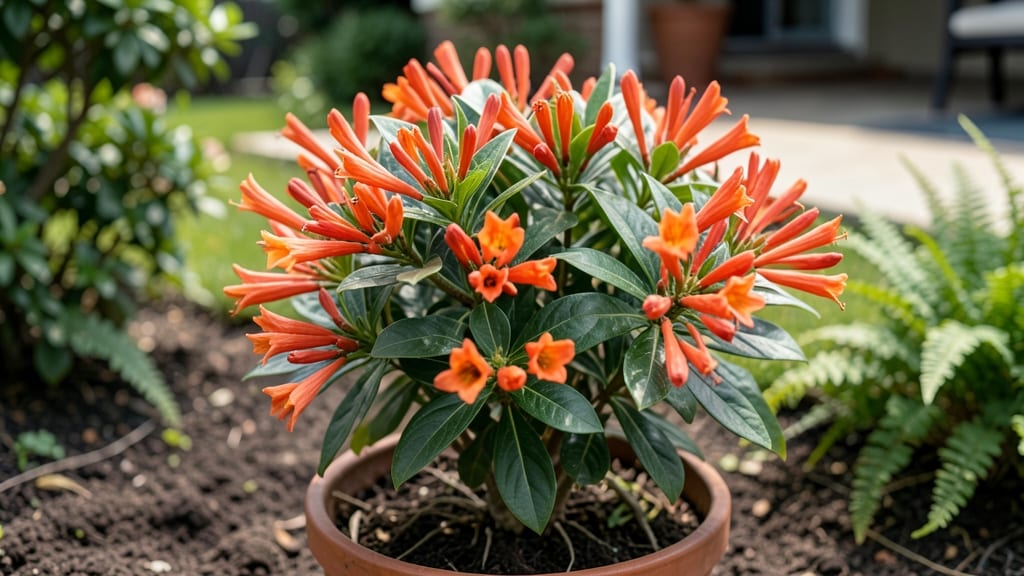
Crossandra isn't a true perennial in most climates but acts like a tender perennial, losing its foliage in winter and regrowing from its roots once temperatures consistently stay above 60°F (15°C).
This tropical plant's behavior stems from its origins in warm climates like India and Africa, where frost never occurs. 🌱 Unlike hardy perennials that survive winter dormancy above ground, Crossandra's roots remain active but its stems die back when exposed to freezing temperatures.
The key to its survival is this root system—when spring arrives, the roots push out new growth as soon as soil temperatures warm.
What sets Crossandra apart is its ability to bounce back dramatically—given proper care during its dormant period, it can produce even more vibrant blooms the following season.
This makes it a popular choice for gardeners in USDA zones 9-11, though with creative overwintering techniques, it can thrive in cooler regions too.
💡 In This Article
- Why Crossandra Dies Back in Winter: Understanding Its Growth Cycle
- How to Overwinter Crossandra in Cold Climates
Why Crossandra dies back in winter: understanding its growth cycle
Crossandra's winter dieback stems from its tropical heritage, where it evolved in regions like southern India and Africa where temperatures never drop below 50°F (10°C).
Unlike hardy perennials such as lavender or salvia—which develop woody stems and thick leaves to insulate against cold—Crossandra's delicate foliage freezes at 32°F (0°C), triggering a survival mechanism where the above-ground plant wilts entirely.
The roots, however, remain alive underground, storing energy in fibrous root systems that can withstand brief frost exposure.
The plant's classification as a "tender perennial" reflects this behavior: it survives winter only in climates where roots don't freeze solid.
In colder zones, even a light frost can kill back the stems permanently. 🌱 What makes Crossandra unique is how aggressively it regrows—once soil temperatures hit 60°F (15°C) for 3-5 consecutive days, the roots detect warmth and begin pushing out new shoots within 7-14 days.
This rapid rebound explains why gardeners in USDA zones 9-11 can treat it as an annual that self-seeds yearly.
Compare this to true perennials like salvia: their stems remain woody and upright through winter, while Crossandra's stems are herbaceous and completely collapse. The energy stored in Crossandra's roots—primarily in the form of starches—fuels this regrowth, similar to how dahlias regenerate from tubers.
The difference is that Crossandra's roots are less robust, requiring consistent warmth to avoid rotting during dormancy.
What most gardeners overlook is the role of soil temperature in triggering regrowth. Surface air temps may rise above 60°F (15°C) while soil remains cold, delaying sprouting. This is why mulching with 3-4 inches of straw or leaves in fall helps insulate roots—keeping soil 5°F (3°C) warmer than air temps.
The roots need this stable warmth to break dormancy without stress.
Crossandra's growth cycle also differs from annuals because it retains its root system year-round. Unlike marigolds that die completely and reseed, Crossandra's roots remain viable for 2-3 years if protected from freezing.
This persistence explains why even neglected plants can resprout spectacularly in spring—given the right conditions, the roots remember how to grow.
For visual comparison, imagine lavender's woody stems standing firm through winter versus Crossandra's stems that shrivel like overcooked pasta. The key difference lies in their evolutionary adaptations: lavender's thick stems store water for survival, while Crossandra's roots store energy for rapid regrowth.
This trade-off makes Crossandra stunning in warm climates but challenging in cold ones.