
Flowers
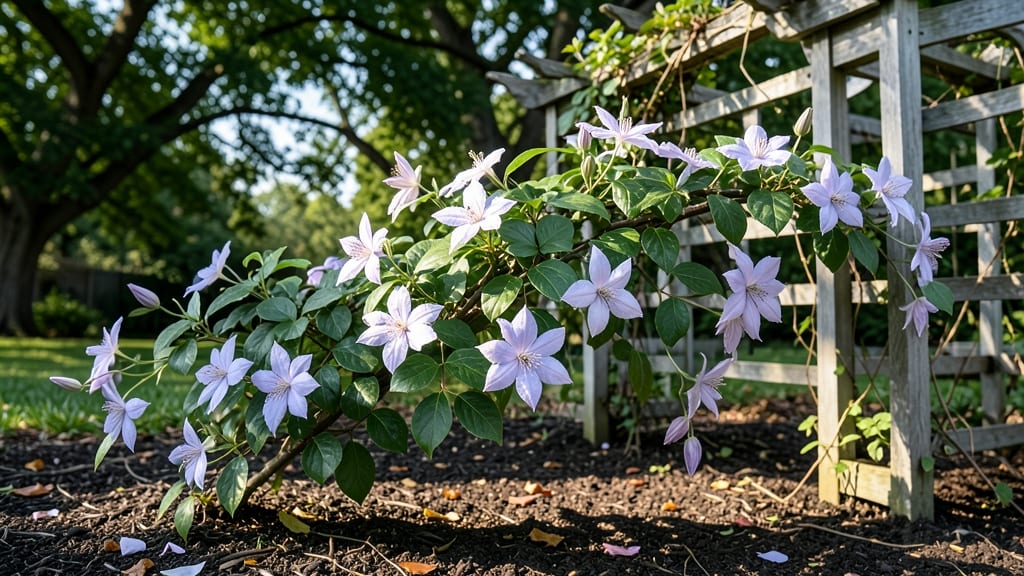
Yes, clematis is a perennial plant that dies back to the ground in winter but regrows from its robust root system each spring, making it a hardy garden staple for multiple seasons.
Clematis earns its perennial status through its ability to store energy underground during cold months, then burst back to life when temperatures rise. 🌱 Unlike annuals that complete their life cycle in one season, clematis plants develop deep, woody roots that act as a survival mechanism—think of them as nature's built-in battery.
This means with proper care, a single clematis vine can grace your garden for decades, though some varieties may need strategic pruning to maintain health and encourage abundant blooms.
What sets clematis apart is its adaptability—it thrives in various climates when given the right winter protection, like mulching or light covering. Many gardeners mistakenly assume its winter dormancy means it's an annual, but the key difference lies in those persistent roots waiting patiently beneath the soil.
I've seen clematis plants in my own garden return stronger each spring after years of neglect, proving just how resilient these plants truly are.
💡 In This Article
- How Clematis Survives Winter Dieback
- Caring for Clematis Perennials Year-Round
How clematis survives winter dieback
The key to clematis' perennial nature lies in its underground root system, which functions like a biological storage unit. During autumn, as temperatures drop below 50°F, the plant's foliage yellows and dies back, but the roots remain dormant while storing carbohydrates in specialized cells.
These roots can extend 3-6 feet deep and 10-15 feet wide, creating an extensive network that anchors the vine and preserves energy for regrowth. This system is far more resilient than annuals, which have shallow, non-woody roots that decompose after one season.
Clematis employs a fascinating survival strategy called "bud dormancy." The plant's growth points (buds) enter a state of suspended animation, protected by thick, waxy coatings that prevent moisture loss.
These buds contain all the genetic instructions needed to regenerate the entire vine, much like how a potato's "eyes" can sprout into a new plant.
The roots act as a reservoir, maintaining just enough moisture and nutrients to keep these buds viable through even the harshest winters—some varieties can survive temperatures as low as -20°F with proper protection. 🌿
What most gardeners don't realize is how this dormancy period actually recharges the plant. During winter, the roots continue a slow metabolic process called "cold hardening," which increases their cold tolerance and prepares them for rapid spring growth.
This is why you'll often see clematis emerging earlier than other perennials—its roots have been "primed" for action. The energy stored in these roots fuels the plant's first flush of growth, often within 2-4 weeks of consistent above-ground temperatures above 40°F.
Clematis' ability to regenerate from its roots distinguishes it from biennials (which live two years) and annuals (which complete their life cycle in one season). Even if the above-ground parts are completely destroyed by frost or disease, the roots can produce new shoots from multiple points along their length.
This is why you might see multiple stems emerging from what appeared to be a single plant—each stem could be a new growth point from the extensive root system. This regenerative capacity is what makes clematis such a reliable garden perennial.
The plant's life cycle demonstrates nature's efficiency in energy conservation. During summer, clematis focuses its energy on photosynthesis and flower production, while in winter, it conserves resources by shutting down non-essential functions.
This two-phase approach allows clematis to thrive in gardens for 10-20 years or more with minimal intervention, making it one of the most durable flowering vines available.
The misconception that clematis is an annual likely stems from its dramatic winter dieback, but the real story happens below ground where the magic of perennial survival occurs. ✨