
Vegetables
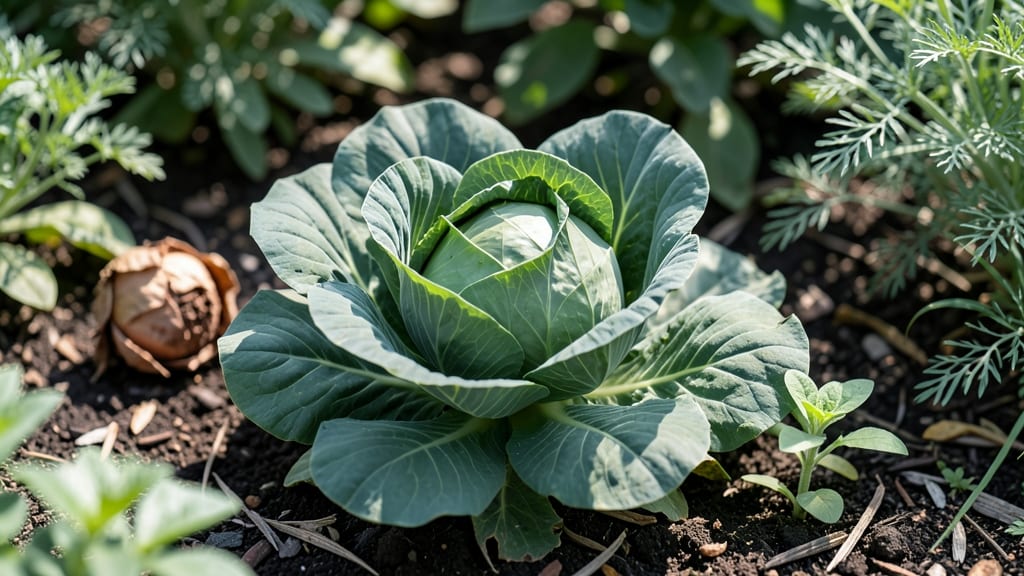
Cabbage behaves as a biennial rather than a true perennial, meaning it dies back in winter but can regrow from the same root if frost protection is provided. Its ability to return depends on climate—mild zones see annual regrowth, while colder areas require spring replanting.
This biennial behavior means cabbage follows a two-year life cycle: it grows leaves in its first year, then bolts and flowers in the second. 🌱 The key to encouraging regrowth lies in protecting the root crown from freezing temperatures, which can trigger dormancy.
In warmer climates like USDA Zone 8 or higher, cabbage often survives winter and produces new leaves in spring, while colder zones may need row covers or mulch to coax it back. Varieties like 'Winterbor' are bred for cold tolerance, making them better candidates for overwintering experiments.
What sets cabbage apart from true perennials like kale is its sensitivity to cold stress—once temperatures drop below 20°F, even protected roots may struggle to regenerate. This is why gardeners in Zone 5 or colder typically treat cabbage as an annual, replanting each spring.
The trade-off? Biennial cabbage offers larger harvests in its first year compared to perennial greens, which often yield smaller leaves.
💡 In This Article
- Why Cabbage Dies Back in Winter: The Science of Biennial Growth
- Extending Cabbage’s Life: Frost Protection and Regrowth Tips
Why cabbage dies back in winter: the science of biennial growth
Cabbage's winter dieback stems from its evolutionary adaptation as a biennial plant, designed to survive cold through dormancy rather than continuous growth. When temperatures drop below 32°F, the plant's metabolic processes slow dramatically, causing leaves to yellow and wilt—a protective response to conserve energy.
Unlike true perennials like kale, which maintain active growth through winter, cabbage prioritizes root survival, storing nutrients in its thick taproot to fuel potential regrowth in spring.
The critical factor here is vernalization, a biological process where exposure to prolonged cold (typically 4-6 weeks below 40°F) triggers flowering in the second year. This mechanism ensures cabbage produces seeds before dying, completing its life cycle.
In colder climates, this natural progression often means the plant bolts too early for harvest, forcing gardeners to treat it as an annual. The trade-off? Cabbage's biennial nature allows it to store more energy in its first year, resulting in larger heads than many true perennials.
What makes cabbage unique is its cold sensitivity threshold. While some varieties can tolerate brief dips to 15°F with protection, prolonged exposure below 20°F typically kills the root crown. This contrasts sharply with hardy perennials like Swiss chard or rhubarb, whose roots survive -20°F or lower.
The key difference lies in cabbage's shallow root system—just 6-12 inches deep—which makes it more vulnerable to freezing ground temperatures.
Here's what's actually happening at the cellular level: Cold stress triggers the production of abscisic acid, a plant hormone that signals dormancy. This hormone causes the plant to break down chlorophyll in leaves (turning them yellow) while redirecting nutrients to the root.
The root cells then enter a state of cold acclimation, producing protective proteins that prevent ice crystal formation in their tissues—a survival mechanism shared with winter wheat but absent in tropical plants.
Consider these key factors when evaluating cabbage's winter behavior:
- Climate zone: Zones 7-10 often see natural regrowth, while zones 5-6 require protection
- Variety selection: 'January King' tolerates 18°F better than 'Golden Acre'
- Soil moisture: Overly wet conditions increase root rot risk during dormancy
The science reveals why cabbage's biennial nature makes it a gardening paradox: it's more productive than true perennials in its first year but less reliable for long-term survival.
This duality explains why gardeners in milder climates often treat it as a semi-perennial, while those in colder regions replant annually—a decision based purely on temperature thresholds and frost duration.