
Aphids
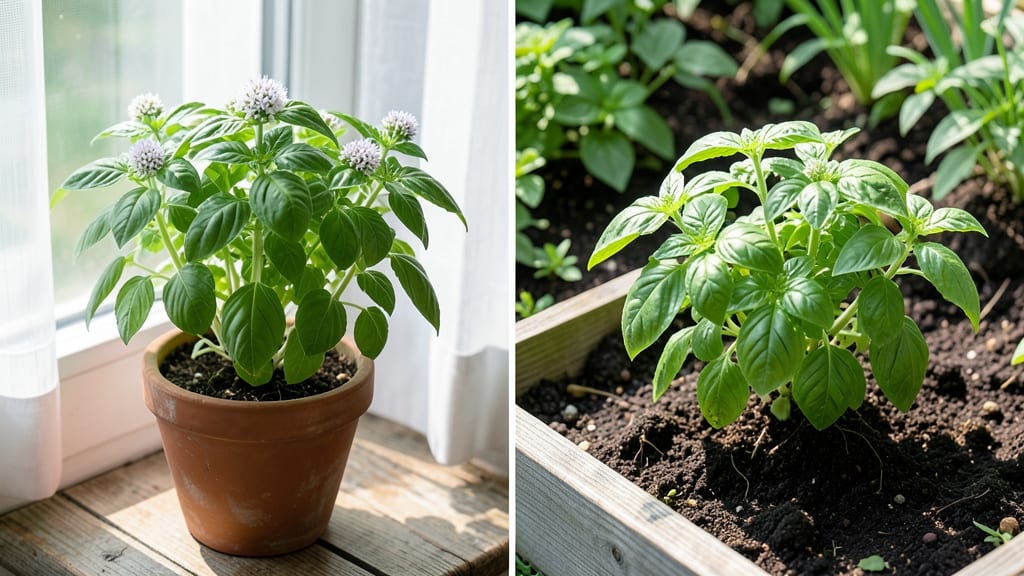
Basil is not a perennial in most climates but acts like an annual, dying back when frost hits. Only in USDA zones 10-12 does it survive winter dormancy and regrow, becoming semi-perennial with proper winter protection.
Basil's tropical roots explain why it struggles in colder climates. 🌱 The plant's delicate stems can't withstand freezing temperatures, causing irreversible damage when frost hits below 32°F. Even in milder zones like 9 or 10, basil needs protection from unexpected cold snaps to survive winter.
What makes this interesting is how different varieties respond—some, like Thai basil, handle cooler weather slightly better than sweet basil, but none can truly survive freezing without human intervention.
In warmer zones where basil can overwinter, the key is creating dormancy conditions: reducing water, moving pots to sheltered spots, and using mulch to insulate roots. This mimics how wild tropical plants survive dry seasons, though basil's domesticated varieties have lost some of that natural resilience.
The good news? With these techniques, you can effectively extend basil's growing season well beyond one year in suitable climates.
💡 In This Article
- Why Basil Dies in Cold Climates: Science of Freeze Sensitivity
- How to Grow Basil Year-Round in Cold Zones
Why basil dies in cold climates: science of freeze sensitivity
Basil's tropical origins make it fundamentally incompatible with freezing temperatures. Native to regions like India and Southeast Asia, basil evolved in climates where temperatures rarely drop below 50°F. Its tender stems contain high moisture content—around 85-90%—which freezes and ruptures cell walls when exposed to 32°F or lower.
This cellular damage is irreversible, causing the plant to blacken and die within hours of frost exposure. 🌱
The science behind this sensitivity lies in basil's lack of cold acclimation mechanisms. Unlike hardy perennials like mint or oregano, basil cannot produce protective antifreeze proteins or increase its sugar content to prevent ice crystal formation.
Even a light frost triggers rapid dehydration as water vapor escapes from damaged cells. For comparison, cilantro—a similarly tender herb—suffers similar freeze damage, though it can sometimes regrow from roots if the crown survives.
What makes this especially challenging is how quickly frost damage occurs. Basil's stems lack the woody structure of perennials, meaning they can't insulate internal tissues. When temperatures drop below 30°F, the plant's vascular system collapses within 2-4 hours, cutting off nutrient flow.
This explains why even a single overnight frost in zone 7 or colder will kill basil plants outright, leaving no chance for regrowth in spring.
Another critical factor is basil's shallow root system, which doesn't penetrate deeply enough to access warmer soil layers during cold snaps. Most basil varieties develop roots only 6-12 inches deep, making them vulnerable to temperature fluctuations at the soil surface.
In contrast, hardy perennials like rosemary can send roots 3-5 feet deep to escape frost. This shallow rooting also makes basil highly susceptible to heaving—when soil freezes and expands, it can uproot the entire plant.
Interestingly, basil's leaves contain high levels of volatile oils (like eugenol) that actually increase in concentration when stressed by cold. While these compounds give basil its signature aroma, they don't provide any freeze protection.
In fact, the oils can make the plant more attractive to pests during winter stress, creating a secondary challenge for gardeners trying to preserve their plants through cold seasons.
The good news lies in understanding these limitations. By recognizing basil's tropical nature and its physiological weaknesses, gardeners can implement targeted protection strategies. For example, using black plastic mulch can raise soil temperatures by 5-10°F during cold nights, while row covers provide a 10-15°F buffer against frost.
These approaches don't change basil's fundamental annual nature but can extend its growing season significantly in marginal climates.