
Aphids
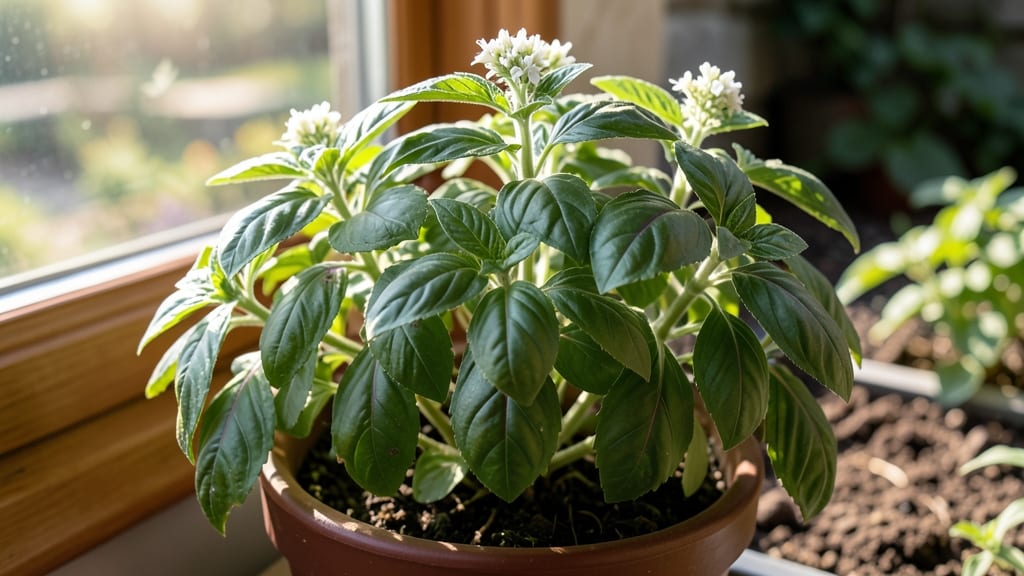
Basil behaves as a perennial herb in warm climates but is usually cultivated as an annual in colder regions because frost kills its above-ground growth. With proper protection, its root system can survive winter and regrow when temperatures rise.
Basil's perennial nature depends entirely on climate and protection.
In USDA zones 10-12, where winters rarely drop below 20°F, basil naturally returns year after year from its robust root system. 🌱 The key difference from true perennials like oregano lies in its shallow root structure—while oregano develops deep taproots, basil relies on fibrous roots that store minimal energy for regrowth.
This makes it vulnerable to prolonged freezing, which is why gardeners in cooler zones treat it as an annual.
For those in transitional climates, extending basil's life involves strategic overwintering. Moving potted plants indoors before the first frost or using thick mulch to insulate soil can preserve roots. Cold-hardy varieties like Thai basil also offer better survival chances.
The trade-off? Indoor basil often produces smaller leaves, but the ability to harvest fresh herbs year-round makes the effort worthwhile.
💡 In This Article
- How Basil’s Root System Determines Its Perennial Nature
- Extending Basil’s Growing Season: Practical Tips for Year-Round Cultivation
How basil’s root system determines its perennial nature
Basil's perennial potential hinges on its fibrous root system, which spreads horizontally just below the soil surface. Unlike true perennials like oregano—whose deep taproots store energy reserves for years—basil's roots are shallow and store minimal carbohydrates.
This makes them vulnerable to freezing temperatures below 28°F, where cell damage occurs within hours. In USDA zones 10-12, where winter lows rarely drop below 20°F, these roots naturally survive and regrow when spring arrives.
The key difference lies in energy storage: oregano's taproot can sustain the plant through winter dormancy, while basil's fibrous roots require consistent warmth to regenerate. When exposed to frost, basil's above-ground growth dies back completely, but the roots may remain viable if protected.
This is why gardeners in warm climates often find basil "volunteering" the next season—its roots have simply been waiting for warmer conditions to resume growth. 🌱
Temperature thresholds are critical: basil roots begin suffering damage at 25°F, with irreversible injury at 15°F. The plant's native tropical origins mean it lacks cold acclimation mechanisms found in temperate perennials.
Even in mild winters, prolonged exposure to 32°F can weaken the root system, reducing its ability to regrow. This biological limitation explains why basil is classified as a perennial only in frost-free zones.
Soil moisture plays a secondary role in root survival. Well-drained soil prevents root rot during winter, while consistent moisture helps maintain cellular integrity. In contrast, waterlogged conditions accelerate freezing damage.
The combination of shallow roots and moisture sensitivity means basil's perennial nature is fragile—one hard freeze can turn a potential perennial into an annual. This is why gardeners in marginal climates must take active measures to protect basil through winter.
Comparing basil to true perennials reveals another key difference: regrowth speed. While oregano may take weeks to emerge from dormancy, basil can sprout new leaves within 2-3 weeks of warm conditions if its roots survived.
This rapid recovery is both a strength and a weakness—it allows quick harvests but also means the plant is more vulnerable to environmental stress. The trade-off between speed and fragility defines basil's unique position as a "conditional perennial."
For those in transitional climates, understanding this root system explains why overwintering strategies focus on insulation and protection. A 6-inch layer of straw mulch can raise soil temperatures by 10°F or more, creating a microclimate that preserves roots.
This botanical insight transforms what might seem like a simple gardening question into a fascinating study of plant physiology and climate adaptation. 🌿