
Flowers
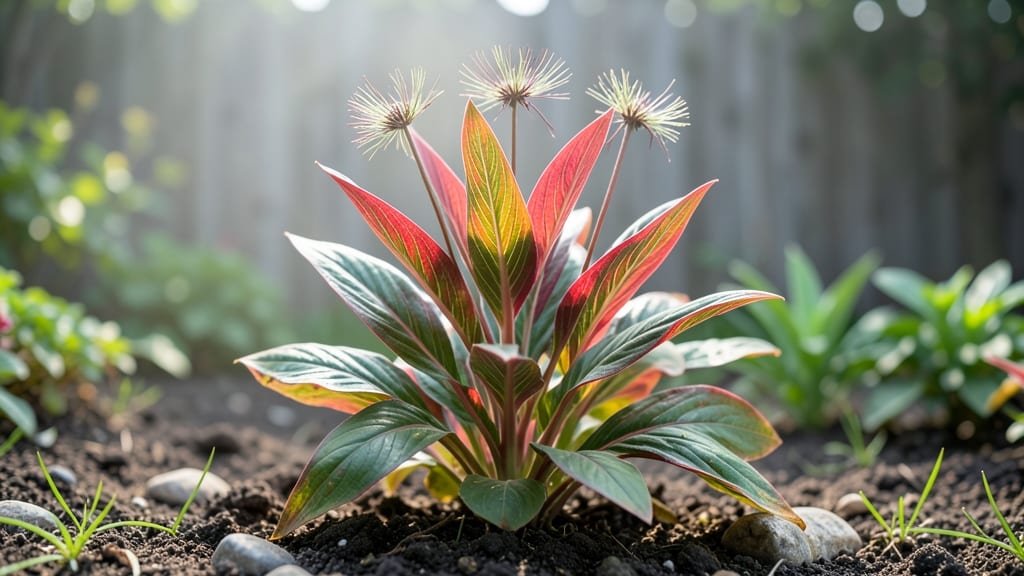
Is amaranthus a perennial? No—it behaves like a short-lived perennial in mild climates (USDA zones 9-11), where it may regrow from its root crown after frost, but in colder regions, it dies back completely each winter.
Amaranthus plants are often classified as tender perennials because their root systems can persist through mild winters, allowing them to resprout in spring. 🌱 However, their ability to survive depends heavily on your climate zone—even a light frost can kill the foliage, and harsh winters will typically destroy the roots entirely.
In warmer areas, you might see amaranthus return year after year, while gardeners in colder zones treat it as an annual. The key difference lies in how aggressively you protect the roots during winter months.
For gardeners in transitional zones, strategies like heavy mulching or growing in containers can help extend the plant's lifespan. This approach mimics the natural resilience of amaranthus in its native tropical and subtropical habitats, where it thrives as a perennial.
Understanding this distinction helps you decide whether to treat your amaranthus as a seasonal plant or invest in overwintering techniques.
💡 In This Article
- Amaranthus Cold-Hardiness and Survival Mechanics
- Extending Amaranthus Lifespan: Mulching and Overwintering Hacks
Amaranthus cold-hardiness and survival mechanics
Amaranthus plants are classified as short-lived perennials or tender annuals because their survival hinges on temperature and root resilience. Unlike true perennials (such as lavender or hostas), amaranthus lacks specialized winter-hardy structures like thick rhizomes or deep taproots.
Instead, it relies on a fibrous root system that stores minimal energy reserves—typically just enough to regenerate foliage in mild winters (USDA zones 9-11), where temperatures rarely drop below 20°F.
The turning point for amaranthus is frost. Even a light freeze (32°F) will blacken the leaves, but the root crown (the thickened base where stems emerge) can survive if protected.
In colder climates (USDA zones 7 and below), the roots often fail to regenerate after 15°F or lower, forcing gardeners to replant annually. This explains why amaranthus thrives as a perennial in Florida or Southern California but behaves like an annual in the Midwest or Northeast. 🌡️
Botanically, amaranthus belongs to the Amaranthaceae family, which includes both true perennials (like pigweed) and annuals. The key difference lies in their native habitats: tropical and subtropical regions where winters are non-existent or brief.
When transplanted to temperate zones, amaranthus struggles to adapt because its growth cycle is tied to warm-season photosynthesis—it prioritizes rapid leaf and seed production over cold tolerance.
Here’s how the survival mechanics break down by zone:
- USDA 9-11 (Mild Winters): Root crowns survive 20-25°F with minimal protection; regrowth occurs by spring.
- USDA 8 (Borderline): Needs heavy mulch (6+ inches) or row covers to prevent root dieback.
- USDA 7 and Below (Cold Winters): Roots rarely survive below 15°F; treat as annual.
For gardeners in transitional zones (USDA 8), the battle is often won or lost in late fall. Amaranthus roots can remain dormant for months, but prolonged exposure to sub-freezing temperatures or wet, frozen soil triggers rot. This is why mulching with straw or leaves (8-12 inches thick) is critical—it insulates the soil and maintains temperatures above 30°F, the threshold where roots begin to fail.
The science behind this involves cryoprotection, a process where plants accumulate sugars and proteins to prevent cell damage from ice formation. While amaranthus has some natural cryoprotective mechanisms, they’re far less developed than in true perennials.
For example, a hardy perennial like asparagus can withstand -20°F because its roots produce antifreeze-like compounds; amaranthus lacks these adaptations. 🌱
Understanding these mechanics helps you set realistic expectations. In USDA 9-11, amaranthus may return year after year with minimal effort, while in colder zones, even the hardiest varieties (like ‘Love Lies Bleeding’) will require overwintering strategies—or acceptance that they’re seasonal plants.