
Flowers
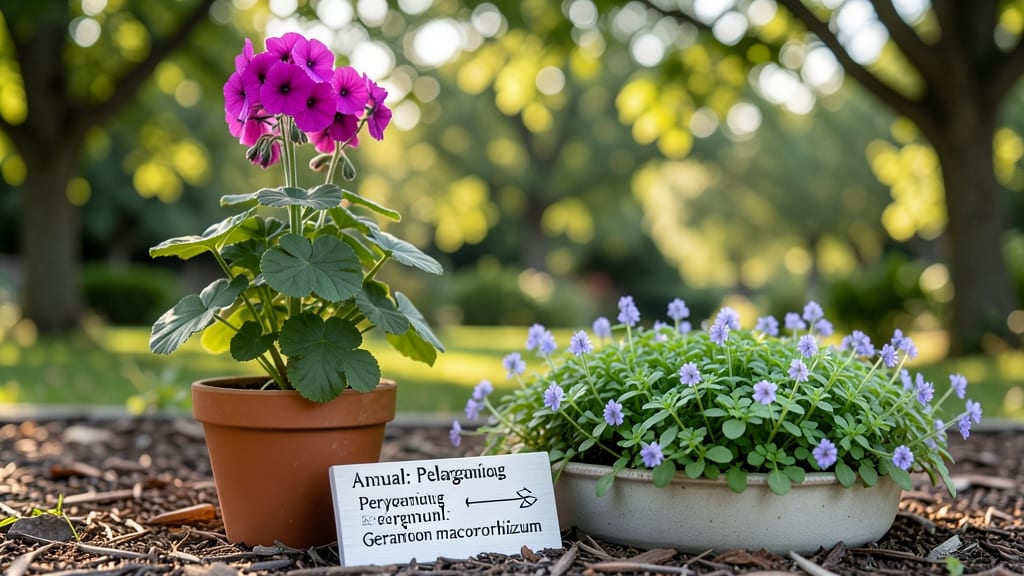
Whether geraniums are annuals or perennials depends entirely on your climate—most die back in cold regions (USDA Zones 3-6) but return year after year in warmer areas (Zones 7-10) with proper care. Hardy types like Geranium macrorrhizum withstand frost, while tender varieties succumb to freezing temperatures.
Your local climate determines whether geraniums act as annuals or perennials. 🌱 In colder zones, the roots often survive winter but the tops freeze back, requiring replanting each spring. The key difference lies in their hardiness—some varieties naturally resist frost, while others need protective measures like mulching or container overwintering.
I've found that even in Zone 5, with careful winter prep, geraniums can bounce back stronger than ever in spring.
For gardeners in marginal zones, the solution often lies in strategic overwintering. Moving potted geraniums indoors or burying them deeply in mulch can extend their lifespan beyond a single season. The science behind this is fascinating—the roots enter dormancy when temperatures drop, then regrow when warmth returns.
This explains why some gardeners swear by treating geraniums as perennials even in colder climates.
💡 In This Article
- Climate Zones and Geranium Plant Hardiness
- Extending Geranium Lifespan in Cold Regions
Climate zones and geranium plant hardiness
The USDA Plant Hardiness Zone Map serves as the foundation for understanding geranium survival. This system divides North America into 13 zones based on average annual minimum temperatures, with each zone representing a 10°F difference.
Geraniums naturally thrive as perennials in Zones 7-10, where winter temperatures rarely drop below 0°F. In these warmer regions, their fibrous root systems remain active year-round, continuously replenishing nutrients through mild winters.
What changes dramatically in colder zones is the plant's response to frost. In Zones 3-6, where winter lows can reach -30°F to 0°F, most geranium species experience topkill—the above-ground stems and leaves die back completely.
However, the roots often survive because they're insulated by soil and organic matter. Geranium macrorrhizum, also called creeping Charlie, stands out as an exception with remarkable frost tolerance down to -25°F when properly established, thanks to its deep root system and ability to produce new growth from the crown.
The science behind this survival mechanism involves a process called dormancy. When temperatures drop below 32°F, geraniums undergo physiological changes where growth slows dramatically. Their cells produce protective proteins that prevent ice crystal formation, while carbohydrates stored in roots fuel regrowth when spring arrives.
This explains why you might see new shoots emerging from the ground even after a harsh winter—it's not a new plant, but the same roots reviving their growth cycle.
Not all geraniums share this resilience. Tender varieties like Pelargonium species (often called "zonal geraniums" in gardening circles) have limited cold tolerance, typically surviving only to 25-30°F before suffering permanent damage. Their leaves often develop brown edges or crisp in freezing conditions, a clear sign of frost injury.
The difference comes down to evolutionary adaptations—hardy geraniums developed in temperate climates where winter survival was essential, while tender types originated in warmer regions where frost was rare.
Visual clues can help identify hardy versus tender geraniums. Hardy types often have darker, leathery leaves and more robust stems, while tender varieties tend to have softer, lighter foliage. The root structure also differs—hardy geraniums develop deeper, more extensive root systems that anchor them better against temperature fluctuations.
This structural difference is why you'll often see creeping Charlie spreading aggressively in garden beds, while tender geraniums remain more compact and delicate.
Understanding these hardiness distinctions is crucial for gardeners in transition zones like Zone 6 or 7. In these areas, geraniums may survive winters unprotected but often with reduced vigor.
The key factor becomes not just whether they survive, but whether they'll return with the same health and flowering capacity as they had the previous season. This is where proper winter care becomes the deciding factor between treating geraniums as annuals or perennials in your garden.