
Flowers
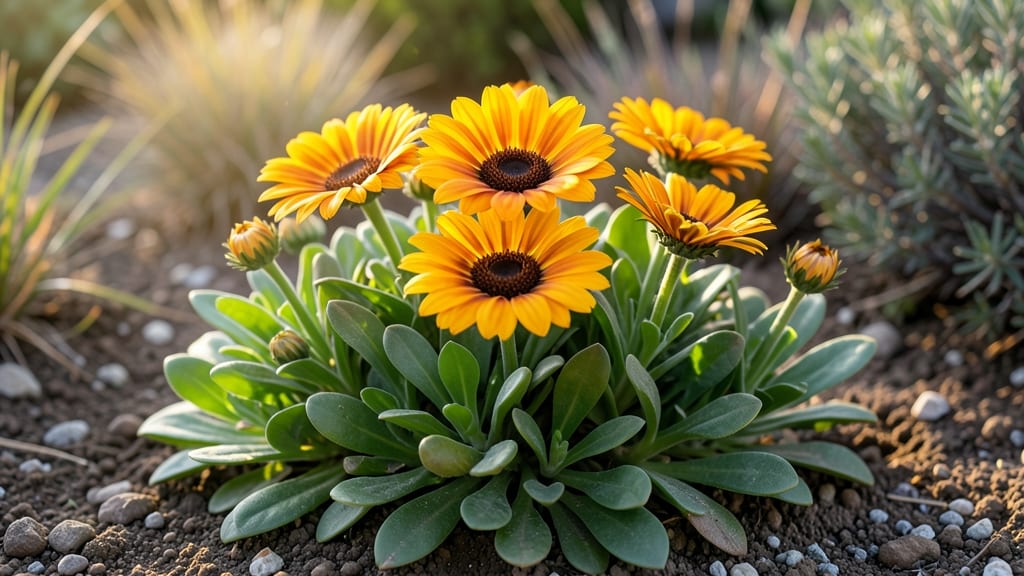
Gazania flowers behave as annuals in cold climates, where frost kills their foliage but often triggers prolific self-seeding for next year's blooms, while in frost-free regions they grow as perennials with consistent care.
This behavior comes down to temperature tolerance.
Gazanias are native to South Africa's dry climates, where they evolved to thrive in heat but lack cold resistance. 🌡️ In colder zones, the plants die back completely when frost hits, but their seeds often survive in the soil, sprouting fresh blooms when temperatures warm again.
In warmer climates, their roots can persist year-round with proper watering and protection from extreme heat, allowing them to return annually without replanting.
For gardeners in transitional climates, this means you can enjoy gazanias as both annuals and perennials depending on winter conditions. The key is understanding your local frost patterns—if you get hard freezes, treat them as annuals and plan for self-seeding.
In milder winters, they'll often bounce back on their own with minimal intervention.
💡 In This Article
- Understanding Gazania’s Frost Sensitivity and Dieback Patterns
- Year-Round Gazania Care Tips for Frost-Prone Gardens
Understanding gazania’s frost sensitivity and dieback patterns
Gazania's lifecycle shifts between annual and perennial behavior based on a biological response to temperature—a survival mechanism rooted in their South African desert origins. These plants evolved in regions where winter frost is rare, so their cells lack the protective proteins that allow other perennials to survive freezing.
When temperatures drop below 32°F (0°C), the entire above-ground structure collapses as cell membranes rupture from ice crystal formation. 🌡️ This dieback isn't just cosmetic—it's a complete metabolic shutdown, with energy reserves redirected to root systems in milder climates.
The key difference between annual and perennial behavior lies in root survival. In frost-free zones, gazania roots develop deeper, woody structures that can store starch reserves for 2-3 years when given consistent moisture and protection from summer droughts. These roots produce new shoots when conditions improve, creating the perennial effect.
In colder regions, however, even the roots typically succumb to frost unless protected by 6+ inches of mulch or container insulation. The plant's survival strategy then shifts entirely to seed production—often 100-200 seeds per plant—which lie dormant until spring warmth triggers germination.
What most gardeners don't realize is that gazanias actually time their frost response with remarkable precision. Studies show they begin producing stress hormones 2-3 weeks before the first expected frost, accelerating seed maturation.
This explains why you'll often see second flushes of blooms in late summer—it's the plant's last attempt to set seed before winter. The seeds themselves have an incredibly hard outer coating that protects them from temperature swings and even light soil movement during winter months. 💫
This dual lifecycle strategy makes gazanias uniquely adaptable. In USDA Zone 8 and warmer, where winters rarely drop below 20°F (-6°C), they'll reliably return year after year. But in Zone 7 and colder, their perennial potential depends entirely on microclimate protection.
Even a 10°F (-12°C) dip can kill unprotected roots, forcing gardeners to choose between annual replanting or creating frost pockets using techniques like raised beds with heat-absorbing stones.
The science behind their dieback is fascinating when you consider their native habitat. In South Africa's winter-rainfall regions, gazanias experience dormancy periods during their dry summer months—not frost-induced.
Their ability to switch between these survival modes explains why they thrive in Mediterranean climates but struggle in regions with prolonged cold snaps.
The plant's entire growth cycle accelerates in response to temperature cues, with blooming typically occurring 4-6 hours after sunrise when temperatures reach 70°F (21°C)—a perfect adaptation for their heat-loving origins.
For gardeners in transitional zones, this means you can create perennial-like behavior by mimicking their native conditions. Planting in well-draining soil with 20-30% sand content and providing afternoon shade during summer's peak heat (when temps exceed 95°F (35°C)) can significantly improve their cold tolerance.
The trade-off? You'll need to monitor soil moisture closely—gazanias hate soggy roots, which is why they thrive in desert conditions but struggle in humid climates. 💧