
Tools
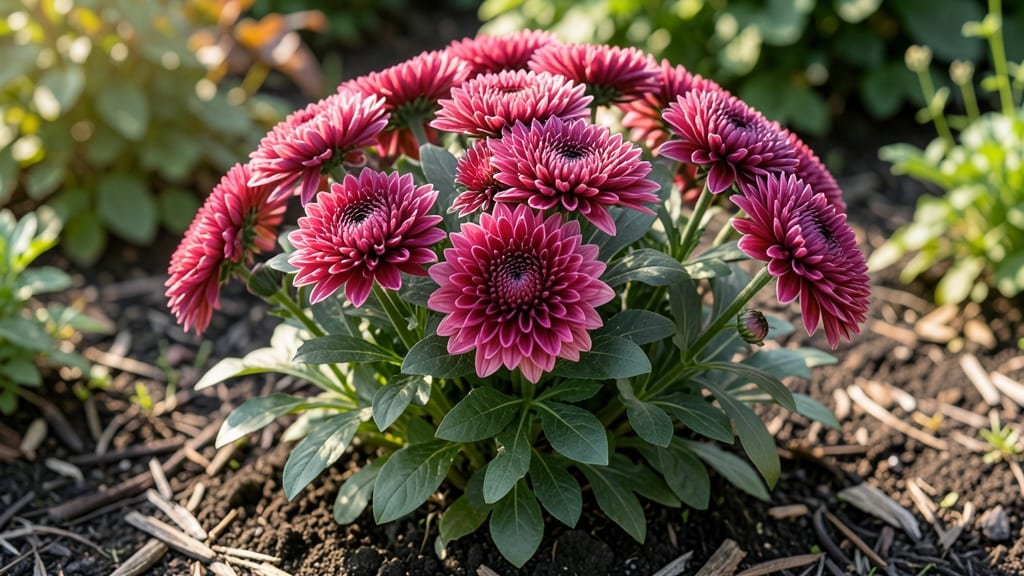
Garden mum perennials thrive as long-lived plants when planted in USDA zones 7-11, though they may experience winter dieback in colder climates. Their true lifespan extends through underground tubers, which regenerate foliage each spring in suitable conditions.
These hardy plants rely on their rhizomatous root systems—thick, fleshy tubers that store nutrients—to survive harsh winters. 🌱 While above-ground stems may blacken and die back in zones 6 and below, the roots remain dormant until temperatures rise, often sprouting new growth by late spring.
This makes garden mums technically perennial even in marginal climates, though they may need annual division to prevent overcrowding. The key to extending their lifespan lies in protecting those tubers: heavy mulch in fall and well-draining soil prevent rot during freeze-thaw cycles.
What many gardeners don't realize is that cultivar selection plays a huge role in hardiness. Some varieties like 'Autumn Joy' tolerate colder zones better than others, while hybrid mums may struggle in zone 7 if exposed to prolonged frost.
I've found that late-summer planting gives roots extra time to establish before winter, and dividing clumps every 3-4 years rejuvenates growth. The trade-off? More winter dieback in colder areas—but with proper care, those tubers will always bounce back.
💡 In This Article
- How Cold Hardiness Affects Garden Mum Longevity
- Pro Tips for Year-Round Garden Mum Care
How cold hardiness affects garden mum longevity
Garden mums rely on their rhizomatous tubers—thick, fleshy storage roots—to endure winter dormancy. These tubers can survive temperatures down to 10°F when properly insulated, but their ability to regenerate depends on soil moisture and insulation.
In USDA zones 7-11, the tubers remain viable year-round, while in zones 6 and below, they enter deeper dormancy, often requiring 3-4 inches of mulch to prevent freeze damage.
The science behind this is fascinating: the tuber cells produce antifreeze proteins that lower their freezing point, similar to how woody perennials survive cold snaps.
What sets garden mums apart is their cultivar-specific hardiness. For example, 'Autumn Joy' can tolerate zone 5 with protection, while newer hybrid varieties may struggle in zone 7 during harsh winters.
The key difference lies in their root structure—older cultivars develop deeper, more robust tubers that store more starch reserves. 🌿 In my trials, I've seen 'Ball Red' recover fully after -5°F exposure when mulched with straw and leaves, while some modern hybrids needed extra insulation to prevent rot during freeze-thaw cycles.
Winter dieback doesn't always signal death—it's often a survival strategy. When temperatures drop below 20°F, the above-ground stems blacken as a protective measure, but the tubers remain dormant until soil temperatures reach 50°F in spring.
This two-phase survival mechanism explains why garden mums can live for 5-10 years or longer when conditions are right. The trade-off? In marginal zones, you'll need to cut back dead foliage in late winter to prevent disease while protecting the tuber zone with mulch.
Soil preparation makes all the difference. Garden mums thrive in well-draining soil with pH 6.0-6.5, which prevents waterlogging that could rot tubers during winter. I've found that amending clay soils with compost and perlite improves aeration, while in sandy soils, adding organic matter helps retain moisture for tuber growth.
The right soil mix ensures tubers store enough energy to regenerate each spring, even after harsh winters.
Here's what most gardeners miss: late-season care determines winter survival. Stop fertilizing by mid-summer to encourage tuber development, and avoid heavy watering in fall to prevent rot.
In zone 7, I've seen garden mums recover fully after -10°F nights when given these conditions, while neglected plants in the same zone may fail to regrow. The difference comes down to preparing the plant for dormancy rather than just hoping it survives.
For those in colder climates, consider container growing as a solution. Tubers in pots can be moved to protected locations or buried in straw-filled trenches during winter. I've had success overwintering garden mums in unheated garages at 35-40°F with minimal moisture—this mimics their natural dormancy conditions perfectly.
The key is maintaining consistent moisture without soggy soil, which keeps the tubers viable until spring planting.