
Orchid Care
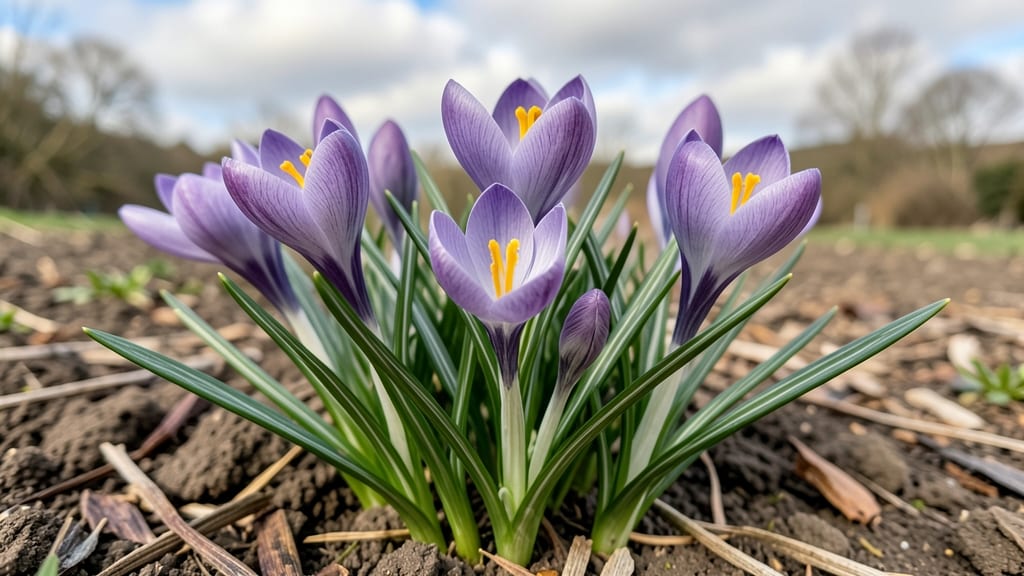
This crocus is a perennial, not an annual, because its foliage dies back in summer while its underground corms remain dormant, then regrow from the same root system each fall. This natural cycle lets it live for years with proper care.
This perennial behavior isn't just about surviving—it's about thriving. 🌱 The corms store nutrients during the growing season, allowing them to "sleep" through summer heat and then burst back to life when conditions improve.
Unlike annuals that complete their entire life cycle in one season, crocuses rely on this underground energy reserve to return year after year. That's why you'll often see them popping up in the same spot for a decade or more with minimal effort from gardeners.
The key difference lies in their growth pattern: while annuals focus all energy on flowering and seed production before dying, perennials like crocuses allocate resources to both reproduction and root development.
This dual strategy is what makes them such reliable garden stars—just give them well-draining soil and 6 hours of sunlight daily, and they'll reward you with cheerful blooms season after season.
💡 In This Article
- How Crocus Corms Survive Through Summer Dormancy
- Maximizing Crocus Longevity: Planting and Care Tips
How crocus corms survive through summer dormancy
Crocus plants enter summer dormancy through a biological process called vernalization, where their corms (thickened underground stems) store starches and sugars like glycogen and fructans during the growing season.
These stored nutrients can sustain the corm for months without photosynthesis, allowing it to survive temperatures up to 104°F (40°C) and drought conditions. The foliage's natural dieback isn't a sign of death—it's a survival strategy to conserve moisture and energy while the corm remains alive and viable underground.
The dormancy cycle begins when daytime temperatures consistently exceed 75°F (24°C) for two weeks, triggering a hormonal shift that halts top growth. This process is similar to how tulip bulbs behave, but crocus corms are uniquely adapted to thrive in USDA hardiness zones 3-8, where summer heat is intense.
The corm's protective outer layer (tunic) prevents moisture loss while maintaining a 5-10% water content—just enough to keep cellular functions minimal but alive. 💫
What makes crocus corms exceptional is their ability to regenerate from just 1/3 of their original size after dormancy. Unlike annuals that rely on seed production, perennial crocuses produce offsets (small corms) around the parent corm, creating a network that ensures survival even if some corms fail.
This offsets system is why you'll often see crocus patches expand over years—each corm can produce 3-5 new corms annually under ideal conditions, creating a self-sustaining colony.
The moisture trigger for regrowth is equally precise: corms need 2-3 weeks of consistent soil moisture at 50-60°F (10-15°C) to break dormancy. This typically occurs in fall when cooler nights and shorter days signal the plant's internal clock. The corm's vascular system reactivates, transporting stored nutrients to the emerging shoots.
Gardeners often mistake this dieback for death, but the corm's dormancy is actually a highly efficient survival mechanism evolved over millennia in Mediterranean climates where summer droughts are common.
Consider the science behind this: the corm's starch content can drop from 30% to just 5% during dormancy, yet it maintains enough energy to regrow within 4-6 weeks of ideal conditions.
This metabolic efficiency is why crocuses are among the first flowers to appear in early spring—often breaking through snow or frozen ground to bloom when temperatures reach 40-50°F (4-10°C). The corm's ability to "wait" underground for perfect conditions is what makes it a true perennial powerhouse.
Here's what this means for gardeners: if you see crocus foliage yellowing in late spring, resist the urge to pull it—this is nature's way of conserving energy. The corm is already preparing for its summer nap, storing up nutrients for next year's show.
Proper care during this phase (like mulching to retain moisture) ensures the corm stays healthy and ready to burst back to life when conditions improve. 🌱