
Flowers
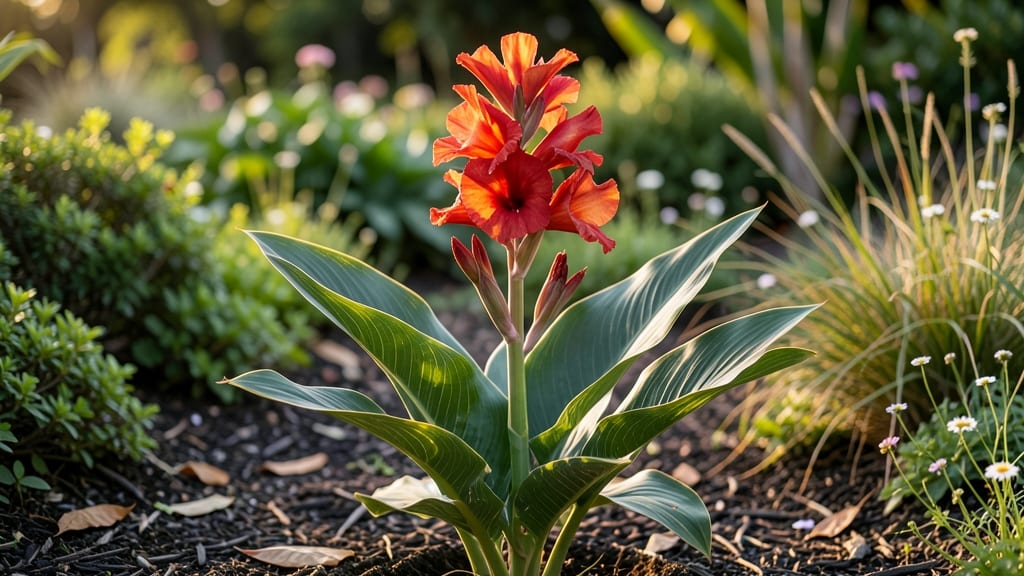
Canna lilies are perennials that thrive year-round by entering dieback—a natural dormancy where their above-ground growth retreats underground, storing nutrients in rhizomes until warmer weather triggers regrowth. Cold-resistant types flourish in zones 8-11 with minimal winter intervention.
This survival strategy makes them unique among tropical plants. 🌱 Unlike annuals that die back completely, canna lilies preserve their root systems underground, allowing them to bounce back each spring with minimal effort. The key lies in their rhizomes—thick, starchy roots that act like natural batteries, storing energy through winter.
Even in colder zones, proper mulching or container storage can extend their lifespan beyond a single season.
What sets them apart from other perennials is their adaptability. While tropical varieties need protection, cold-hardy cannas (like Canna 'Striped Forever') can withstand 20°F temperatures with the right care. The trade-off? They often produce slightly smaller blooms but prove far more resilient long-term.
💡 In This Article
- How Canna Lily Rhizomes Enable Perennial Growth
- Winter Care Tips to Protect Canna Lily Rhizomes
How canna lily rhizomes enable perennial growth
Canna lilies rely on their rhizomes—thick, horizontal underground stems—to survive through dormancy. These specialized roots store starches, sugars, and nutrients like a natural energy reserve, allowing the plant to "hibernate" during cold months.
Unlike annuals that die completely, canna rhizomes remain viable underground, often for years, until temperatures rise above 50°F in spring. The rhizome's thick, waxy skin protects it from rot and pests, while its segmented structure contains multiple growth points that can sprout new shoots.
The energy storage mechanism works like a biological battery: excess glucose produced during photosynthesis is converted into starch and stored in the rhizome's cells. Tropical varieties (like Canna 'Black Knight') store more energy but require warmer winters, while cold-hardy types (such as Canna 'Durban') optimize storage for resilience.
For example, a mature rhizome can weigh 2-5 pounds and contain enough energy to fuel a full season's regrowth—about 50-100 calories per pound of stored starch, comparable to a potato's energy density.
Seasonal dormancy triggers a fascinating biological switch. As daylight shortens and temperatures drop, the plant's growth hormones shift from promoting leafy shoots to conserving energy. The above-ground foliage yellows and dies back, but the rhizome remains metabolically active, maintaining a slow "maintenance mode" that prevents nutrient loss.
This process is similar to how deciduous trees drop leaves in winter—both strategies conserve resources during unfavorable conditions. 🌱 The difference? Canna lilies keep their root systems intact, ready to burst into action when conditions improve.
Cold-hardy varieties have evolved additional adaptations to survive freezing temperatures. Their rhizomes produce higher concentrations of antifreeze proteins (similar to those in cold-resistant fish) that prevent ice crystal formation in cells. Meanwhile, tropical types rely on mulching or container storage to mimic their native warm climates.
The trade-off? Cold-hardy cannas often produce slightly smaller blooms because they allocate more energy to survival than growth. For instance, Canna 'Pactola' might yield 3-inch flowers in colder zones versus 6-inch blooms in tropical conditions.
Here's what's actually happening at the cellular level: The rhizome's meristematic cells (growth centers) remain dormant but viable, surrounded by protective layers of parenchyma cells. These cells act like insulation, maintaining temperatures 5-10°F warmer than the surrounding soil.
When spring arrives, rising temperatures and longer daylight trigger the production of gibberellins—hormones that "wake up" the rhizome's growth points. Within 2-4 weeks, new shoots emerge, fueled by the stored energy.
This biological strategy explains why canna lilies can thrive for decades with minimal intervention. Unlike annuals that must be replanted yearly, a single rhizome can produce new plants for 5-10 years or more.
The secret lies in their ability to balance growth and conservation—producing enough foliage for photosynthesis while storing excess energy underground for the next season. 💫