
How To
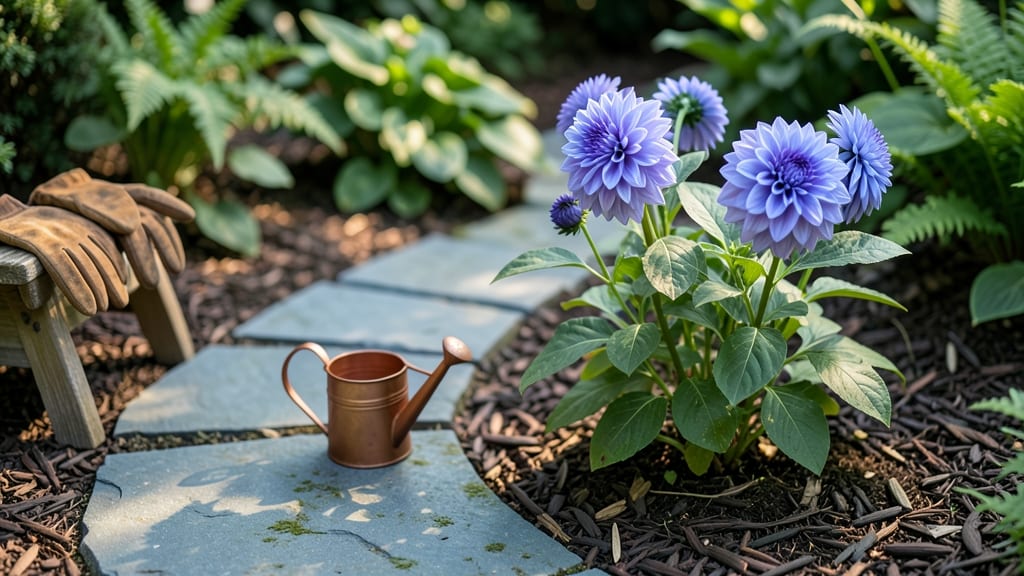
Bluestone Perennials dahlias survive cold winters through specialized underground tubers that store nutrients and regulate growth, allowing them to withstand freezing temperatures when properly hardened and insulated. Their hardiness depends on tuber maturity and soil protection.
These hardy perennials owe their resilience to nature's clever design—their thick, fleshy tubers act like living batteries, converting stored starches into sugars during cold snaps. 🔥 This energy boost helps cells survive freezing temps, while the tubers' protective outer layer minimizes moisture loss.
What's fascinating is how these plants "know" when to trigger dormancy: shorter daylight hours and dropping temperatures send chemical signals to halt growth and redirect resources underground.
For gardeners in colder climates, this means proper preparation can make all the difference. I've seen firsthand how tubers dug too early or stored improperly fail to regenerate—always wait until foliage dies back completely before handling them.
The key is patience: mature tubers with thick necks handle winter best, while younger ones need extra insulation.
💡 In This Article
- How Dahlia Tubers Adapt to Cold Weather
- Preparing Bluestone Dahlias for Winter Survival
How dahlia tubers adapt to cold weather
Dahlia tubers employ a multi-layered survival strategy when temperatures drop. Their thick, corky outer layer acts as a natural insulator, reducing moisture loss by up to 70% compared to unprotected tubers. Inside, specialized cells called parenchyma store starches that convert to sugars during dormancy—a process called cryoprotection.
These sugars lower the freezing point of cell fluids, preventing ice crystal formation that would rupture delicate membranes. 💫
The real magic happens at the cellular level. As temperatures fall below 50°F, dahlias trigger a cascade of hormonal signals (primarily abscisic acid) that harden cell walls and reduce water content. This adaptation mirrors how woody perennials like peonies survive winter—they essentially dehydrate slightly to become more frost-resistant.
What's unique to dahlias is their ability to maintain this state for months without metabolic activity, only resuming growth when soil temperatures reach 55-60°F in spring.
Light exposure plays a surprising role too. Shorter daylight hours in autumn reduce chlorophyll production, signaling tubers to focus on storage rather than growth. This photoperiod response is why dahlias planted in northern climates often produce more robust tubers than those in southern regions with longer growing seasons.
The tubers' necks (where stems attach) contain meristematic tissue—this growth zone remains protected by a thickened layer of cells that acts like a biological shield against freezing.
Temperature fluctuations actually help prepare tubers for winter. Gradual cooling (like autumn's 10-15°F drops) triggers a hardening process similar to how gardeners cold-acclimate seedlings. Each freeze-thaw cycle strengthens cell membranes, making them more resilient to extreme cold.
This is why tubers left in the ground with proper mulch often survive better than those dug too early—they get this natural conditioning period.
One fascinating adaptation is the tubers' ability to regulate their own internal temperature slightly. While not as dramatic as mammals, their cellular respiration slows dramatically, reducing heat output by 80% during dormancy.
This energy conservation allows them to maintain just enough metabolic activity to survive without depleting their starch reserves completely. The result? A plant that can lie dormant for months yet spring back to life with minimal energy loss.
For gardeners, understanding these mechanisms explains why proper winter care matters so much. Tubers stored at 35-45°F with 50-70% humidity mimic these natural conditions, while improper storage (like freezing) disrupts the delicate balance of sugars and cell integrity.
The key takeaway? These tubers aren't just surviving winter—they're actively preparing for it through a sophisticated biological toolkit.