
Orchid Care
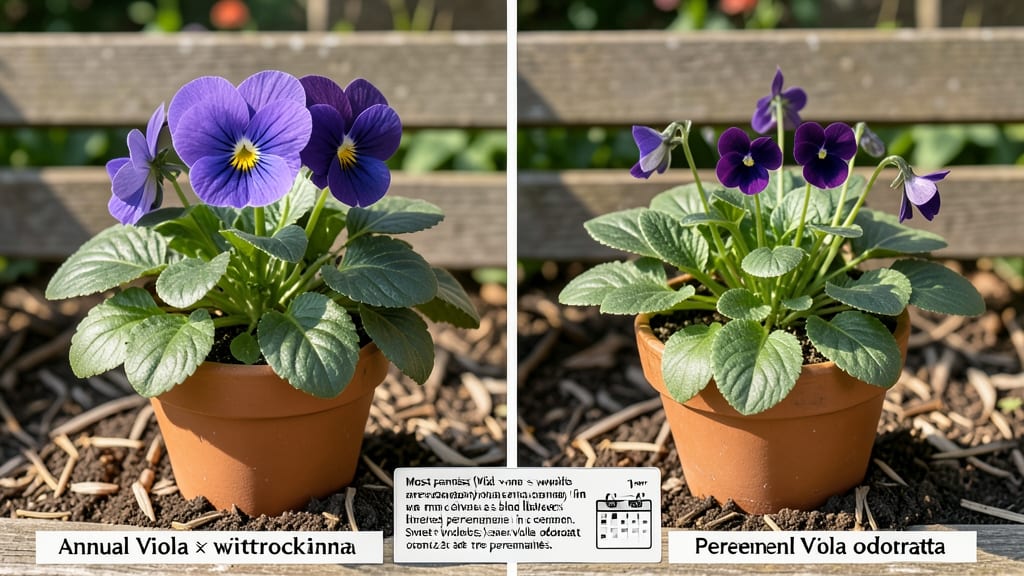
Violas are perennials in mild climates but often grown as annuals in colder regions, thriving in USDA zones 4-9 with their cold-hardy nature and ability to rebloom year-round in frost-free areas.
Violas actually behave differently depending on your climate.
In warmer areas where winters stay above freezing, these plants naturally return year after year, sending up fresh foliage and blooms each spring. 🌱 The key lies in their root systems—violas can survive light frosts, but prolonged sub-freezing temperatures will kill them back to the ground.
That's why gardeners in colder zones typically treat them as annuals, replanting new seeds each season for continuous color.
What sets violas apart is their resilience. Even when above-ground growth dies in winter, the roots often survive to regrow when temperatures warm. This makes them semi-perennial in marginal climates—some years they'll return, others they won't. The secret to pushing their limits?
Proper winter mulching and choosing cold-hardy varieties like Viola cornuta or Viola tricolor.
💡 In This Article
- Viola Cold Hardiness and Perennial Lifespan
- Growing Violas as Annuals vs Perennials: Best Practices
Viola cold hardiness and perennial lifespan
The perennial nature of violas hinges on their ability to withstand 20-25°F temperatures for short periods, thanks to their deep root systems that store energy for regrowth. These roots can remain dormant through winter, even when above-ground growth dies back completely—a survival strategy called geophyte dormancy.
In USDA zones 7-9, violas naturally overwinter and return each spring, while in zones 4-6, they often need protection to survive harsh winters.
What makes violas unique is their cold acclimation process. As temperatures drop below 40°F, violas begin producing antifreeze proteins in their cells, similar to how winter wheat survives frost.
However, prolonged exposure to below 10°F for more than 24 hours typically kills the foliage and roots, forcing gardeners in colder climates to treat them as annuals. Their flowers also contain natural antioxidants that help protect cellular structures during freeze-thaw cycles.
The distinction between annual and perennial growth comes down to winter severity. In frost-free zones (like Southern California or Florida), violas thrive as true perennials, blooming continuously from fall through spring.
But in regions with sub-zero winters, even cold-hardy varieties like Viola cornuta may only survive one season unless given extra protection. This is why gardeners in colder zones often plant violas in fall (8-10 weeks before first frost) to establish roots before winter.
Interestingly, violas exhibit what botanists call hemicryptophyte growth habit—they produce new shoots from protected buds just below the soil surface. This allows them to regrow quickly in spring, even after complete winter dieback.
The trade-off is that their regrowth speed depends on soil warmth, which is why early spring plantings often outperform late-season ones in colder climates.
Consider these key survival factors for violas:
- Root depth: Mature violas develop roots 4-6 inches deep, accessing moisture and energy reserves during dormancy
- Leaf structure: Their waxy leaf coating reduces water loss and insulates against cold
- Flower timing: Early bloomers (like Viola tricolor) often survive better as they finish flowering before hard frosts
The coldest temperatures violas typically survive are -15°F for brief periods, but consistent sub-zero conditions will kill even hardy varieties. This is why gardeners in zone 5 often treat violas as short-lived perennials—they may return for 2-3 years before needing replacement. 🌱