
Vegetables
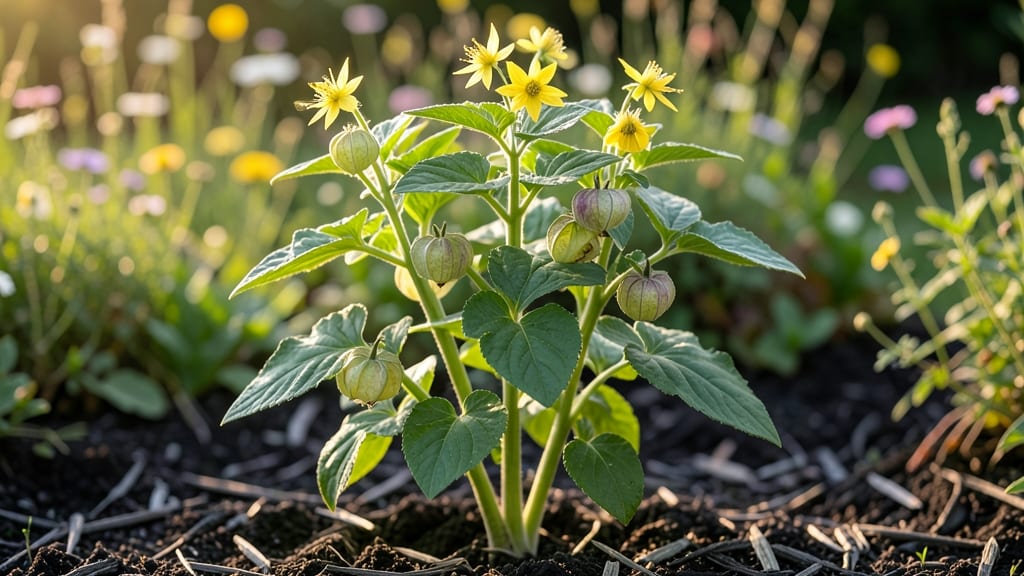
Tomatillos aren't true perennials in most climates, though they act like tender perennials by regrowing each year from their root systems in frost-free zones. Their above-ground growth dies back annually, but the roots remain dormant until spring.
This behavior might fool gardeners into thinking tomatillos are hardy perennials, but they're actually tender perennials—meaning they can't survive harsh freezes. 🌱 In warmer regions like USDA zones 9-11, they'll naturally regrow each spring from their surviving roots, producing new stems and leaves.
The key difference from true perennials is their sensitivity to cold: even a light frost can kill their tops, while hard freezes may damage the roots themselves.
Many gardeners in colder areas treat them as annuals, but with proper protection like mulch or containers, you can coax them to return year after year.
What's interesting is how their lifecycle works: the plant stores energy in its roots during the growing season, which fuels regrowth when conditions improve. This is why you'll often see them coming back stronger than annuals planted from seed—it's like nature's built-in insurance policy for survival.
The confusion arises because their regrowth pattern mimics true perennials, but without the cold hardiness.
💡 In This Article
- Why Tomatillos Die Back Annually Despite Perennial-Like Behavior
- How to Extend Tomatillo Lifespan in Cold Climates
Why tomatillos die back annually despite perennial-like behavior
Tomatillos exhibit what botanists call "tender perennial" behavior—meaning their roots survive winter but only in frost-free conditions. The plant's herbaceous stems and leaves contain high moisture content (about 90% water), which makes them highly susceptible to freezing.
When temperatures drop below 28°F, cellular water crystallizes, rupturing plant tissues and causing irreversible damage to above-ground growth. However, the root system—typically extending 12-18 inches deep—contains specialized parenchyma cells that store starches and sugars, allowing them to remain dormant until spring.
The regrowth mechanism begins when soil temperatures reach 55-60°F, triggering hormonal signals in the roots. These signals activate meristematic cells at the root crown, producing new shoots within 2-4 weeks.
This process explains why tomatillos often return stronger than annuals: their established root systems provide a head start over newly planted seeds.
The confusion with true perennials stems from their ability to regenerate annually, but unlike hardy perennials (such as asparagus or rhubarb), tomatillos lack the cold tolerance to survive below 20°F without protection.
What makes this lifecycle fascinating is the plant's energy storage strategy. During the growing season, tomatillos convert sunlight into carbohydrates through photosynthesis, storing up to 30% of these reserves in their roots as inulin—a type of fructose polymer.
This stored energy fuels early spring regrowth, often producing fruit 4-6 weeks earlier than newly planted annuals. The trade-off is their sensitivity to cold snaps: even a single night below 30°F can kill back the entire plant, leaving only the roots to restart the cycle.
Gardeners often mistake this behavior for true perennialism because the regrowth appears identical to previous seasons. However, the key difference lies in cold hardiness: while true perennials (like lavender) can withstand -10°F to -20°F, tomatillos' roots typically survive only down to 25°F without protection.
This is why they're classified as "tender perennials"—their survival depends entirely on climate conditions.
Consider this comparison: a hardy perennial like peonies stores energy in thick, woody roots that can survive -30°F, while tomatillos rely on fibrous, non-woody roots that lack this insulation.
The plant's entire strategy revolves around rapid regrowth rather than cold endurance, making it perfectly adapted to warm climates but vulnerable in colder regions without intervention.
What most gardeners don't realize is that this annual dieback is actually an evolutionary adaptation. In their native Mexico and Central America (where they thrive as true perennials), tomatillos experience mild winters with no frost.
The plant's lifecycle is optimized for warm climates where rapid regrowth is more important than cold survival—a perfect example of how environmental conditions shape plant behavior.