
Plants
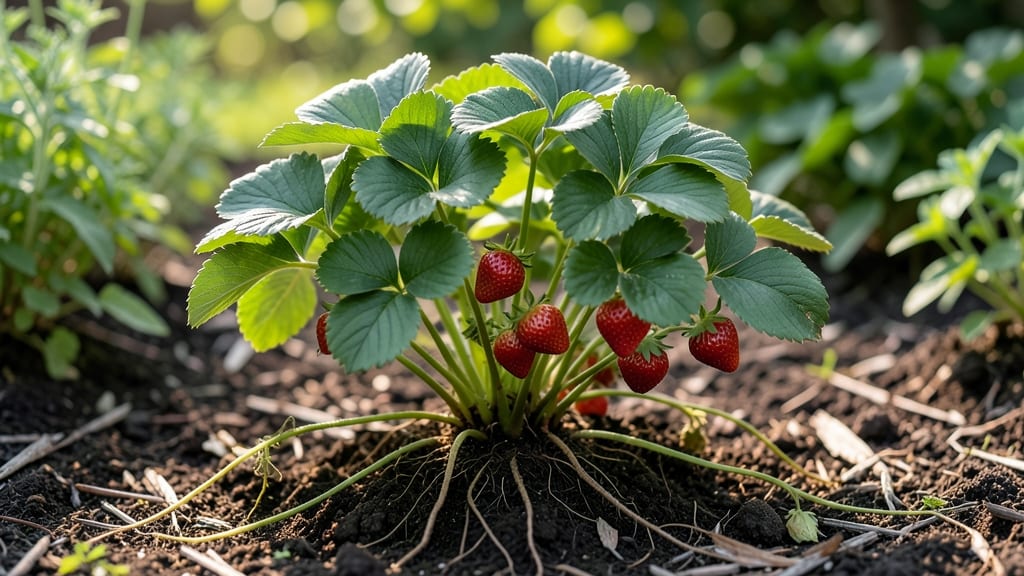
Strawberries are perennials, meaning they regrow each year from the same crown if given proper care, though many gardeners replant runners annually for stronger yields. Cold-hardy varieties thrive in temperate climates with winter mulching and protection from frost.
This means your strawberry plants can live for years if you protect their roots during winter dormancy. 🌱 The crown—the thick base where leaves meet the soil—stores energy like a natural battery, allowing new growth to sprout each spring.
However, many gardeners still prefer renewing plants every 2-3 years because older crowns produce smaller berries. Cold-hardy varieties like 'Jewel' or 'Albion' are specifically bred to survive freezing temperatures, making them ideal for USDA zones 3-10.
What sets strawberries apart from annuals is their ability to send out runners—those long stems that create new plants. While these runners die back in winter, the mother plant's crown remains alive underground, ready to push out fresh foliage when temperatures rise.
This natural cycle is why strawberries can outperform annuals in the right conditions, though they do require consistent care to maintain vigor.
💡 In This Article
- How Strawberry Plants Survive Winter as Perennials
- Best Practices for Year-Round Strawberry Cultivation
How strawberry plants survive winter as perennials
Strawberries enter dormancy as temperatures drop below 50°F, triggering a biological survival mechanism. The plant's crown—where leaves meet the root system—stores carbohydrates like starches in specialized cells, creating a natural energy reserve. This process is similar to how trees store nutrients in their roots over winter.
The crown can remain viable even when above-ground growth dies back completely, as long as soil temperatures stay above 20°F.
Cold-hardy varieties like 'Jewel' or 'Albion' have evolved thicker crowns with higher sugar content, which acts as antifreeze. These varieties can survive down to -30°F in USDA zone 3, while tender varieties (like 'Chandler') struggle below 15°F.
The key difference lies in their cellular structure—hardy varieties produce more protective proteins that stabilize cell membranes during freeze-thaw cycles. This is why you'll see strawberry patches in New England that produce for decades!
Runners (those long stems producing baby plants) die back first when frost arrives, but the mother plant's crown remains dormant. What most people don't realize is that the crown actually grows larger underground during winter, storing more energy for spring.
This is why established plants often outperform newly planted ones in their second year. The trade-off? Older crowns produce smaller berries after 3-4 years, which is why many gardeners renew plants annually.
Temperature zones play a critical role in perennial performance. In USDA zones 7-10, strawberries may grow year-round with minimal dormancy, while zones 3-6 require heavy mulching (at least 6 inches of straw or leaves) to insulate crowns.
The sweet spot for winter survival is maintaining soil temperatures between 32-40°F—cold enough to trigger dormancy but not so cold that cells rupture.
Here's what happens at the cellular level: As temperatures drop, the plant converts sugars to antifreeze proteins that prevent ice crystals from forming in cell walls. This is why you'll often see strawberry leaves turn brown but the crown remains green and firm beneath the soil.
The plant essentially goes into hibernation mode, with metabolic activity slowing to just 10% of summer levels.
One fascinating adaptation is how strawberries handle freeze-thaw cycles. The crown's outer layers contain high concentrations of phenolic compounds that act as natural sunscreen, preventing UV damage during winter sunlight. This is why properly mulched plants often emerge healthier in spring than those left exposed.
The combination of stored energy, antifreeze proteins, and protective compounds makes strawberries one of nature's most resilient perennials!